

Published Feb 11, 2026 | 11:24 AM ⚊ Updated Feb 11, 2026 | 1:14 PM

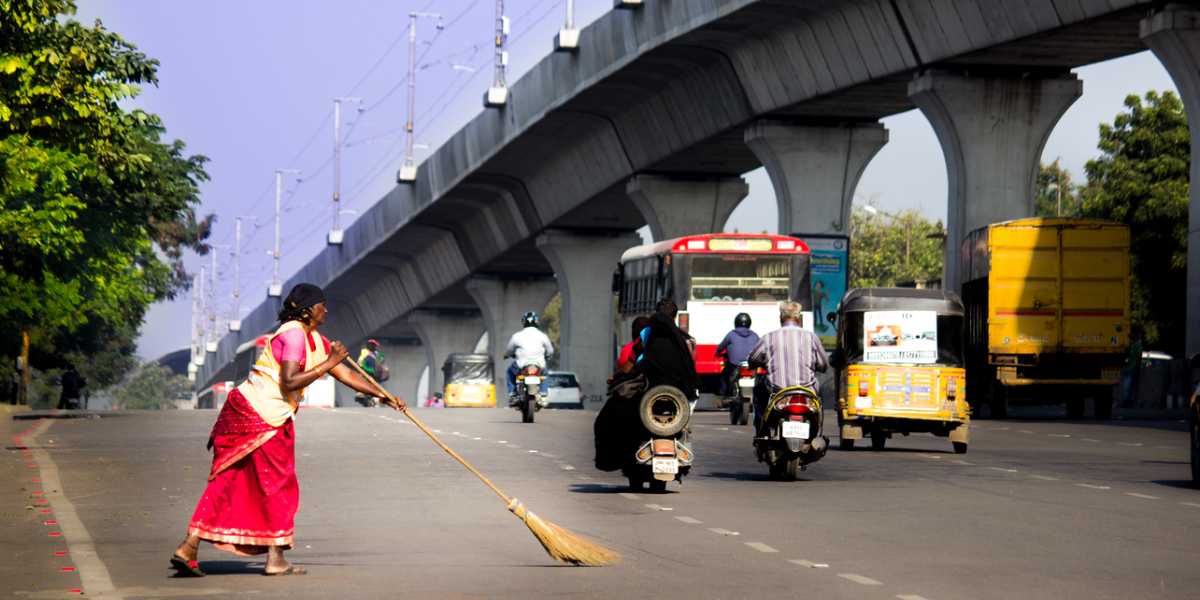
Hyderabad street (iStock)
Synopsis: The Telangana government reorganised the Greater Hyderabad Municipal Corporation into three separate Municipal Corporations. Following the trifurcation, the government also ordered the transfer and postings of IAS officers connected with the GHMC.
The Telangana government on Wednesday, 11 February, reorganised the Greater Hyderabad Municipal Corporation (GHMC) into three separate Municipal Corporations.
In a Government Order (GO) (Ms No. 55), the state government said the decision was made after careful examination/consideration of the administrative requirements arising out of the expansion of the city.
The move follows the earlier reorganisation of GHMC into 12 zones and 60 circles, as per government orders issued in December 2025. The government said the restructuring was necessary to ensure efficient civic administration and improved service delivery.
The three new Municipal Corporations are: Cyberabad Municipal Corporation, Malkajgiri Municipal Corporation and the Greater Hyderabad Municipal Corporation.
The state government also appointed Jayesh Ranjan, Special Chief Secretary to Government, Metropolitan Area & Urban Development Department, as Special Officer for the newly constituted corporations. He will oversee the transition and administrative arrangements for the Greater Hyderabad Municipal Corporation, Cyberabad Municipal Corporation and Malkajgiri Municipal Corporation until elected bodies are constituted.
According to the GO, the Cyberabad Municipal Corporation comprises the areas constituted by the Serilingampally, Kukatpally and Qutbullapur Zones; the Malkajgiri Municipal Corporation comprises the areas constituted by the Malkajgiri, Uppal and LB Nagar Zones; and the remaining area comprising the areas constituted by the Shamshabad, Rajendranagar, Charminar, Golconda, Khairatabad and Secunderabad Zones, will continue to be called the Greater Hyderabad Municipal Corporation.
The government clarified that each of the newly constituted municipal corporations will function as a separate body corporate. They will have perpetual succession, a common seal and the authority to sue and be sued in their respective names, subject to the provisions of the Greater Hyderabad Municipal Corporation Act, 1955 (Act II of 1956), as amended from time to time.
Following the trifurcation, the government also ordered the transfer and postings of IAS officers connected with the GHMC.
RV Karnan, IAS (2012), will continue in the post of Commissioner, Greater Hyderabad Municipal Corporation.
G Srijana, IAS (2013), Additional Commissioner, GHMC, has been transferred and posted as Commissioner, Cyberabad Municipal Corporation.
T Vinay Krishna Reddy, IAS (2013), Additional Commissioner, GHMC, has been transferred and posted as Commissioner, Malkajgiri Municipal Corporation.
Dr Jyoti Buddha Prakash, IAS (2002), Secretary to Government, SCD Department, has been transferred and posted as Chairman & Managing Director, Singareni Collieries Company Limited (SCCL), duly relieving D Krishna Bhaskar, IAS (2012) from FAC of the said post.
Sabyasachi Ghosh, IAS (1994), Special Chief Secretary to Government (Implementation of Flagship Welfare & Developmental Schemes Unit), has been placed in FAC of the posts of Special Chief Secretary to Government, Scheduled Caste Development Department and Commissioner, Scheduled Caste Development, duly relieving Dr Jyoti Buddha Prakash from said posts.
Sabyasachi Ghosh will continue to hold the FAC posts of Special Chief Secretary to the Government, Tribal Welfare Department, Special Chief Secretary to Government, Welfare and Commissioner, Tribal Welfare.
Sandeep Kumar Sultania, IAS (1998), Principal Secretary to Government, Finance Department, has been placed in FAC of the post of Principal Secretary to Government, Planning Department & EO Director General, Telangana Remote Sensing Applications Centre (TGRAC), duly relieving Dr Jyoti Buddha Prakash from FAC of the said post.
D Divya, IAS (2010), Chief Executive Officer, Society for Elimination of Rural Poverty (SERP), has been placed in FAC of the post of Commissioner, PR & RD, duly relieving Shruti Ojha, IAS (2013), from FAC of the said post.
P Katyayani Devi, IAS (2017), Additional Chief Executive Officer, Society for Elimination of Rural Poverty (SERP), has been transferred and posted as State Nodal Officer, Prajavani, duly relieving D Divya from FAC of the said post.
P Katyayani Devi will continue to hold the FAC of the post of Joint Managing Director, State Finance Corporation.
Mayank Mittal, IAS (2020), Executive Director, HMWS&SB, has been transferred and posted as Joint Managing Director, HMWS&SB.
U Raghuram Sharma, IAS (SCS), OSD to Minister for IT, Industries & LA, has been transferred and posted as Special Secretary to Government, Industries & Commerce.
U Raghuram Sharma has also been placed in the FAC of the post of OSD to Minister for IT, Industries & LA.
The trifurcation has been necessitated after Hyderabad witnessed exponential growth over the past two decades, both in terms of population and geographic spread.
The existing GHMC jurisdiction had expanded significantly, covering urban, peri-urban and formerly rural pockets. Officials said administering such a vast and diverse territory under a single civic body had posed logistical and governance challenges.
By splitting the GHMC into smaller municipal corporations, the government aims to decentralise decision-making, improve accountability and accelerate infrastructure development.
Separate corporations are expected to enable more focused planning tailored to the distinct needs of different regions — IT and commercial development in Cyberabad, dense residential expansion in Malkajgiri, and heritage conservation and urban renewal in the old and central city areas.
Official sources indicated that the reorganisation would also help in better financial management, quicker approval of civic works and enhanced monitoring of sanitation, road maintenance, water supply and town planning functions.
The trifurcation of GHMC is expected to have significant administrative and political ramifications. Smaller municipal corporations could alter local political dynamics, especially in high-stakes urban constituencies where civic issues often influence electoral outcomes.
(With inputs from Raj Rayasam.)


