

Published May 24, 2025 | 1:05 PM ⚊ Updated May 24, 2025 | 1:05 PM

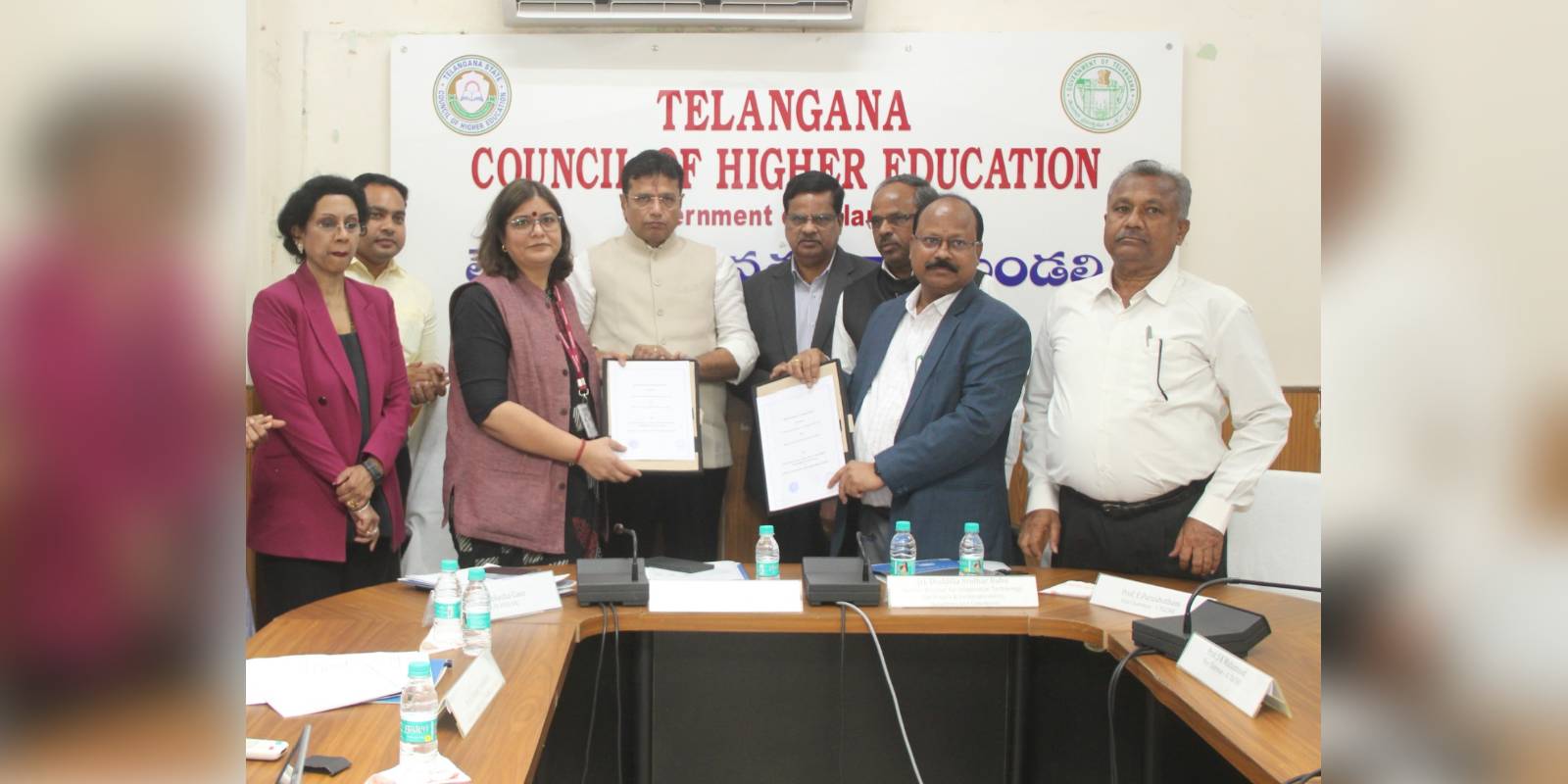
Telangana Council of Higher Education and NASSCOM sign MoU. (TGCHE)

Synopsis: The Telangana Council of Higher Education signed an MoU with NASSCOM to upskill one lakh learners annually in emerging tech like AI and cybersecurity. The initiative includes industry-aligned courses, certifications, and job linkages via NASSCOM’s Talent Connect. Hyderabad aims to become India’s “Skill Capital,” enhancing student employability through curriculum reforms and strong industry-academia partnerships.
In a significant move in making higher education meet industry demands, the Telangana Council of Higher Education (TGCHE) on Friday, 23 May, signed a Memorandum of Understanding (MoU) with the National Association of Software and Service Companies (NASSCOM) and its IT-ITeS Sector Skills Council (SSC).
The agreement, signed in the presence of Telangana IT Minister Duddilla Sridhar Babu also aims to train one lakh learners annually over the next three years in emerging technologies.
The MoU outlines a collaborative framework to enhance skill development for engineering and non-engineering students, as well as faculty, across universities, colleges, and institutions under TGCHE’s purview.
The initiative focuses on upskilling in cutting-edge domains such as Artificial Intelligence, Cybersecurity, Fintech, Digital Marketing, and Sustainable Sciences.
Key components include: Micro learning content and courses, which are both free and paid, foundation and deep-skilling programmes, specialized offline course in “Embedded Software Development and Testing” to build critical digital capabilities.
There will also be talent development by matching academic learning with industry certifications, linking certified learners to potential employers through NASSCOM’s Talent Connect platform to facilitate seamless transitions from education to employment.
The collaboration also includes provisions for online exams with proctoring and the issuance of credits through universities via NASSCOM’s Future Skills framework, ensuring certifications are industry-recognized.
Speaking on the occasion Sridhar Babu said that the Telangana government was committed to transforming the state into a hub for skilled talent. The effort was to empower every graduate with industry-relevant skills, positioning Hyderabad as the “Skill Capital of India”.
The minister also underscored the transformation of Industrial Training Institutes (ITIs) into Advanced Training Centers (ATCs), which aim to guarantee 100 percent job placement for students. He stressed the importance of industry-academia partnerships to provide market-driven skills and internships, enhancing student employability.
Prof V Balakista Reddy, Chairman of TGCHE, elaborated on the council’s efforts to overhaul higher education curricula to meet industry demands. He highlighted ongoing reforms at the undergraduate level, ensuring exposure to technology-driven courses in emerging fields.
“These transformative changes are designed to significantly enhance the employability and industry-readiness of graduates across Telangana,” Prof Reddy said. He also stressed the TGCHE’s role in fostering agreements between universities and industries to address challenges in gaining international recognition for qualifications.
Dr Abhilasha Gaur, CEO of IT-ITeS SSC, NASSCOM, outlined the organisation’s contribution to the growth of India’s IT industry. She detailed the council’s initiatives to strengthen skill development, including the provision of industry-aligned certifications and employment linkages through platforms like Talent Connect.
“Our partnership with TGCHE will create a robust ecosystem for skilling Telangana’s youth, preparing them for the demands of the digital economy,” Dr Gaur said.
(Edited by Sumavarsha)



