

Published Sep 01, 2026 | 8:20 PM ⚊ Updated Sep 01, 2026 | 9:26 PM

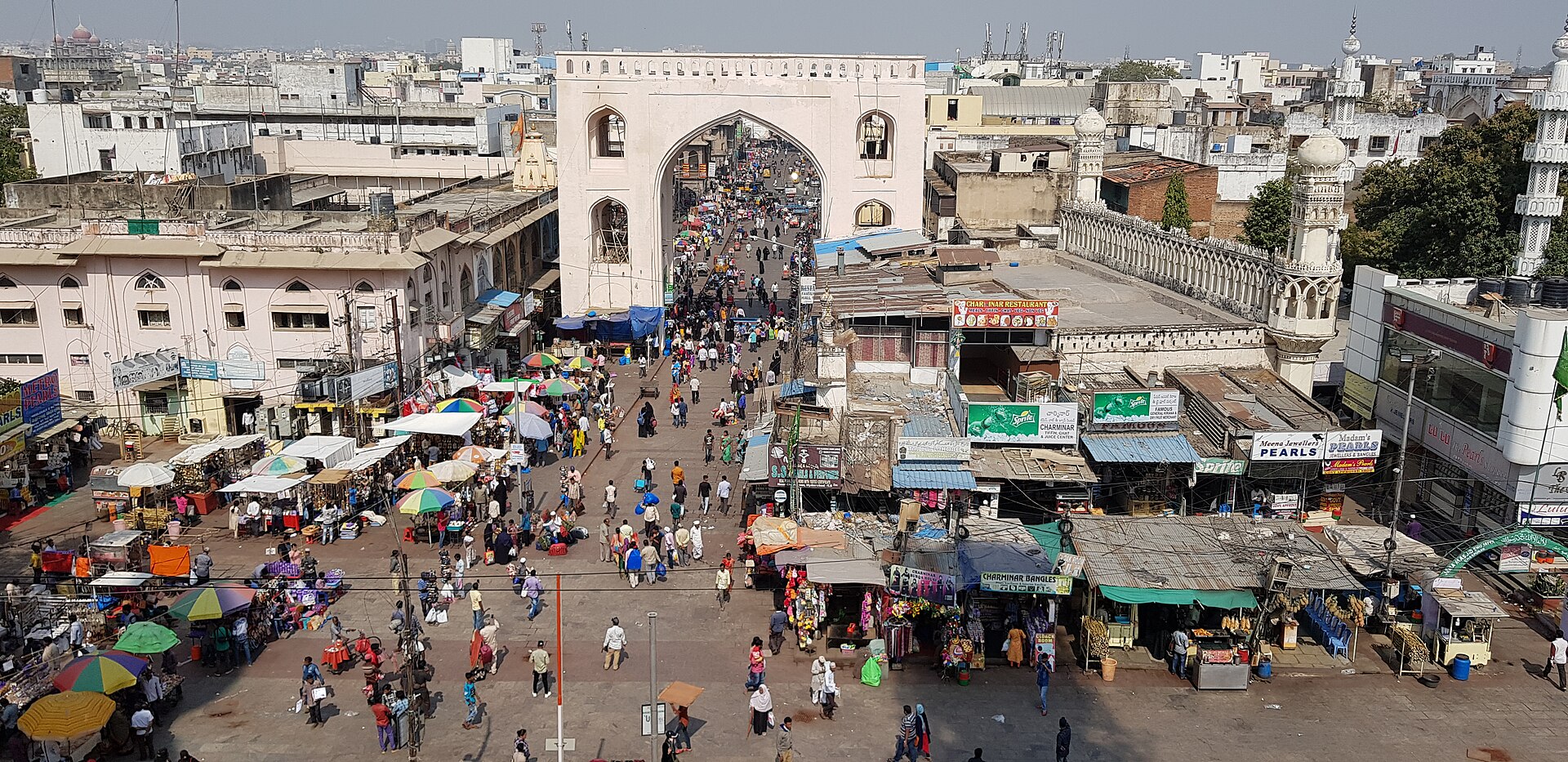
Women formed 47.8% of the 1,941,444 electors deleted across Hyderabad and 48.5% of the 5 January 2023 electoral roll. (Gunjan Pandey/Creative Commons)

Synopsis: On average, more than 500 voters have been deleted from each polling booth in Hyderabad, the SABAR Institute survey led by Sabir Ahamed, Souptik Halder and Ashin Chakraborty said. Booth number 297 in the Yakutpura Assembly segment recorded the most deletions, with 1,069 voters left off the rolls.
A survey by the SABAR Institute found that 89% of voters included in the January 2023 electoral rolls of 15 constituencies in Hyderabad have been excluded from the draft voters’ list after the Special Intensive Revision (SIR).
The survey found 92% of deleted voters still alive. The SIR cited that 69.3% of the deleted voters had permanently shifted residence, and 17.7% were either untraceable or absent.
“A preliminary analysis of Hyderabad’s Special Intensive Revision (SIR) records 19.41 lakh electoral-roll deletions across 15 constituencies, equivalent to 46.1% of the January 2023 roll. The deletions exceed the 2023 winning margin in every constituency,” the survey, SIR Hyderabad, said.
On average, more than 500 voters have been deleted from each booth in Hyderabad, the survey led by Sabir Ahamed, Souptik Halder and Ashin Chakraborty said. Booth number 297 in the Yakutpura Assembly segment recorded the most deletions, with 1,069 voters left off the rolls.
“Eight of Hyderabad’s 10 worst booths are in Yakutpura,” the survey noted.
Further, it also found that 9.28 lakh women voters were deleted. Yakutpura Booth 297 alone saw 535 women removed from the rolls. Of the 535 women removed, 527 are still alive.
Also Read: SIR and denying the citizenship rights of minorities
Another interesting aspect the survey revealed was that those with Muslim names comprised 40.7% of the total deletions.
“Muslim electors account for 40.7 per cent of the 1,941,444 deletions recorded across Hyderabad. The share ranges from 12.1 per cent in Secunderabad Cantonment to 85.9 per cent in Bahadurpura, a spread that tracks the city’s residential geography: the old-city constituencies sit at one end, and the Secunderabad and western constituencies at the other,” the survey report said.
The four recorded reasons (untraceable/absent, already enrolled, death, and permanent shift) were not distributed alike between Muslims and non-Muslims.
“Permanent shifting of residence accounts for 73.0 per cent of non-Muslim deletions but 63.8 per cent of Muslim ones. The difference is taken up by the two categories that rest on the weakest documentary basis. Untraceable or absent removals form 19.8 per cent of Muslim deletions against 16.0 per cent of non-Muslim ones, and prior enrolment elsewhere 7.6 per cent against 3.4 per cent more than twice the rate. Death is recorded at 8.8 and 7.5 per cent, respectively,” the survey noted.
The researchers clarified that the religion field in the survey was derived from the elector’s name, not Election Commission data.
The survey found that men formed the majority of those removed in Hyderabad, which the researchers said, “unusually so for an exercise of this kind: women are 47.8 per cent of all deletions and hold a majority in only 2 of the fifteen constituencies. The female share is nonetheless higher among Muslim deletions, at 49.5 per cent against 46.7 per cent, and across constituencies the female share of deletions rises with the Muslim share at a correlation of +0.65. Ages are almost identical between the two groups, with a median of 42 years among Muslim electors and 43 among non-Muslim ones, so age does not explain the difference in recorded reason”.
Also Read: SIR is disenfranchising the marginalised
Women formed 47.8 per cent of the 1,941,444 electors deleted across Hyderabad and 48.5 per cent of the 5 January 2023 electoral roll.
Set against that baseline, the deletions are close to proportional, tilted slightly towards men. The district figure hides the constituencies: women are over-represented among those removed in 3 of the fifteen, and the gap runs from -2.4 points in Sanathnagar to +2.8 in Bahadurpura,” the survey said.
The SIR survey cited 50.2 per cent of total women deleted were ‘Untraceable/Absent’, and 40.9 per cent ‘dead’.
“Read the other way, 6.9 per cent of deleted women are recorded as deaths against 9.1 per cent of deleted men, which follows male mortality rather than anything about the revision, while permanent shifting accounts for 69.6 and 69.0 per cent, respectively effectively the same. The differences are real but small, and none show the revision affecting women in a distinctly different way from men,” the SABAR survey noted.
SABAR said the consequences of SIR would extend far beyond the right to vote. Electoral roll status could be linked to government services and documentation. The cases examined indicated difficulties involving passport renewal, the Public Distribution System, domicile and residence certificates, education, land transactions, vehicle registration and other administrative processes. Prolonged uncertainty over electoral status can also create financial stress, psychological distress and disruption to family life.
The implementation and consequences of SIR also require serious discussion in Parliament through debates, questions, committees and other mechanisms of democratic oversight,” it said.
The researchers called for an urgent, independent countrywide study of SIR. “It should examine deletions, non-death deletions, restorations, appeals, adjudication delays, demographic and regional patterns, documentary requirements, the use of algorithms, and the social and economic consequences of exclusion,” the survey recommended.
The SABAR survey result came even as reports said as many as 73.39 lakh names, constituting 21.70% of the total electorate, were deleted from the draft publication of electoral rolls in Telangana by the Election Commission on Monday, 31 August. The state had 3.38 crore voters when the SIR began on 25 June.
“The deleted names included 9.22 lakh (2.73%) deceased, 11.25 lakh absent, 45.18 lakh permanently shifted (16.99%, both put together), and 6.70 lakh (1.98%) enrolled at multiple places in the electoral rolls,” The Wire reported.



