

Published Feb 27, 2026 | 7:00 AM ⚊ Updated Feb 27, 2026 | 7:00 AM

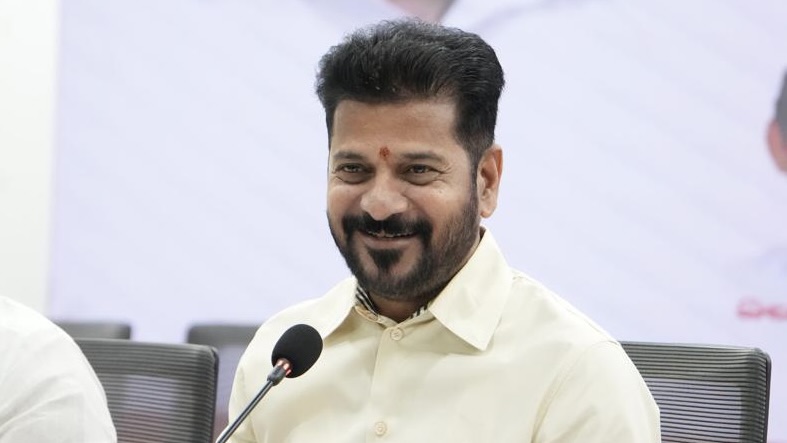
Telangana Chief Minister A Revanth Reddy.
Synopsis: Under the single transferable vote system, the quota to elect one Rajya Sabha member is 41 votes, assuming all 119 MLAs participate. No party except Congress crosses this threshold on its own. If the opposition did not contest, Congress could secure both seats, possibly even unopposed. However, reports that the BRS is likely to field a candidate have upset these calculations.
As Telangana heads to the biennial Rajya Sabha elections on 16 March to fill two seats that fall vacant on 9 April, the ruling Congress’s ambition to win both now looks uncertain.
One seat is held by senior Congress leader and Rajya Sabha member Abhishek Manu Singhvi, who is widely expected to be renominated. The other is held by BRS’s K Suresh Reddy.
Until recently, Congress leaders were confident of a clean sweep, banking on their numerical strength in the 119-member Assembly. But reports that BRS supremo K Chandrashekar Rao (KCR) is likely to field a candidate have upset such calculations.
The BRS, reeling from its 2023 Assembly drubbing (down to 39 seats from 88 in 2018), a rout in the 2024 Lok Sabha polls (zero seats), and a poor showing in the February municipal elections (28.75 percent vote share, far behind Congress’s 39.8 percent), now sees this contest as a chance to reassert its relevance.
That move could turn a probable 2-0 result for Congress into a 1-1 split. On paper, the BRS’s 37 MLAs fall just four short of the 41-vote quota.
But if the BRS and the BJP come together—though that is hard to predict—the combination would yield 45 votes, more than enough to secure one seat.
In the current Assembly, the Congress has 66 MLAs and the support of one CPI legislator, taking its effective strength to 67.
The BRS has 37 MLAs on paper, but 10 are accused of defecting to the Congress (the Speaker has rejected disqualification petitions against eight, while two are pending). The BJP has eight MLAs and AIMIM seven.
Under the single transferable vote system, the quota to elect one Rajya Sabha member is 41 votes, assuming all 119 MLAs participate. No party except the Congress crosses this threshold on its own.
If the opposition did not contest, Congress could have secured both seats, possibly even unopposed.
With 67 first-preference votes, it would easily elect its first candidate. The surplus of 26 votes would then transfer at a fractional value of about 0.388 per ballot to the second nominee. Even without perfect transfers, the numbers favoured a sweep.
Aspirants for the second seat include Vem Narender Reddy, B Sudarshan Reddy, V Hanumantha Rao and Madhu Yashki. The high command in Delhi will finalise the list, factoring in caste equations and loyalty.
But to reach the 41-vote quota for the second seat, Congress needs about 15 more effective votes through first preferences, cross-voting or strategic abstentions.
The 10 BRS “defectors” could be Congress’s ace up its sleeve. Since Rajya Sabha voting is by open ballot and no party whip applies, the party is counting on their support.
And even if they do not come through, Chief Minister A Revanth Reddy’s reported cordial ties with AIMIM chief Asaduddin Owaisi could deliver AIMIM’s seven votes, pushing the second candidate close to or over the line.
But several variables make the outcome uncertain. If the BRS secures even four extra votes, either from the BJP, a couple of AIMIM MLAs, or even disgruntled Congress backbenchers, its candidate crosses the 41-vote mark and wins a seat.
In a single transferable vote count, Congress’s first candidate would likely be elected first, but a consolidated opposition vote could then carry the BRS candidate through for the second seat.
KCR, sidelined after two major defeats, is using this contest to project the BRS as the principal opposition and avoid irrelevance. A BRS win, or even a strong showing that forces Congress to scramble, would lift morale ahead of the 2028 Assembly polls.
For Revanth Reddy, the second seat is a test of his political management. He led Congress to power in 2023 and strengthened it through local body wins and defections, but he cannot afford a slip now.
Losing the second seat would show weakness in floor management. Securing both, despite a BRS challenge, would further marginalise KCR and reinforce Congress dominance.
(Edited by Dese Gowda)


