


Published Dec 22, 2025 | 2:34 PM ⚊ Updated Dec 22, 2025 | 2:34 PM

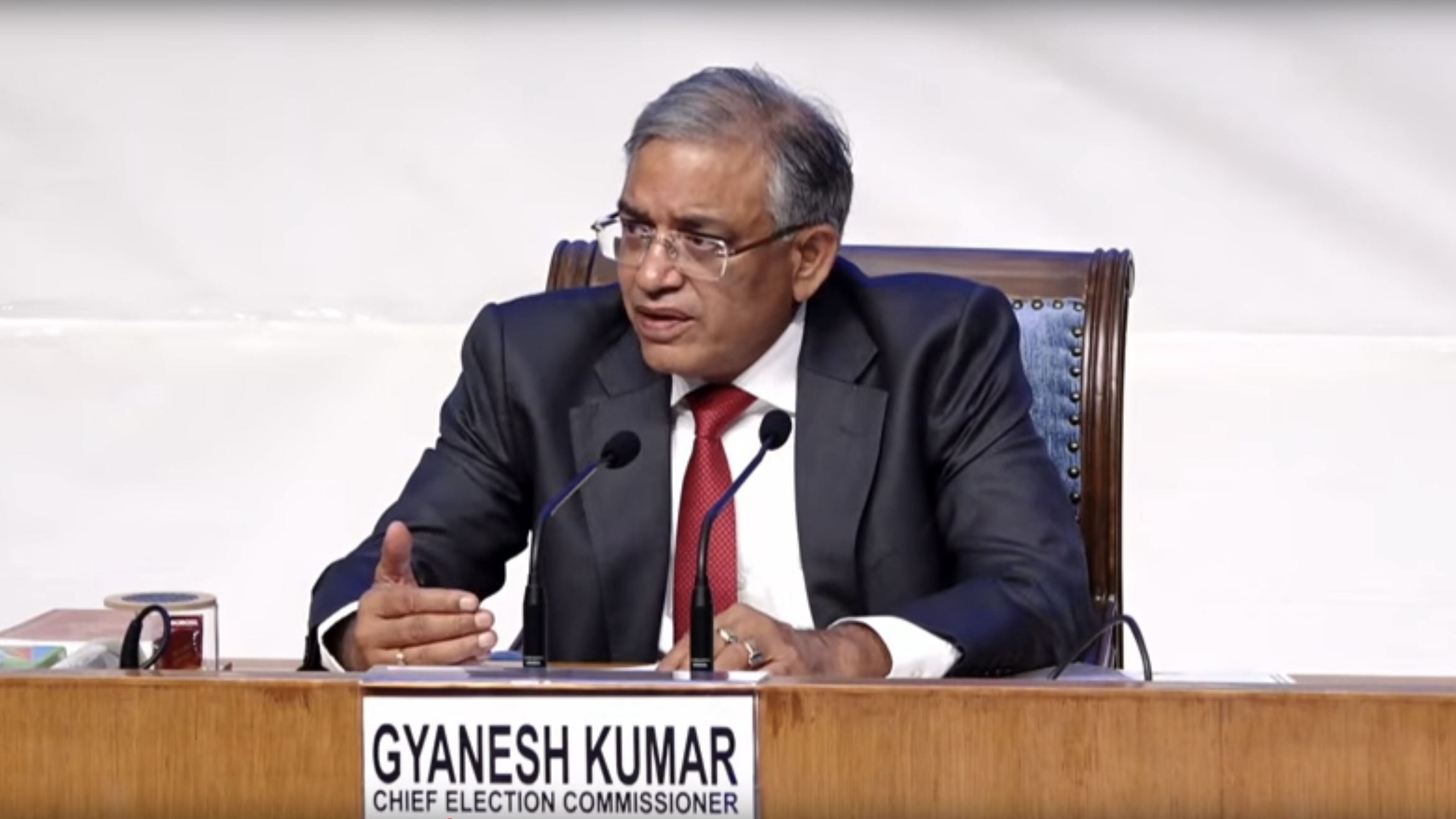
Chief Election Commissioner Gyanesh Kumar
Synopsis: The Chief Election Commissioner, Gyanesh Kumar, announced that Phase-3 of SIR will cover Telangana, but he did not specify any dates. He lauded BLOs’ dedication and urged them to handle an average of around 930 voters each during the revision process .
Chief Election Commissioner (CEC) Gyanesh Kumar has announced that the next phase of the Special Intensive Revision (SIR) of electoral rolls will include the state of Telangana.
Addressing Booth Level Officers (BLOs) at the Ravindra Bharati Auditorium in Hyderabad on Sunday, 21 December, Kumar expressed optimism that Telangana could set a national benchmark in purging the electoral rolls, following the “successful model established in Bihar” earlier this year.
The announcement comes amid ongoing nationwide efforts to enhance the accuracy and integrity of India’s voter registry, a process that has drawn both praise for its thoroughness and criticism for causing disruptions to marginalised voters.
The CEC emphasised the critical role of “purified electoral rolls” in sustaining a healthy democracy.
“A clean and accurate voter list is the foundation of fair elections,” Kumar stated, underscoring the necessity of periodic revisions to eliminate duplicates, ghost entries, and ineligible voters while including all eligible citizens.
He said Telangana has the potential to become a “role model” for the country, noting the state’s expansive area and its diverse population as factors that could demonstrate scalable best practices in electoral management.
Praising the BLOs for their dedication, he urged them to handle an average of around 930 voters each during the revision process, focusing on transparency and inclusivity.
Introduced by the Election Commission of India (ECI) as a comprehensive verification drive, SIR goes beyond routine annual summary revisions by involving door-to-door checks, document verification, and community engagement to update voter rolls.
The staggered process, which began with a pilot in Bihar in mid-2025, has since expanded to cover over 51 crore voters across multiple states and Union Territories (UTs).
Kumar’s decision to take up Telangana next for SIR aligned with the ECI’s phased rollout strategy.
The second phase, announced on 27 October, covered 12 states and UTs, including Tamil Nadu, Kerala, Goa, Puducherry, Lakshadweep, and Andaman & Nicobar.
Why Telangana?
According to sources, Telangana was chosen for SIR because of its relatively stable political environment post the 2023 Assembly elections and its advanced digital infrastructure, which could facilitate efficient SIR implementation.
Telangana’s Chief Electoral Officer, C Sudharshan Reddy, who welcomed Kumar during his three-day visit from 19 December, has already begun preparatory measures to address voter confusion about the process.
However, the initiative courted controversies too. Opposition voices, including those from the Congress and regional parties, labelled SIR as a potential tool for “vote theft”. They argued that it disproportionately affected minorities, the poor, and migrants who might lack updated documentation.
In Telangana, where the ruling Congress government under Chief Minister A Revanth Reddy has focused on welfare schemes, any perceived disruption in voter rolls could spark political tensions.
(Edited by Majnu Babu).


