

Published Jan 30, 2026 | 12:47 PM ⚊ Updated Jan 30, 2026 | 6:38 PM

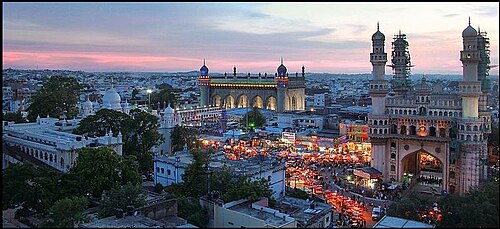
Elections to seven municipal corporations and 116 municipalities in Telangana will be held on 11 February.
Synopsis: Independent agencies have been roped in to conduct ward- and division-level surveys, assessing winnability, public reputation, service record, party loyalty, integrity, discipline, and grassroots support.
Political parties in Telangana are racing against time on Friday, 30 January, to finalise candidates with high winning prospects in the 11 February municipal elections.
The parties have little time at their disposal since Friday is the last day for filing nominations for the ballot paper-based elections to seven municipal corporations and 116 municipalities.
This high-stakes urban contest is being viewed as a referendum on the Congress-led government, its unfulfilled promises, and the state’s future political trajectory.
Buoyed by its 2023 Assembly victory and subsequent successes in Lok Sabha polls, by-elections, and gram panchayat results, the Congress claims it has adopted a meticulous, data-driven ticket finalisation.
Independent agencies have been roped in to conduct ward- and division-level surveys, assessing winnability, public reputation, service record, party loyalty, integrity, discipline, and grassroots support.
Senior leaders stressed that selections will be merit-based and warned against inducements or payments for tickets.
In-charge ministers, appointed for each Lok Sabha constituency, are playing a crucial role, conducting face-to-face consultations with aspirants and supervising local assessments.
In the key battleground of Karimnagar Municipal Corporation, ministers Tummala Nageswara Rao, D. Sridhar Babu, and Ponnam Prabhakar surveyed all 66 wards and met aspirants.
Addressing party workers at the Congress office in Indira Gardens, Karimnagar, on 28 January, Nageswara Rao assured the party loyalists that “Committed workers who stood by the Congress during testing times would be rewarded.”
The Congress emphasised social justice, likely allocating a significant portion of tickets to Backward Classes, including in general-category wards, to enhance its urban appeal.
Chief Minister A Revanth Reddy, who holds the Municipal Administration portfolio, is closely monitoring developments, despite being on a visit to the US.
He is in touch with Deputy Chief Minister Bhatti Vikramarka Mallu and key ministers, directing efforts toward maximum results.
On his return, Revanth Reddy is expected to launch an aggressive campaign from 3 February, addressing public meetings in districts including Miryalguda (3 February), Jagtial (4 February), and others.
In-charge ministers are out in the field, supervising preparations and countering opposition strengths, particularly in areas like Karimnagar.
The BRS, positioning these polls as a chance for redemption following improved gram panchayat performances, has largely completed candidate selection through a coordinated, leadership-driven mechanism.
Working president KT Rama Rao (KTR) is overseeing the process, with district coordinators and former MLAs identifying contenders under the direct watch of party supremo K Chandrashekar Rao.
Surveys gauge sentiment in priority corporations like Nizamabad, Karimnagar, Nalgonda, Kothagudem, Mancherial, Mahbubnagar, and Ramagundam.
In Hyderabad, KTR welcomed back former MLA Aroori Ramesh (who quit the BJP) on Thursday, 29 January, and called for party unity.
“Ahead of the municipal elections, put up a united front to secure a massive victory, by exposing the Congress Government’s ‘failures’ over the last two years. Citizens will teach Congress a fitting lesson and stand firmly with BRS in the upcoming elections,” he thundered.
KTR alleged the Congress had “abandoned all the promises made” and lacked time or intention to care for people, framing the polls as a public trial of the ruling party’s two-year rule.
BRS campaigns will aggressively highlight unfulfilled guarantees using symbolic “baaki cards” (debt cards) and tours by senior leaders like KTR and T Harish Rao to energise cadres.
The BJP is pursuing a centralised, survey-guided approach to expand its urban footprint, building on its 2020 performance and recent rural gains. The party is targeting winning at least five of the seven corporations and 60% of municipalities.
State president N Ramchander Rao has appointed in-charges for every urban local body, supported by a central team overseeing strategy and meetings with Telangana leaders.
Focus areas include strongholds like Karimnagar, Nizamabad, Nalgonda, Mahbubnagar, Ramagundam, Kothagudem, and Mancherial.
Union Minister of State for Home Affairs Bandi Sanjay Kumar told a preparatory meeting in Karimnagar in December that the BJP’s ascent to power in Telangana was inevitable.
He expressed confidence that the party would win all civic bodies in his Karimnagar Parliamentary constituency, including the Municipal Corporation.
He called for discipline and warned against fights for tickets. The party will campaign on central funding for state welfare schemes, infrastructure projects such as ₹479 crore under the Smart City Mission in Karimnagar), and urban accountability.
Adding another layer of complexity, Telangana Jagruthi, led by former BRS MLC K Kavitha, will contest under the All India Forward Bloc’s lion symbol following a coordination agreement. The Jagruthi may split BRS votes in select areas.
(Edited by Majnu Babu).


