

Published Mar 29, 2026 | 7:45 PM ⚊ Updated Mar 29, 2026 | 7:45 PM

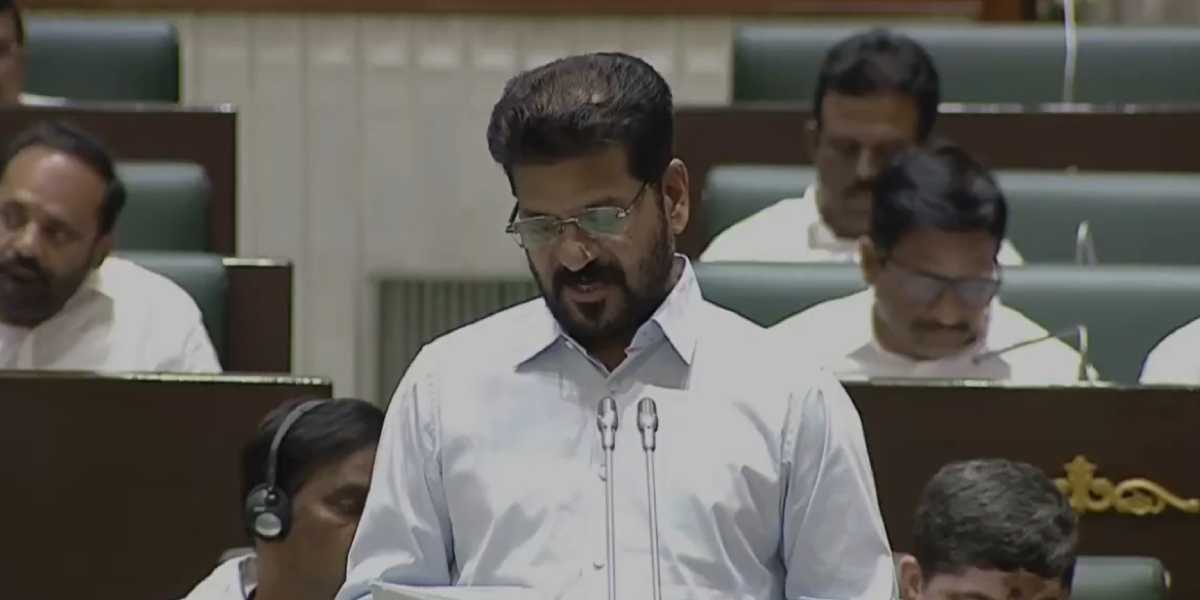
The Bill will apply to those working in government departments, State-supported institutions, and more.
Synopsis: The central provision of the Bill placed a legal obligation on employees to provide maintenance to their parents. This included ensuring access to food, shelter, medical care, and other basic requirements necessary for living with dignity.
The Telangana Legislative Assembly on Sunday, 29 March, passed the landmark Telangana Employees Accountability and Monitoring of Parental Support Bill, 2026.
While introducing the Bill, Chief Minister A Revanth Reddy said it was meant to address increasing instances of neglect of elderly parents and to create enforceable responsibility among children.
The Chief Minister referred to Shravana Kumara, a mythical character in The Ramayana, as an example of devotion towards parents and contrasted it with present social conditions where changing family structures and economic priorities were affecting caregiving within households.
He also cited the case of industrialist Vijaypat Singhania to highlight how elderly parents could face neglect even after transferring their assets to their children.
The Chief Minister said that while children and women have legal protections, such as the Juvenile Justice Act and the Protection of Children from Sexual Offences Act, a gap remained in ensuring protection for elderly parents.
He noted that the Maintenance and Welfare of Parents and Senior Citizens Act, 2007, has not been sufficient to address the issue in a comprehensive manner, particularly in terms of enforcement.
Reddy stated that the legislation intended to introduce accountability and act as a deterrent in cases where children failed to support their parents.
The Bill would apply to a wide category of employees, including those working in government departments, institutions that receive State support, and organisations linked to public funding.
Employees in local bodies and other notified entities would also fall under its purview. By covering a broad segment of the formal workforce, the Bill sought to ensure that it provisions would be applicable to a significant number of salaried individuals.
The legislation defined dependent parents as those who with insufficient income or resources to sustain themselves. This included parents unable to meet their basic needs without their children’s financial support.
The central provision of the Bill placed a legal obligation on employees to provide maintenance to their parents. This included ensuring access to food, shelter, medical care, and other basic requirements necessary for living with dignity.
The Bill moved beyond viewing parental care as a personal or moral responsibility and placed it within a legal framework. It stated that failure to provide such support could invite the intervention of authorities and result in enforceable orders.
The Chief Minister said that in many cases, elderly parents were left without care and they later got entangled in property disputes. He noted that such situations reflected a breakdown in responsibility and require corrective measures through law.
The Bill envisaged a formal process through which parents could seek maintenance. A parent, not receiving adequate support, could file an application before a designated authority. Upon receiving the complaint, the authority would initiate an inquiry.
Both the employee and the parent have been given an opportunity to present their cases. The authority would assess the financial condition of the parent, the income of the employee, and other relevant factors before arriving at a decision.
The legislation specified that the inquiry process should be completed within 60 days from the date of receipt of the complaint. This time-bound approach would spare the elderly from delays in accessing relief.
A key enforcement provision in the Bill was the power to order salary deductions, if the parent’s claim was found valid. If the authority determined that an employee had failed to support his/her parents, it could order the deduction of a part of the employee’s salary.
The amount has been capped at a maximum of 15 percent of the employee’s monthly salary or ₹10,000, whichever is lower. The deducted amount would be transferred monthly, directly to the parent’s bank account.
This mechanism would ensure regular financial support without requiring repeated legal intervention. It also placed responsibility on the employer or the department concerned to implement the deduction as per the order.
The Bill has provided an appeals mechanism in cases where either party has been left unsatisfied with the authority’s decision. A higher body would examine the appeal, which has to be filed within a specified period.
The legislation proposed the involvement of a state-level commission to handle such appeals and to act as an oversight mechanism. This meant that decisions could be reviewed and ensured a structured process for addressing disputes.
The Bill has made the appeals process time-bound, with provisions indicating that matters should be resolved within a defined period to avoid delays.
The Bill has provided for the establishment of a dedicated commission to oversee the implementation of its provisions. The commission would function as a supervisory and adjudicatory body, responsible for monitoring compliance and addressing grievances.
Besides reviewing appeals, the authority would also ensure that departments followed the prescribed procedures, and issue directions where necessary. The commission would include senior officials and individuals with relevant administrative or legal experience.
The creation of such a body indicated an institutional approach to enforcement, with the aim of ensuring consistency in implementation across the State.
The Chief Minister told the Assembly that the Bill’s objective was to ensure support for elderly parents, and that mechanisms would be in place to address neglect. He said that no parent should be forced to live without care or face distress in their sunset years.
The Bill reflected an approach where the State could intervene in cases of family neglect through legal and administrative measures. By linking compliance to salary deductions and institutional oversight, it attempted to create an enforceable system.
Further discussion were soon likely in the Assembly on the Bill’s provisions, scope, and implementation. It also raised questions about the balance between legal enforcement and personal responsibility within families.
The implementation would mark a shift in addressing parental care, moving from a largely welfare-based framework to one that incorporated accountability and structured enforcement.
(Edited by Majnu Babu).


