


Published Mar 24, 2026 | 6:43 PM ⚊ Updated Mar 24, 2026 | 6:43 PM

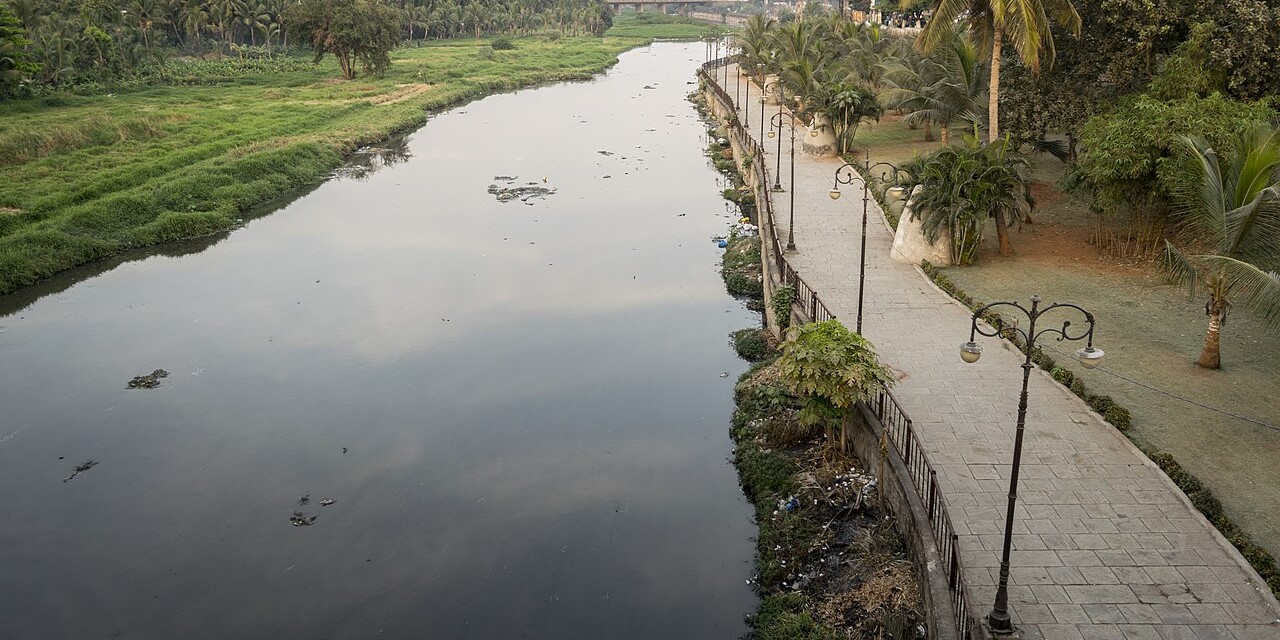
File image of Musi river. (Creative Commons)
Synopsis: Musi Jan Andolan noted that despite meeting Vikramarka and presenting the long-standing demands and concerns regarding the Musi Riverfront Development Project, the government proceeded with the unveiling of the ‘detailed project plans’ for River Musi Rejuvenation (Phase-1), on 13 March. It was done without any democratic and consultative processes, they alleged.
More than 500 people, including those affected by the Telangana government’s Musi Riverfront Project, on Tuesday, 24 March, called for a comprehensive review of the plan, besides demanding zero displacement and safeguarding of the Musi River basin ecology.
The letter to Chief Minister A Revanth Reddywas released by Musi Jan Andolan (MJA), an independent, non-party people’s platform and movement to safeguard River Musi and communities living on its banks.
It acknowledged the Chief Minister’s announcement in the state Assembly on 23 March regarding the formation of a Cabinet Sub-Committee on Musi Rejuvenation and his assurance that the government would take care of all families affected by the project.
However, the signatories stated that the Cabinet Sub-Committee must consider scientific and democratic alternatives for river rejuvenation and river basin ecology conservation.
They also emphasised that the government must focus on minimising mass displacement instead of undertaking avoidable displacement and acquisition for a mega-commercial venture, and then offering rehabilitation.
The petition also included a 11-point critique-cum-response to the presentation made by the Managing Director of Musi Riverfront Development Corporation Ltd. (MRDCL) and the Chief Minister’s public address on Musi River Rejuvenation Project on 13 March. It also referred to Revanth Reddy’s statements in the state Assembly on 23 March, reducing all riverine issues to ‘rehabilitation’.
The letter was also addressed to the Congress central leadership, including Mallikarjun Kharge, Rahul Gandhi, Jairam Ramesh and Meenakshi Natarajan, Bhatti Vikramarka Mallu (Deputy Chief Minister & Chair of Cabinet Sub-Committee) as well as to the Governing Board, MRDCL.
The signatories included Medha Patkar, Sagar Dhara, Shabnam Hashmi, Prof. Rama Melkote, Fr. Cedric Prakash, Dr. Veena Shatrugna, Donthi Narasimha Reddy, Prof. Navdeep Mathur, Dr. Jasveen Jairath, Dr. S Seethalakshmi, Rukmini Rao, N. Venugopal, Gautam Bandopadhyay, Pittala Srisailam, Dr. Lubna Sarwath, Kanneganti Ravi, Ruchit Asha Kamal, Dr. Indu Prakash, P. Shankar, Kirankumar Vissa, Amitraj Deshmukh, Vishalakshi, Anand Reddy, Uma Shankari, Kalyani Menon Sen, Jeevan Kumar, Sajaya, V Sandhya, Varghese Theckanath, Syed Bilal, John Micheal, Arunya, SQ Masood, Meera Sanghamitra, and Akhil Surya.
MJA demanded the government to critically revisit its fundamentals rather than continuing with the riverfront model by blaming the previous governments for initiating it.
It urged the government to release the Detailed Project Report (DPR) for all phases in Telugu, Urdu, and English. It also asked the Congress-led government to demonstrate openness to reconsider and revise the ‘riverfront’ approach as the primary means of river rejuvenation.
The signatories emphasised their strong support for socio-ecologically sound river-basin planning, without resorting to commercial riverfront development, concretisation of the river, and large-scale displacement. They expressed solidarity with the ongoing struggle in different bastis and colonies, against the project.
They noted that despite meeting Vikramarka and presenting the long-standing demands and concerns regarding the Musi Riverfront Development Project, the government proceeded with the unveiling of the ‘detailed project plans’ for River Musi Rejuvenation (Phase-1), on 13 March. It was done without any democratic and consultative processes, they alleged.
The MJA skipped the plan unveiling event despite a “last minute” oral invite from Vikramarka.
The signatories called upon the Chief Minister and the Cabinet Sub-Committee to ensure a comprehensive review of the project, including a detailed social, ecological, and financial cost-benefit analysis.
The letter also stated that it was not just MJA and the affected communities raising these concerns, but also voices within Congress like Lubna Sarwath (ecological economist) and Meenakshi Natarajan (AICC General Secretary in charge of Telangana).
The signatories expressed hope that the Chief Minister would be open to feedback, in the interest of the river and people, since the project would have serious implications for the ecology, economy and lakhs of people.
(Edited by Majnu Babu).


