

Published Mar 14, 2026 | 9:26 PM ⚊ Updated Mar 14, 2026 | 9:26 PM

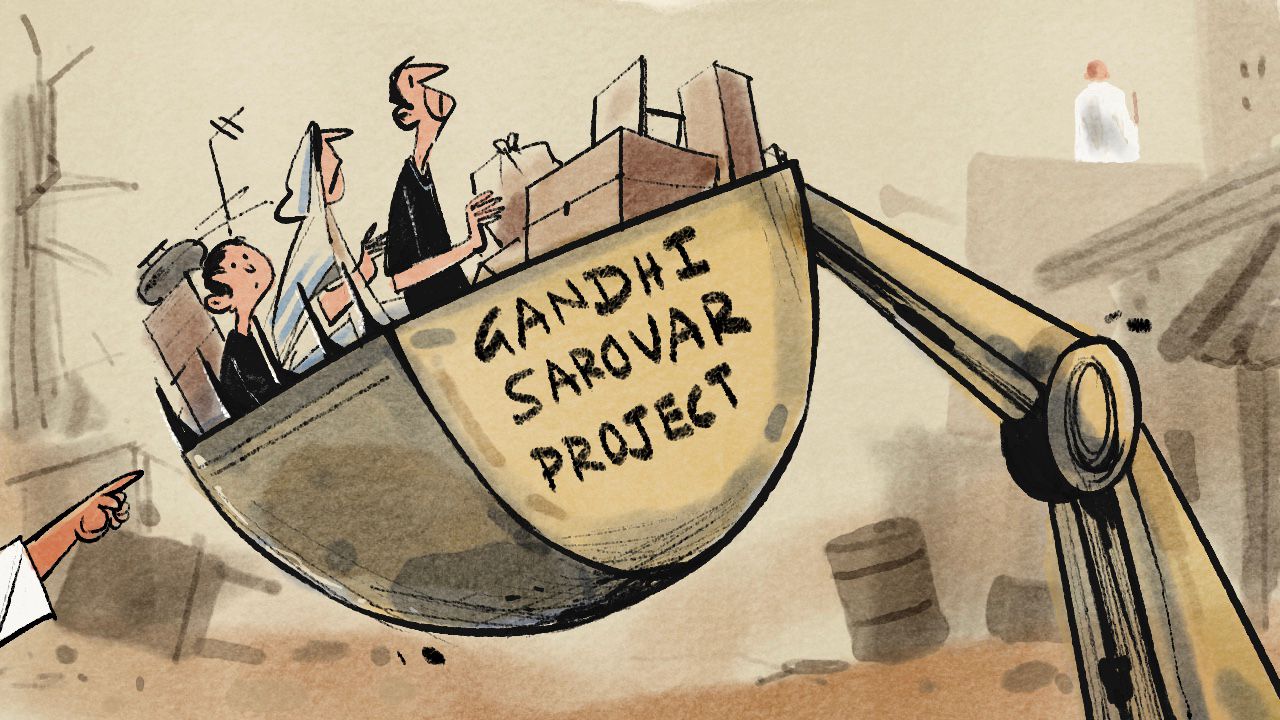
While flagging multiple issues, the MJA said the planned Gandhi Sarovar may reflect extravagance rather than the simplicity associated with Gandhiji.
Synopsis: One of the central criticisms the Musi Jan Andolan raised relates to the sequencing of the government’s plans. It contended that the project focuses heavily on building riverfront amenities such as parks, promenades, walkways and tourism infrastructure without addressing the primary problem—severe river pollution.
The Musi Jan Andolan (MJA), a citizens’ platform working towards safeguarding the Musi River and the communities living along its banks, on Saturday, 14 March, criticised the Musi Riverfront vision presented by the state government and the Musi Riverfront Development Corporation Limited (MRDCL).
In its preliminary response to the Telangana government’s project, the MJA argued that the proposed plan accords priority to large-scale infrastructure and commercial riverfront development over genuine ecological restoration of the river.
The response came a day after Telangana Chief Minister A Revanth Reddy and officials of MRDCL presented the government’s vision for the Musi River rejuvenation project at a special stakeholder meeting in Hyderabad.
Although invited to attend the event where the project details were unveiled, MJA chose to skip the meeting, citing a “severe democratic deficit” in the consultation process.
The group said it nevertheless followed the proceedings digitally and later issued its response after analysing the presentation made by the Managing Director of MRDCL and the Chief Minister’s address.
Reiterating that it is independent of all political parties, the organisation stressed that it fully supports the goal of restoring the Musi River. However, it argued that true rejuvenation must follow ecologically sound river basin planning rather than what it described as “commercial riverfront development projects driven by marquee infrastructure”.
According to the organisation, the current approach risks transforming the river into a “cosmetic urban project” instead of addressing the root causes of its degradation.
One of the central criticisms raised relates to the sequencing of the government’s plans. MJA contended that the project focuses heavily on building riverfront amenities such as parks, promenades, walkways and tourism infrastructure without addressing the primary problem—severe river pollution.
The organisation pointed out that examples frequently cited by the government, including riverfront developments in global cities such as London and Singapore, were built only after decades of sustained efforts to eliminate pollution and restore water quality.
In contrast, the MJA argued that constructing public infrastructure along a polluted river would only create an illusion of restoration while leaving the river’s ecological problems unresolved.
“Constructing parks, walkways, and tourism infrastructure will not clean the river,” the statement said, noting that global examples demonstrate that industrial and municipal pollution must first be completely stopped before riverfront beautification projects are undertaken.
Without such measures, the MJA warned, the Musi would remain polluted regardless of the infrastructure built along its banks.
Another major concern raised by the organisation related to proposals to pump water from other rivers into the Musi as part of the rejuvenation strategy. The group described this approach as unsustainable, energy-intensive and financially costly.
The group said a living river should depend on natural flows generated by rainfall, runoff and properly treated wastewater rather than artificial pumping. It cautioned that such interventions could effectively turn the river into an engineered canal rather than restoring it as a natural ecosystem.
The organisation also questioned the proposal to construct extensive concrete embankments along the river. The MJA said such structures could actually increase flood risks rather than reduce them. Narrowing the river channel through concrete structures can increase water velocity during heavy rains and eliminate natural floodplains that help absorb excess water.
The MJA pointed to the historical lessons from the devastating floods that struck Hyderabad in 1908, after which reservoirs were built to regulate water flows and mitigate flooding. Modern best practices, they said, favour preserving wetlands, floodplains and retention areas rather than heavily concretising riverbanks. The organisation also warned that concrete-heavy infrastructure can worsen urban heat, reduce groundwater recharge and destroy vegetation along the river corridor.
Apart from ecological concerns, the MJA also questioned the alleged discrepancies in official claims regarding the number of families likely to be displaced by the project.
In his address, the Chief Minister had stated that there were “hardly 10,000 families” living along the entire stretch of the river. However, the MJA pointed to documents submitted by MRDCL to the State Environment Impact Assessment Authority (SEIAA), which reportedly indicated that 12,204 families would be displaced in Phase I of the project alone. This discrepancy, it said, raises critical questions about the scale of displacement and the adequacy of rehabilitation measures.
The group argued that the government has yet to convincingly explain whether such large-scale displacement is unavoidable or whether alternative ecological restoration strategies could minimise social disruption.
The statement also referred to demolitions carried out in October 2024 in several neighbourhoods along the Musi River, including Shankar Nagar in Malakpet. The MJA said more than 300 houses were demolished during that period, and some residents are still awaiting proper rehabilitation. The group alleged that these incidents were not acknowledged during the government’s recent presentation and accused authorities of attempting to erase the memory of those evictions from public discourse.
Financial transparency has also emerged as a key concern. According to the presentation, the tentative development cost for Phase I of the project—excluding land acquisition and Transferable Development Rights (TDR)—was estimated at between ₹6,500 crore and ₹7,000 crore. However, the group noted that MRDCL had earlier submitted an estimated cost of Rs 5,641 crore for the same phase in documents filed with the SEIAA while seeking environmental clearance.
The difference of ₹859 crore to ₹1,359 crore between the two estimates has raised questions about possible cost escalation and financial planning for the project.
The group argued that such discrepancies must be clarified before the project proceeds further.
While the government has repeatedly acknowledged the severe pollution in the river, the organisation said the project presentation did not provide a clear strategy for addressing industrial effluents.
The presentation emphasised the construction of sewage treatment plants (STPs) to treat municipal wastewater entering the river. However, the group pointed out that STPs are designed to treat domestic sewage and cannot effectively handle toxic industrial waste. To tackle industrial pollution, the group said, effluent treatment plants (ETPs) are required at the source. Without addressing industrial discharges from factories, MJAs argued, the river cannot truly be restored.
The MJA also contested the government’s explanation for the floods that affected riverbank areas in 2025. The presentation attributed the flooding primarily to heavy rainfall. However, residents and activists claim that the flooding was exacerbated by the sudden release of water from upstream reservoirs without adequate early warning.
They alleged that authorities failed to follow key safety protocols under the Dam Safety Act, 2021, and did not provide timely alerts to communities living downstream. According to the group, blaming rainfall alone ignores the government’s own accountability in managing reservoir releases and flood preparedness.
Another issue highlighted by the MJA concerns water allocation priorities.
During his speech, the Chief Minister reportedly acknowledged that Hyderabad faces a serious groundwater crisis. However, he also mentioned the importance of ensuring reliable water supplies for global data centres that may be established in the region.
Activists argued that this statement raises concerns that the Musi project may partly be aimed at supplying water to such industrial facilities rather than prioritising local ecological restoration and community needs.
The proposal to construct barrages in the river to facilitate boating has also drawn criticism from the group. The group said this contradicts the stated goal of restoring the river to its natural heritage.
It argued that barrages would alter the river’s natural flow and convert it into a series of stagnant pools, potentially worsening ecological conditions. A river, the group emphasised, must be treated as a living ecosystem rather than a controlled water channel designed for tourism activities.
The group also criticised attempts to frame the project in terms of symbolic themes such as secularism or Gandhian ideals. It said invoking such concepts to justify large infrastructure projects and displacement risks trivialises deeper social and ecological concerns.
In particular, the group questioned the proposal for a large “Gandhi Sarovar” and other landmark structures, arguing that such developments may reflect extravagance rather than the simplicity associated with Mahatma Gandhi’s philosophy.
The MJA called for a comprehensive review of the entire project before further implementation. The group urged the government to conduct a thorough assessment of the project’s ecological, financial and social implications. It also appealed to all political parties to engage with the issue in a substantive manner rather than using it for political opportunism.
At the same time, the organisation reiterated its willingness to participate in constructive dialogue with the government and contribute scientific and community-based insights to shape a more sustainable approach to restoring the Musi River. It said it would remain committed to continuing its analysis of official documents and presentations and would release more detailed responses in the coming weeks.
(Edited by Majnu Babu).


