

Published Mar 03, 2026 | 3:57 PM ⚊ Updated Mar 03, 2026 | 3:57 PM

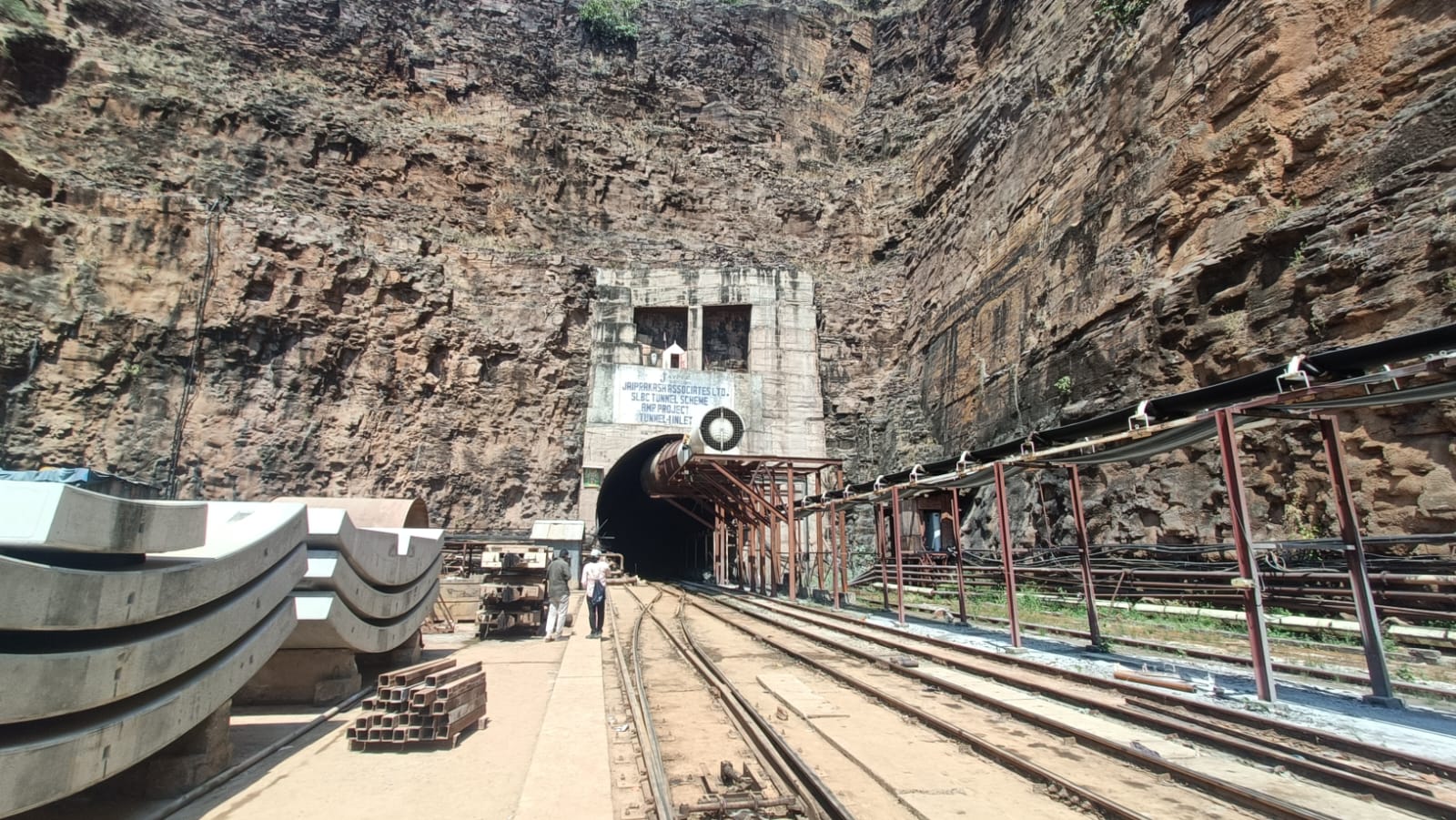
SLBC tunnel
Synopsis: Telangana has resumed work on the long‑delayed Srisailam Left Bank Canal tunnel project after its collapse in February 2025 killed eight workers. Irrigation Minister N Uttam Kumar Reddy announced progress from the Devarkonda end, with excavation cycles underway. Abandoning TBM technology, engineers are using advanced tunnelling methods to enhance safety, aiming for breakthrough by 2027 and commissioning in 2028.
Grappling with the long-delayed Srisailam Left Bank Canal (SLBC) tunnel project, Telangana government seems to have made some headway in the construction of tunnel after its collapse and the tragic death of eight workers inside on 22 February, 2025.
Irrigation and Civil Supplies Minister N Uttam Kumar Reddy announced progress from the Devarkonda (outlet) end, which he described as the first substantial breakthrough after years of stagnation.
For Uttam Kumar Reddy, the tunnel project is very crucial as it is designed to provide irrigation faculty to three lakh acres in his native Nalgonda district, besides augmenting drinking water supply to problem areas. Given its socio-economic implications, the project is central to Telangana’s irrigation strategy and rural development agenda.
He said at a review meeting recently: “About 20 metres of excavation has been completed in the past week, with seven excavation cycles executed from the Devarkonda side, where work had remained stalled for nearly seven years.”
The resumption assumes adds importance after the 44-km tunnel project lay paralysed after its collapse near the inlet side a year year ago, which forced a comprehensive review of engineering methods and safety systems.
The minister assessed manpower mobilisation, deployment of machinery and timelines for both Tunnel-I and Tunnel-II. The renewed activity signals a calibrated attempt by the government to restore momentum to one of Telangana’s most critical but technically challenging irrigation projects.
A key feature of the revival is the strategic departure from Tunnel Boring Machine (TBM) technology. The TBM method was found unsuitable due to unpredictable geological formations encountered along the alignment.
Instead, the execution agency has adopted advanced observational tunnelling techniques, involving precise drilling protocols, installation of additional supports and continuous geological monitoring. This approach, officials indicated, is intended to enhance worker safety and structural stability while navigating complex rock formations.
Specialised equipment has been deployed to address anticipated ventilation challenges deep inside the tunnel. Dewatering systems and additional electrical and ventilation infrastructure are being installed to accelerate excavation while maintaining safety standards.
Preparatory works at the inlet side, including a 20-metre open cut and reinforcement measures, are also underway, with full-scale operations expected to intensify within the next fortnight.
The minister underscored that safety would remain paramount, directing officials to ensure round-the-clock operations under strict protocols. The government has also formed a dedicated division to monitor progress and compliance closely — a move seen as an institutional safeguard against further delays.
The government has set an ambitious target of achieving tunnel breakthrough by mid-2027 and commissioning the project by June 2028. It remains to be seen if the deadline would be met.
(Edited by Amit Vasudev)


