


Published Jan 26, 2026 | 2:58 PM ⚊ Updated Jan 26, 2026 | 2:58 PM

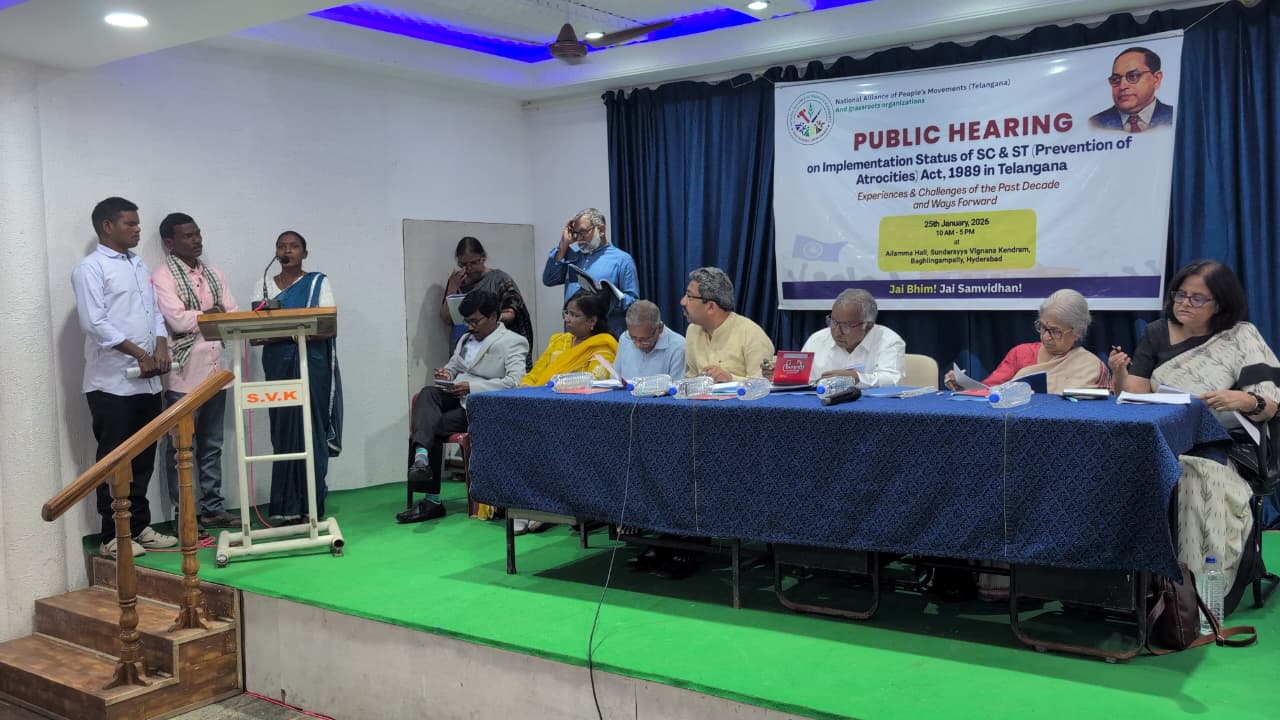
The jury plans to submit a detailed report with specific recommendations to the government soon. (Supplied)
Synopsis: On 25 January, NAPM Telangana held a powerful public hearing in Hyderabad, where a 7-member eminent jury—including retired judges, professors, and advocates—heard harrowing testimonies from Bahujan victims across 22 districts. They exposed chronic failures in implementing the SC/ST (Prevention of Atrocities) Act, 1989: delayed FIRs, police bias, low convictions, and denied compensation. The jury demanded urgent state action to uphold constitutional justice.
A day-long public hearing organised by the National Alliance of People’s Movements (NAPM Telangana) on 25 January, in solidarity with grassroots organisations, brought to light serious concerns over the implementation of the Scheduled Castes and Scheduled Tribes (Prevention of Atrocities) Act, 1989, in Telangana.
A seven-member jury comprising eminent legal and academic experts heard firsthand testimonies from Dalit and Adivasi victims representing more than 20 districts across the state. The hearing, held in Hyderabad, reviewed the Act’s enforcement over the past decade and stressed on the persistent failures in protecting the marginalised communities from caste-based violence and discrimination.
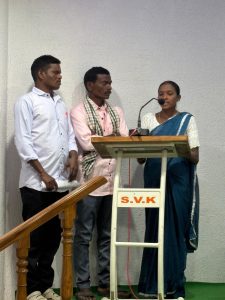
The organising committee had collected and analysed around 90 cases from various districts. Of these, victims presented 30 cases from 22 districts, including Bhadradri Kothagudem, Yadadri Bhuvanagiri, Mancherial, Warangal, Nizamabad, Sangareddy, Vikarabad, Narayanpet, Mahbubnagar, Nagarkurnool, Jogulamba Gadwal, Nirmal, Adilabad, Asifabad, Medak, Siddipet, Ranga Reddy, Hyderabad, Karimnagar, Kamareddy, Medchal-Malkajgiri, and Nalgonda.
The cases covered a wide spectrum of atrocities, such as ‘honour’ killings, gendered caste crimes, rape, police torture (including custodial deaths), caste-based verbal abuse, unlawful land encroachments on SC/ST properties, caste-based murders, social boycotts, untouchability practices, denial of temple entry, workplace sexual harassment, and violations of the Forest Rights Act.
Victims described systemic issues, including deliberate delays or refusal by police to register FIRs, pressure on victims to reach ‘compromises,’ bias toward the accused, failure to provide timely compensation as mandated by the Act, and extremely low conviction rates. Many cases remain unreported or inadequately addressed despite legal provisions.
During the hearing, a Dalit victim from Medak, who had faced police violence, said: “We know the Constitution and we have rights; we must invoke Dr Ambedkar’s Constitution without being deterred.”
P Shankar, National Secretary of the Dalit Bahujan Front (DBF), who conducted fact-finding on several cases, observed that “victims of atrocities become leaders against atrocities.”
Jury members offered sharp critiques of institutional failures. Senior Advocate V Raghunath said that “victims should not have to become activists to get institutions to follow the rule of law.”
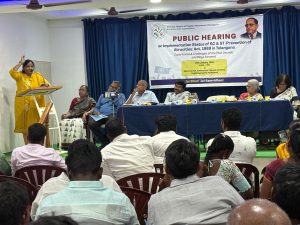
Retired Justice Nimma Narayana noted that higher courts have not been proactive in enforcing the Act’s legislative intent.
Meanwhile, Advocate Darshanam Narasimha highlighted under-implemented provisions, such as Section 4, which penalises neglect of duties by police officers, and stressed victims’ right to appoint their own advocates for prosecution.
Professor Sujatha Surepally underscored the intersection of gender and caste. She warned, “We must not forget that women face the brunt of every caste atrocity, directly or indirectly. Anti-caste movements must address the gender divide.” She called for anti-caste movements to address gender divides.
Professor Rama Melkote described humiliation as central to caste enforcement, while Professor Kalpana Kannabiran stressed the need for constitutional morality over caste-based ideas, lamenting the existence of Manusmriti-like notions in a constitutional democracy.
Meanwhile, professor K Lakshmi Narayana asserted that caste is a societal problem rooted in religion, requiring its eradication for true annihilation of caste. “Caste is not a Dalit or Adivasi problem but the problem of society as a whole,” he added.
The jury concluded that Telangana must act urgently to enforce the Act effectively.
The recommendations included activating high-power review committees under the CM, establishing district-level Vigilance and Monitoring Committees in all districts, ensuring timely compensation to victims, and periodic reviews as required by law.
The jury plans to submit a detailed report with specific recommendations to the government soon.
This public hearing forms part of NAPM Telangana’s year-long Constitutional Justice Campaign, launched on Constitution Day (26 November, 2025) and running until Republic Day 2026, to support marginalised communities and uphold constitutional rights.


