


Published Feb 01, 2026 | 1:48 PM ⚊ Updated Feb 01, 2026 | 1:48 PM

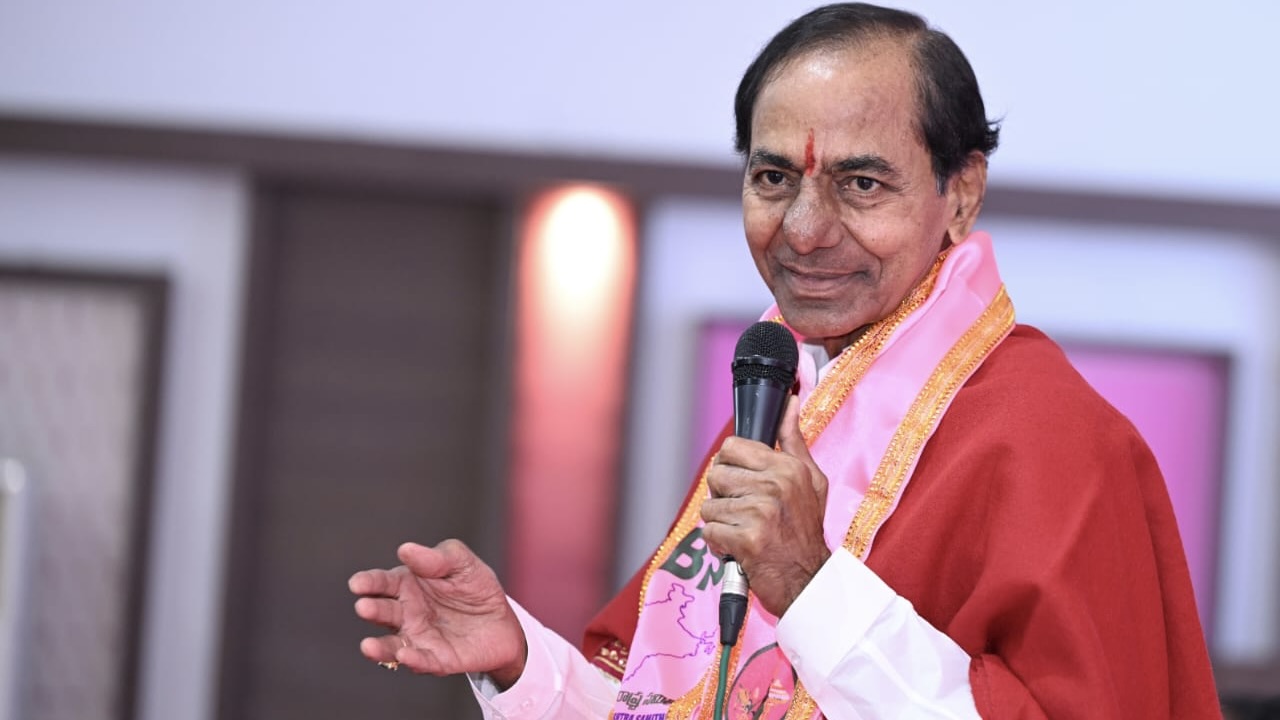
BRS chief K Chandrashekar Rao
Synopsis: Former Telangana CM K Chandrashekhar Rao challenged a police notice in the phone-tapping case, calling it illegal under CrPC Section 160 due to lack of jurisdiction and improper service. He cited Supreme Court and High Court rulings, objected to notice pasting on his wall, and alleged double standards. Despite objections, he offered to appear for examination on February 1, 2026.
Former Telangana Chief Minister and Bharat Rashtra Samithi (BRS) president K Chandrashekhar Rao (KCR) has raised serious legal objections to the notice issued to him by the police in connection with the phone-tapping case, questioning both the jurisdiction of the investigating officer and the mode of service of notice under Section 160 of the Code of Criminal Procedure (CrPC).
In a detailed six-page reply addressed to the Assistant Commissioner of Police, Jubilee Hills Division, dated 31 January, he argued that the notice issued to him for appearance in Crime No. 243 of 2024 was illegal, without jurisdiction and contrary to settled law, as he does not reside within the territorial limits of the Jubilee Hills police station or any adjoining police station.
The development comes in the wake of intensifying investigation into the alleged phone-tapping during the previous BRS government, a case that has already triggered sharp political exchanges between the ruling Congress and the Opposition BRS.
The former CM, in his reply to the police, stated that his contemporary place of residence is Erravalli village in Siddipet district, where he has been residing for several years, and not his Nandi Nagar house in Hyderabad, which is shown only as a correspondence address in official records and election affidavits.
Quoting judgments of the Supreme Court and several High Courts, including the Andhra Pradesh High Court, BRS supremo contended that under Section 160 of the CrPC, a police officer can issue notice for examination only to persons residing within the limits of his police station or adjoining stations.
Citing the 2025 judgment of the Andhra Pradesh High Court in VD Moorthy vs State of Andhra Pradesh, the former CM said the legal position is well settled that a police officer has no power to issue a notice under Section 160 to a person residing outside his jurisdiction, though he may examine such a person by approaching him at his place of residence.
He further pointed out that the law grants special protection to persons above 65 years of age, mandating that their statements shall be recorded only at the place of residence.
Chandrasekhar Rao also objected strongly to the alleged that the way notice was served by pasting it on the compound wall of his Nandi Nagar residence on the night of January 30 and called it illegal and violative of Article 14 and Article 21 of the Constitution.
He argued that as per Section 62 of the CrPC, summons or notices must be served personally, and that pasting on a compound wall does not constitute valid service.
Referring to the Supreme Court’s ruling in Satender Kumar Antil vs CBI, Rao said that the top court has categorically held that notices under Sections 41-A and 160 of CrPC must be served only through prescribed modes, and that service through WhatsApp or other informal methods is impermissible.
“In view of these violations, the alleged notice dated January 30 is no notice in the eye of law, and I am under no legal obligation to respond to or act upon it,” he said, adding that such actions also amount to disregard of binding Supreme Court directions under Article 141 of the Constitution.
He further alleged selective application of procedure, pointing out that in the same phone-tapping case, a notice under Section 160 issued to another legislator was served in Hyderabad, despite the legislator’s declared residence being in Siddipet town.
“This reflects double standards and a shifting of positions to suit convenience,” he alleged.
Despite asserting that the notice was illegal and that he could legally ignore it, Rao said that in the interest of assisting the investigation, he would make himself available for examination at a time and place permitted by law.
“Notwithstanding the above legal position, I, being a former Chief Minister and the present Leader of Opposition, and as a responsible citizen, would be available for my examination at 3 pm on February 1, 2026, at my Nandi Nagar residence, as you are keen to record my statement there,” he stated.
(Edited by Amit Vasudev)


