

Published Jan 10, 2026 | 12:09 AM ⚊ Updated Jan 10, 2026 | 12:09 AM

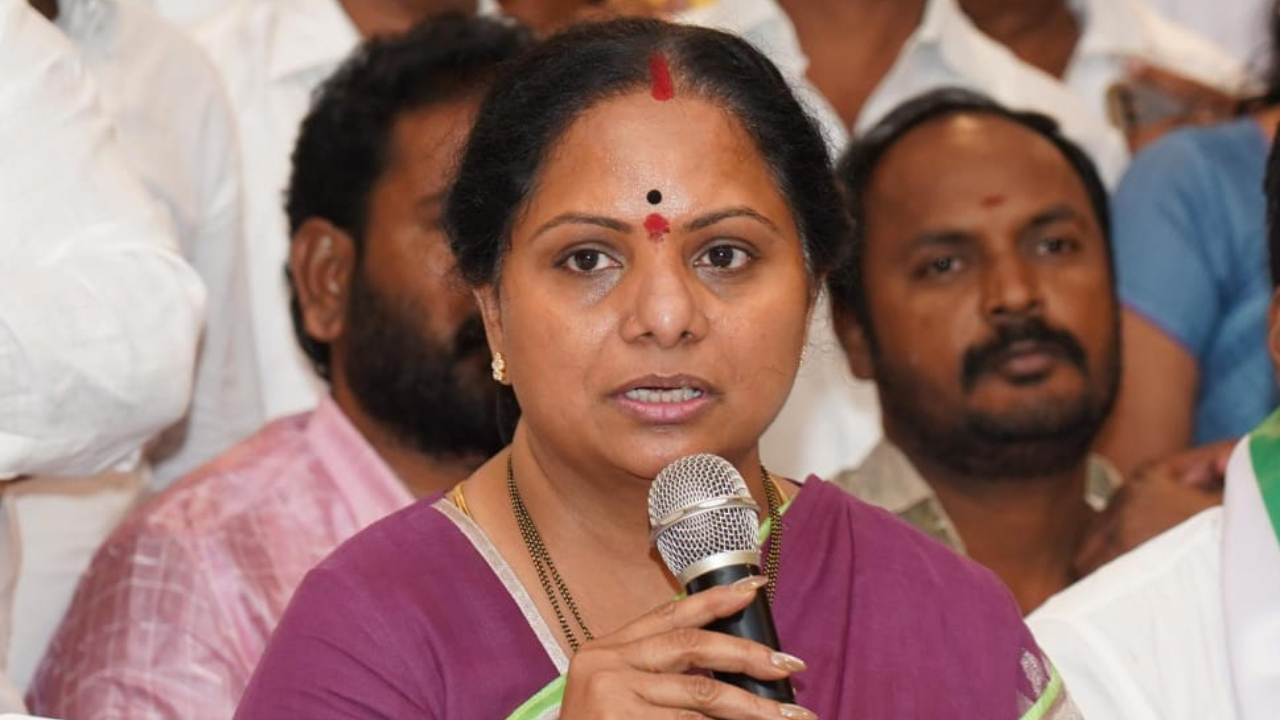
K Kavitha. Credit: x.com/RaoKavitha
Synopsis: Kavitha’s entry may fragment the BRS vote base, given her family legacy and the party’s recent defeats. Her stress on self-respect and inclusivity may attract former BRS supporters, potentially creating a regional force. Though it is too early to say her impact on the ruling Congress, the opposition BJP and BRS, she will cause some kind of disruption in all three parties.
Former BRS MLC and president of the Telangana Jagruthi, K Kavitha, is transforming her two-decade-old organisation into a full-fledged political party.
Her move, announced amid tears and sharp barbs directed at BRS during her farewell speech from the Telangana Legislative Council on 5 January, positioned Kavitha as a possible disruptor in the state’s political landscape ahead of the November 2028 Assembly elections.
By leveraging expert committees, grassroots outreach, and a narrative of anti-corruption and self-respect, Kavitha is crafting a policy-centric platform while navigating familial and electoral challenges.
Kavitha’s departure from the BRS, the party founded by her father and former Chief Minister K Chandrashekar Rao, marked a dramatic family and political rift.
In her emotional address to the Legislative Council, Kavitha said she had quit the BRS as it was bereft of ethical values. She accused party leaders of humiliating her for questioning unfair decisions, failing to support her during her 2023 arrest in the Delhi liquor policy case, and engaging in widespread corruption during the BRS regime.
Swearing on her children and God, Kavitha vowed to return to the legislature as a “stronger political force,” announcing that Telangana Jagruthi would contest the upcoming elections independently.
“The BRS has failed to fulfil Telangana people’s aspirations, and the Congress is doing the same thing,” she said, emphasising the need for an unbiased, secular party focused on public welfare.
According to sources, central to Kavitha’s party-building strategy is a “policy-first” approach, distancing her from the personality-driven politics of the BRS.
On 6 January, the Telangana Jagruthi State Extended Executive Committee resolved to form 32 expert committees, representing sectors such as education, health, employment, agriculture, social justice, labour welfare, women and youth empowerment, minority welfare, Gulf migrant labour, irrigation, budget analysis, students, revenue reforms, etc.
Each committee, comprising three to four members with mandatory educated women leaders, ensures inclusivity and gender balance.
Key among these is a committee for “A Decade of Telangana State – A Comprehensive Study,” assessing progress since 2014, and a legal experts’ panel to draft a “strong, democratic constitution” by reviewing existing party frameworks.
Kavitha contrasted this with the BRS’s “joke” of a constitution, criticising its arbitrary disciplinary actions.
During a Zoom conference on 7 January, she instructed members to conduct field-level studies, analyse failures of past BRS and the present Congress governments in areas like water, funds, and recruitment to government jobs and submit reports by 17 January to a Steering Committee led by Working President L Roop Singh.
Kavitha appears to be giving top priority to a development blueprint aiming to appeal to voters disillusioned with populist governance, positioning her party as people-centric and focused on marginalised communities, youth empowerment, and an anti-corruption campaign.
With over two years until the 2028 elections, Kavitha’s phased rollout provides ample time for her to consolidate. Immediate steps include finalising the roadmap, putting in place the party’s constitution, and crafting its structure.
Kavitha’s entry may fragment the BRS vote base, given her family legacy and the party’s recent defeats. Her stress on self-respect and inclusivity may attract former BRS supporters, potentially creating a regional force. Though it is too early to say her impact on the ruling Congress, the opposition BJP and BRS, she will cause some kind of disruption in all three parties.
Her secular stance, focus on Gulf migrants and minorities, widens the appeal in Telangana’s diverse and fragmented demographic landscape.
Initially, the going might be tough for Kavitha as she would have to build a statewide cadre from scratch, secure funding, overcome familial tensions with KCR and brother KT Rama Rao, and face competition from established parties. It remains to be seen how well she will navigate the choppy waters.
(Edited by Majnu Babu).


