


Published Apr 01, 2026 | 3:32 PM ⚊ Updated Apr 01, 2026 | 3:32 PM

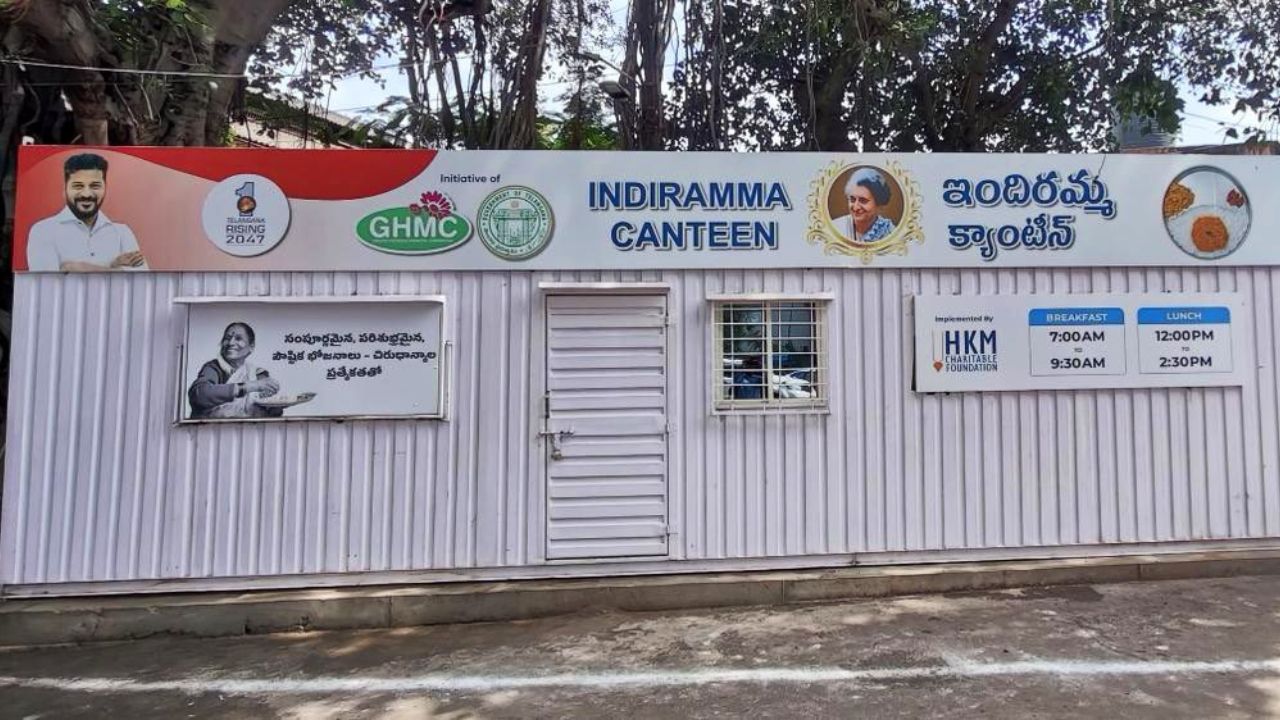
Indiramma Canteen.
Synopsis: A study showed that the Indiramma Canteens of the Telangana government have emerged as a vital welfare programme that touches the lives of thousands of urban poor every single day. However, it said that there are several practical areas where thoughtful improvements can make a significant difference.
A study by Hyderabad-based People’s Pulse showed that the Indiramma Canteens of the Telangana government have emerged as a vital welfare programme that touches the lives of thousands of urban poor every single day.
It said the scheme’s reach, affordability, and economic support to marginalised families are commendable achievements.
However, it said that there are several practical areas where thoughtful improvements can make a significant difference.
Launched in 2014 as Annapurna Canteens, the Telangana Government’s Indiramma Canteens were designed to address the daily struggle of the urban poor in securing at least one affordable, hygienic meal.
Currently, there are 150 canteens spread across Hyderabad and its peripheries, serving meals at a nominal price of just ₹5.
The survey was conducted under the guidance of R Dileep Reddy, Director of People’s Pulse Research Organisation.
These team members visited the canteens, engaged in detailed conversations with staff, beneficiaries, and other stakeholders, and gathered information on the functioning of the system.
The study was carried out from 23 February 2026 to 30 March 2026 and collected 4,000 samples from across 150 Indiramma Canteens in Hyderabad. The researchers also visited 75 canteens and collected between 45 and 55 responses from each location.
The methodology included direct observation of physical conditions at each canteen, structured interviews with people consuming food on the spot, interactions with those who were taking parcels, and open discussions with the staff.
The study found that the Indiramma Canteens are successfully reaching their intended beneficiaries — largely daily wage workers, auto drivers, small traders, and other vulnerable sections from Backward Classes, Scheduled Castes, and Scheduled Tribes.
It said around 36 percent of users visit daily, and the scheme provides meaningful economic relief, with 62 percent of respondents saving between ₹500 and ₹750 per month.
The service is reasonably fast, with 70 percent receiving food within 5–10 minutes.
However, the study also highlights several important areas that need improvement, including consistency in food taste and freshness, nutritional value, full functionality of infrastructure, hygiene and sanitation standards, menu adherence, and regular monitoring mechanisms.
“While the scheme is undoubtedly serving a critical need and functioning as a safety net for thousands of people every day, there exists considerable scope to elevate its quality and impact so that it fully realises its original vision of providing dignified and wholesome meals,” the report said.
Among the 4,000 respondents, 73.1 percent are men and 26.9 percent are women, particularly those engaged in informal and labour-intensive occupations. Age-wise, the majority of users fall within the economically active population, with 27.7 percent in the 26–35 age group and 33.3 percent in the 36–45 category, followed by 22.1 percent in the 46–60 bracket.
Younger users aged 18–25 account for 9.5 percent, while only 7.4 percent are above 60 years.
Backward Classes constitute 42.3 percent of users, followed by Scheduled Castes at 22.6 percent and Scheduled Tribes at 13.6 percent. Other Castes account for 12.3 percent, Muslims 6.9 percent, and other minorities 2.3 percent.
Occupationally, the canteens are closely tied to the informal economy, with 32.4 percent of respondents being daily wage workers, 19.8 percent auto drivers, and 15.1 percent small traders.
Students account for 9.4 percent, the unemployed 5.8 percent, and others 17.5 percent.
About 36 percent of respondents visit the canteens daily, while 22 percent come two to three times a week and 16 percent once a week. Occasional usage is reported by 12 percent, monthly visits by 10 percent, and four percent are first-time users.
According to the study, this pattern indicates that the canteens are not merely supplementary but serve as a regular source of food for a significant section of the population.
When respondents were asked why they chose Indiramma canteens, a substantial 74 percent cited affordability as the primary reason, while 22 percent pointed to the lack of alternative options.
Only four percent indicated that food quality influences their choice. This, according to the study, suggests that the scheme is driven largely by economic necessity rather than satisfaction.
Meanwhile, about 62 percent of users reported saving between ₹500 and ₹750 per month, while 28 percent save between ₹750 and ₹1000, and 10 percent between ₹1000 and ₹1500.
For low-income households, these savings contribute meaningfully to financial stability. Despite this, awareness of the subsidy structure remains low, with only 18 percent of respondents aware of the actual cost of meals, while 82 percent are not.
The question of food quality emerges as a central concern. For breakfast, only three percent of respondents rated the taste as very good. For lunch, only one percent described it as very good and six percent as good.
Freshness is another major issue. Only five percent of respondents stated that food is always served hot and fresh, while 12 percent said it is sometimes fresh.
The study said the scheme’s impact on food security appears partial. 55 percent of respondents said that the canteens have helped reduce their food insecurity, 40 percent said they have not experienced such relief, and five percent were uncertain.
Further, only one percent rated cleanliness as very good and 12 percent as good. Similarly, operational discipline is inconsistent, with only 16 percent stating that canteens function according to official schedules.
Infrastructure deficiencies are particularly severe. About 98percent of respondents reported that wash basins are not functional, and 100percent stated that RO water systems are not working.
Despite these systemic issues, staff behaviour is relatively positive. Around 42 percent of respondents described staff as helpful, and 36 percent as courteous.
Moreover, only five percent of respondents reported that GHMC officials conduct inspections, while 95percent said no such oversight exists.
Even though the government has made a major investment to introduce container-based units, the study observed that they are not yet fully functional.
Water connections, drainage, fans, lighting, and wash basins often remain incomplete or non-working. RO water systems are largely non-functional, and many respondents complained about insufficient water availability. Sanitation conditions vary but require attention in many places.
Field observations also highlighted challenges in food preparation and supply. Rice is often sticky or of lower quality. Curries tend to be diluted, and basic ingredients like onions are missing due to centralised cooking. Breakfast items sometimes lack proper texture.
It noted that the contractor-based staffing model shows inconsistencies in wages, training, and working conditions. Monitoring by GHMC officials appears limited, as reported by 95 percent of respondents.
The study recommended a comprehensive and clearly defined policy framework for the Indiramma canteen system, adding that the quality, taste, and nutritional value of food must be brought in line with Food Safety and Standards Authority of India (FSSAI) guidelines.
It said the prescribed menu should be strictly implemented across all canteens, with regular monitoring to ensure compliance and added that immediate steps must be taken to improve food quality at the fundamental level.
It said all container-based canteens must be made fully functional without delay, with facilities such as wash basins, RO water systems, fans, lighting, drainage, and water connections.
The authors also noted that there is an urgent need to improve cleanliness and sanitation standards and said measures must be taken to address environmental hygiene issues, including the control of flies, rodents, and unsanitary surroundings such as nearby garbage dumps and public urination spaces.
It added that staff working conditions must be significantly improved, including ensuring fair and uniform wages, timely salary payments, and removal of arbitrary commission-based disparities.
(Edited by Muhammed Fazil.)


