

Published Dec 22, 2024 | 8:00 AM ⚊ Updated Dec 22, 2024 | 8:00 AM


HMWSSB water tanker. (Creative commons)
The Hyderabad Metropolitan Water Supply and Sewage Board (HMWSSB) has mandated that at least 17,000 water consumers within the Greater Hyderabad area must install or repair rainwater harvesting pits by early 2025.
In a directive dated 14 December, issued to buildings either lacking these systems or possessing non-functional ones, the board warned that those failing to meet the deadline would face double charges for HMWSSB water tankers.
The notices were based on data collected by 18 NGOs, which had surveyed 39,000 properties. The initiative aims to prevent a recurrence of the severe water crisis experienced by the city earlier this year.
A rainwater harvesting pit is a structure designed to recharge groundwater levels.
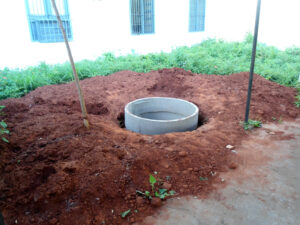
A rain water harvesting pit being constructed at Andhra University Engineering College (Wikimedia Commons)
“The pits will take rainwater that would usually flow down the drain and divert it towards the ground. This incrementally recharges groundwater levels, making it more available throughout the year,” explained A Venkatesh, an HMWSSB-approved contractor specialising in rainwater harvesting pits.
“While the HMWSSB does not provide water connection to any structures which do not implement the practice, this is to help correct those who are still behind. After 31 December, the HMWSSB will not give any new connections if the structure doesn’t have an integrated rainwater harvesting pit,” he said.
Providing an example, Venkatesh noted, “For a 100-residence complex spread over an acre, the HMWSSB would require at least four pits, each measuring 6 feet by 6 feet.”
“Constructing such a system would cost between ₹1 lakh and ₹1.2 lakh per pit, amounting to a total of ₹4–5 lakh. Additionally, the construction process would take approximately a week. The cost of materials must be borne by the complex’s owners,” he added.
Earlier this year, in April 2024, Greater Hyderabad faced a severe water crisis, with groundwater levels plummeting to record lows of 2 metres in some areas.
The HMWSSB reported 1.8 lakh tanker trips during the first 20 days of April alone. Even in December, certain localities, such as Kondapur and Malkajgiri, continued to experience water supply issues despite the winter season.
“The HMWSSB has a limited number of water tankers available in the city. During the summer, demand for water peaks, leading to delays and frustrations for both citizens and the HMWSSB,” Venkatesh explained.
“In the summers, we also tend to quickly run out of groundwater reserves we utilize through borewells. Rainwater harvesting pits will subvert this issue to some degree by recharging the stores.”
The HMWSSB has also warned that buildings failing to install rainwater harvesting pits by 31 December will face a penalty in the form of higher tanker charges.
According to the HMWSSB Citizen’s Charter, a 5-kilolitre water tanker currently costs ₹500 within the city and ₹850 outside it. Non-compliant buildings within Greater Hyderabad will now be charged approximately ₹1,000 for the same service.
“Nowadays, almost every building includes the rainwater harvesting pit. However, sometimes the builders undercut the residents by omitting the crucial structures. The notification to the 17,000 structures is meant to address that,” Venkatesh explained.
(Edited by Dese Gowda)


