


Published Mar 02, 2026 | 8:45 AM ⚊ Updated Mar 02, 2026 | 6:44 PM

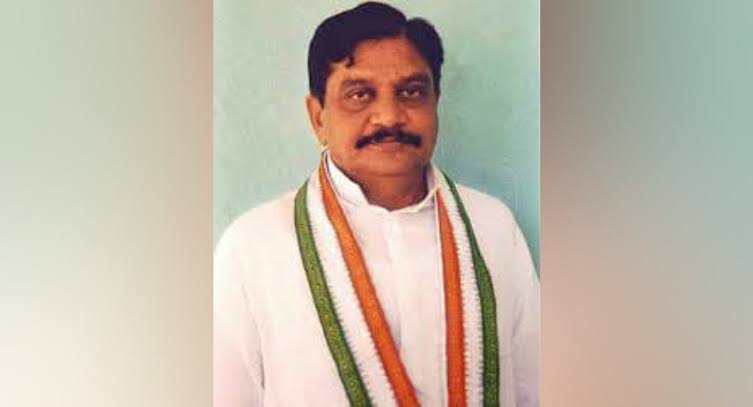
Duddilla Sripada Rao
Synopsis: Duddilla Sripada Rao, born in 1935 in Jayashankar Bhupalpally district, rose from agrarian roots to become Speaker of the Andhra Pradesh Assembly (1990–94). Known for integrity and impartiality, he balanced legislative authority with grassroots development. Tragically killed in a naxalite attack in 1999, his legacy endures as a moral compass in Telangana’s political history.
In the political history of Telangana, where power often eclipses principle, a few leaders stand apart for being remembered not for the offices they held but for the values they embodied. Among them, Duddilla Sripada Rao occupies a distinctive place.
Rising from a modest agrarian background to preside over the Legislative Assembly as Speaker, his journey symbolised the moral possibilities of democratic politics.
Born on March 2, 1935, in Dhanwada village of present-day Jayashankar Bhupalpally district, Sripada Rao’s formative years were shaped by the rhythms and realities of rural life. His early exposure to agrarian hardship instilled in him a grounded understanding of social inequities.
Pursuing higher education in Hyderabad and later earning a law degree from Nagpur, he began his professional life as an advocate. Yet, in a telling reflection of his character, he chose to return to his village, take up agriculture, and engage directly with farmers’ concerns.
This decision was not merely personal it was political in the deepest sense, aligning his life with the lived experiences of his constituents.
His entry into public life was guided less by ambition than by a sense of responsibility. Twice elected as sarpanch, he earned the trust of villagers through hands-on governance and transparent functioning.
As president of the Mahadevpur Samithi and chairman of a land development bank, he worked to strengthen rural credit structures and agricultural productivity. Accessibility and accountability defined his style—traits that would later distinguish him in higher office.
The watershed election of 1983, which saw the dramatic rise of and the formation of the , altered the political landscape of undivided Andhra Pradesh. Against this formidable tide, Sripada Rao secured victory from Manthani as a Congress candidate.
His triumph underscored a vital democratic truth: credibility at the grassroots can outweigh sweeping political waves. Over the course of his career, he was elected thrice as a Member of the Legislative Assembly, consolidating his reputation as a people’s representative rather than a partisan figure.
His most defining role came between 1990 and 1994, when he was unanimously elected Speaker of the. In an era marked by intense political contestation, Sripada Rao’s stewardship of the House was widely regarded as impartial and dignified. He adhered strictly to procedural rules, ensuring that debate however sharp remained within constitutional bounds. His conduct reinforced the principle that the Speaker’s chair is not an extension of party politics but a custodian of legislative integrity.
Importantly, high office did not distance him from his constituency. Developmental initiatives in Manthani ranging from infrastructure and irrigation to education and welfare continued to receive his attention. He demonstrated that legislative authority and grassroots engagement are not mutually exclusive but mutually reinforcing.
Electoral defeat in 1994 did not diminish his public commitment. He remained connected to the people, refusing to equate service with office. His life was tragically cut short on 13 April, 1999, in a Naxalite attack—a violent end to a career rooted in democratic dialogue. The loss was felt not merely as a personal tragedy but as a blow to civil political culture.
His legacy continues through his son, , who remains active in public life. The Telangana government’s decision since 2024 to officially observe Sripada Rao’s birth anniversary and institute memorial recognitions reflects the bipartisan respect he commands.
At a time when public discourse frequently laments the erosion of political values, Sripada Rao’s life offers a counterpoint. Office, he demonstrated, is transient; public trust is enduring.
His journey from the soil of a village to the constitutional authority of the Speaker’s chair remains more than a biographical arc. It is a reminder that democratic institutions are strengthened not merely by laws and procedures, but by the character of those entrusted to uphold them.
For Telangana’s evolving polity, his example endures as both compass and conscience.
(Views expressed are personal. Edited by Amit Vasudev)


