


Published Apr 01, 2026 | 2:50 PM ⚊ Updated Apr 01, 2026 | 3:33 PM

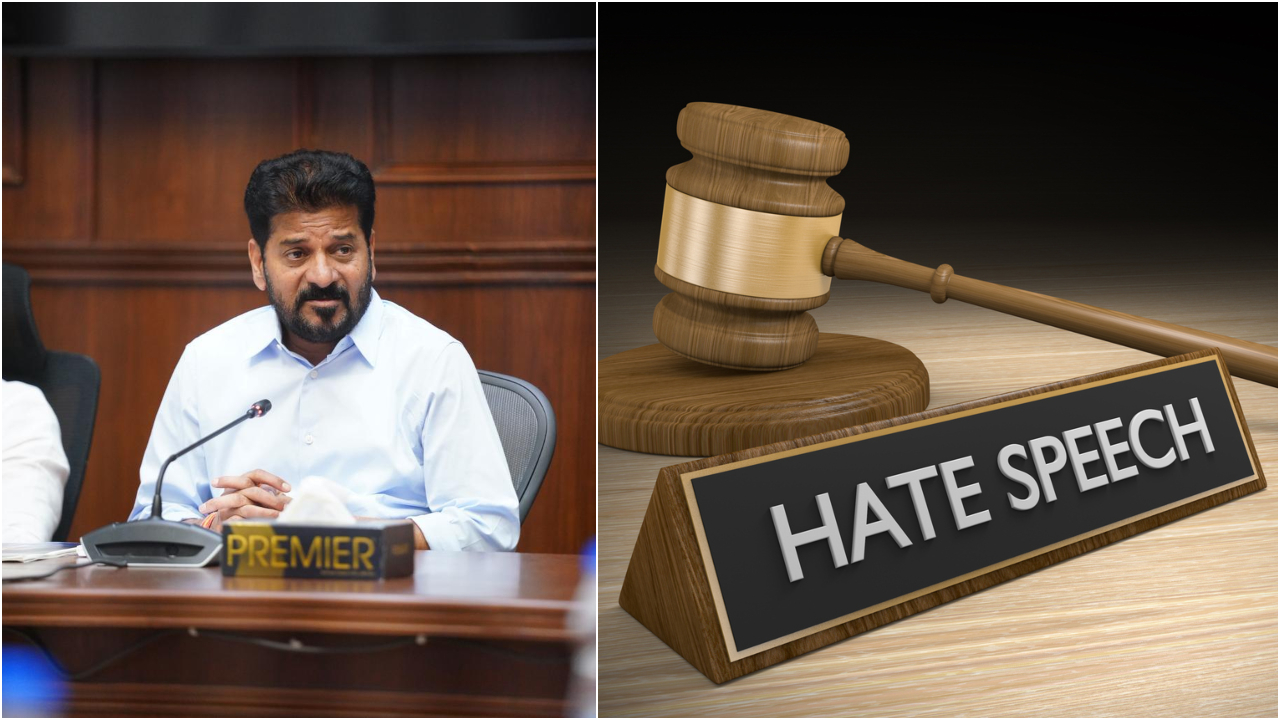
The cases will be tried by a Judicial Magistrate of First Class. Credit: x.com/revanth_anumula, iStock
Synopsis: The Telangana Hate Speech and Hate Crimes (Prevention) Bill, 2026, sent to a select committee after objections in the Assembly, introduces sweeping definitions of hate speech and crime, strict punishments, preventive powers, and digital regulation. It seeks to curb rising online hate, balance free expression with public order, and provide victim compensation, marking a landmark legislative move.
The Telangana Hate Speech and Hate Crimes (Prevention) Bill, 2026, sent to select committee following objections to certain provision by members of the Telangana Assembly, came against the backdrop of increasing instances of hate speech, particularly on digital and social media platforms.
The Bill is likely to attract attention for its far-reaching implications on free speech, digital regulation and public order, making it one of its kind in the state’s legislative history.
The Bill provides an expansive definition of “hate speech,” covering any expression—spoken, written, visual or electronic—made in public view with the intent to incite injury, hatred, ill-will or disharmony against individuals or groups. Importantly, it extends to expressions targeting both living and deceased persons, as well as communities and organisations.
“Hate speech” under the proposed law includes communication based on a wide range of prejudicial grounds such as religion, race, caste, gender, sexual orientation, language, disability, place of birth and tribe. This inclusive definition reflects the government’s attempt to cover diverse forms of discrimination and identity-based hostility.
The Bill also defines “hate crime” as not just the act of making such expressions, but also promoting, propagating, inciting, abetting or attempting to spread hate speech. This broader scope is aimed at capturing indirect and organised forms of dissemination, particularly in the digital ecosystem.
The legislation prescribes strict penalties for offenders. Individuals found guilty of committing hate crimes may face imprisonment ranging from a minimum of one year to a maximum of seven years, along with a fine of Rs 50,000. For repeat offenders, the punishment is significantly enhanced, with imprisonment ranging from two to ten years and a fine of up to Rs 1 lakh.
The Bill classifies offences under the Act as cognisable and non-bailable, indicating the seriousness with which the government intends to deal with such crimes. These cases will be tried by a Judicial Magistrate of First Class.
This apart, courts are empowered to award compensation to victims based on the severity and impact of the offence. This provision seeks to ensure not just punitive action against perpetrators, but also restorative justice for those affected.
The Bill grants substantial preventive powers to law enforcement authorities. Executive Magistrates or Special Executive Magistrates are authorised to take proactive measures against repeat offenders if there is credible information suggesting a likelihood of further offences. Such measures are intended to maintain public order and prevent escalation of tensions.
Further, the legislation introduces accountability for organisations and institutions. If an offence is committed by an organisation, individuals responsible for its operations at the time can also be held liable, unless they can prove lack of knowledge or due diligence in preventing the offence.
Recognising the role of digital platforms in amplifying hate speech, the Bill empowers a designated government officer to direct service providers, intermediaries or platforms to block or remove objectionable content. This provision is expected to play a crucial role in curbing the rapid spread of inflammatory material online.
At the same time, the Bill includes safeguards to ensure that legitimate expression is not unduly restricted. It explicitly exempts content published in the interest of science, literature, art, learning or other matters of public good, as well as materials used for bona fide religious or heritage purposes.
The proposed Act is designed to operate side-by-side existing legal frameworks, including provisions of the Bharatiya Nyaya Sanhita, Bharatiya Nagarik Suraksha Sanhita and the Information Technology Act, 2000. It clarifies that its provisions are in addition to, and not in derogation of, other applicable laws.
The Bill also provides legal protection to public servants acting in good faith under its provisions, shielding them from litigation for actions taken to enforce the law.
The State Government is empowered to frame rules for implementing the Act, subject to legislative oversight. Any rules made under the Act must be laid before both Houses of the State Legislature, which retain the authority to modify or annul them.
The Bill also includes a provision allowing the government to address practical difficulties in implementation through official orders, although such powers are limited to a period of three years from the Act’s commencement.
The Statement of Objects and Reasons accompanying the Bill highlights a “discernible increase” in incidents of hate speech and hate crimes in recent years, particularly via digital channels. It warns that such acts pose a serious threat to public order and social harmony, while undermining constitutional values such as equality, dignity and fraternity.
The government contends that existing laws are insufficient to deal with the complexities and scale of modern hate speech, necessitating a dedicated and comprehensive legal framework.
The Bill aims to achieve three primary objectives: preventing the dissemination of hate speech, ensuring stringent punishment for offenders, and providing adequate compensation to victims.
As per legislative procedure, the Bill, once passed by both Houses of the State Legislature, may be reserved by the Governor for the consideration and assent of the President under Article 254(2) of the Constitution. This step is typically required when state laws may intersect with central legislation.


