

Published Mar 03, 2026 | 1:50 PM ⚊ Updated Mar 03, 2026 | 1:50 PM

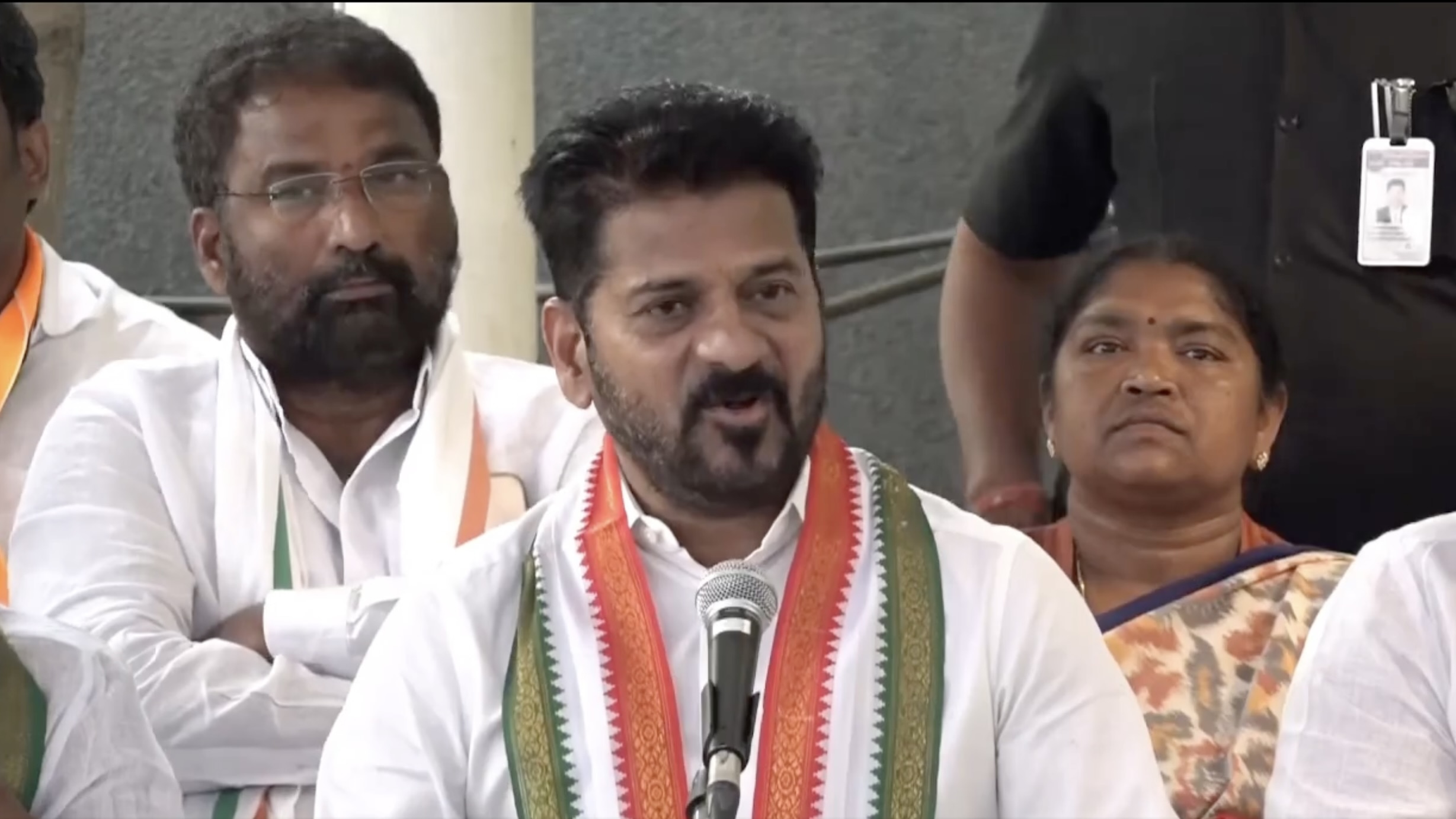
Telangana Chief Minister A Revanth Reddy.
Synopsis: Telangana Chief Minister A Revanth Reddy’s push to overhaul Hyderabad’s urban governance is being seen as a calculated political move, timed to coincide with the elections slated for the three new corporations. It is a bold pitch to voters in Hyderabad’s sprawling metropolis, a key electoral battleground where urban voters decide outcomes based on quality-of-life issues.
Telangana Chief Minister A Revanth Reddy’s recent push to overhaul Hyderabad’s urban governance through the proposed Core Urban Act is being seen as a calculated political move, timed strategically ahead of the elections slated for the three newly carved corporations —Malkajgiri, Cyberabad, and the residuary Greater Hyderabad Municipal Corporation (GHMC) — expected in the summer or a little later this year.
With Telangana’s capital emerging as one of India’s fastest-growing urban sprawls, yet plagued by longstanding civic woes like traffic snarls, waste mismanagement, and infrastructure delays, the Revanth Reddy administration appears to be leveraging these reforms to project the Congress party as a proactive and development-oriented force capable of delivering tangible results.
At the core of this spin is the narrative that Revanth Reddy, who assumed office amid high expectations for urban renewal, is finally “getting down to business” after initial teething troubles.
By giving the green light to the Core Urban Act during a recent review meeting, he has positioned it as a game-changer that centralises authority under a single framework, replacing the outdated GHMC Act.
This move goes beyond administrative housekeeping. It is a bold pitch to voters in Hyderabad’s sprawling metropolis, a key electoral battleground where urban voters decide outcomes based on quality-of-life issues.
The Congress needs to have the residents of Hyderabad on its side, breaking the hold of the BRS. In the Assembly elections in 2023, the Congress could not win even one seat in the Hyderabad district.
The Act promises to standardise building permissions, fee structures, and development works. In election rallies or social media campaigns, Congress could showcase the act and campaign how this will “unlock Hyderabad’s potential,” kindling economic growth and job creation in sectors like IT and real estate.
Tied into its prestigious 99-day programme, set for launch in the entire state in a few days, Reddy’s emphasis on development in Hyderabad adds a sense of urgency. Politically, this allows Congress to project itself as running a government that delivers in 99 days.
For instance, the focus on sanitation and cleanliness in the Core Urban Region (CURE) addresses the the problem of city’s daily 7,000 tonnes of waste by setting up better garbage sites and imposing penalties for illegal dumping, which would come in handy to send a positive vibe to the the middle-class voters in upscale areas like Banjara Hills or Begumpet, who have grown weary of roadside hazards and environmental degradation.
By framing these as “people-first” initiatives, the government hopes to erode the BRS’s influence on urban voters.
The road infrastructure reforms offer another potent electoral weapon. The proposal to transfer all roads to the Municipal Administration and Urban Development (MA&UD) wing, coupled with implementing models for elevated corridors and dashboard-monitored streetlights, is being shown as the answer to Hyderabad’s notorious traffic congestion.
Congress could campaign on slashed commute times (potentially 20-30% in hotspots like Hi-Tech City or Secunderabad), improved safety for women and nighttime commuters, and an end to inter-departmental blame games. This “single-agency speed-up” narrative, the Congress hopes, might resonate with the citizens.
On food safety and public health, the mandate for CCTV in hotel kitchens, linked to a command centre, alongside frequent inspections, taps into rising concerns over adulteration, as over 500 cases were reported in 2025.
Enhanced fire safety in the over 1,000 high-rises around the Outer Ring Road (ORR), water conservation via rainwater harvesting, and beautification of ponds and historical sites through HYDRAA could be packaged as holistic urban rejuvenation. These not only address scarcity and biodiversity loss — with over 50 lakes encroached in recent decades — but also boost tourism revenue.
The Congress appears to hope that these initiatives will translate into electoral dividends when elections are held for the three city corporations. In a city where urban voters are increasingly vocal on social media and at the ballot box, visible improvements in livability could sway voters, particularly in mixed-income zones.
(Edited by Muhammed Fazil.)


