

Published Aug 29, 2026 | 5:32 PM ⚊ Updated Aug 29, 2026 | 5:32 PM

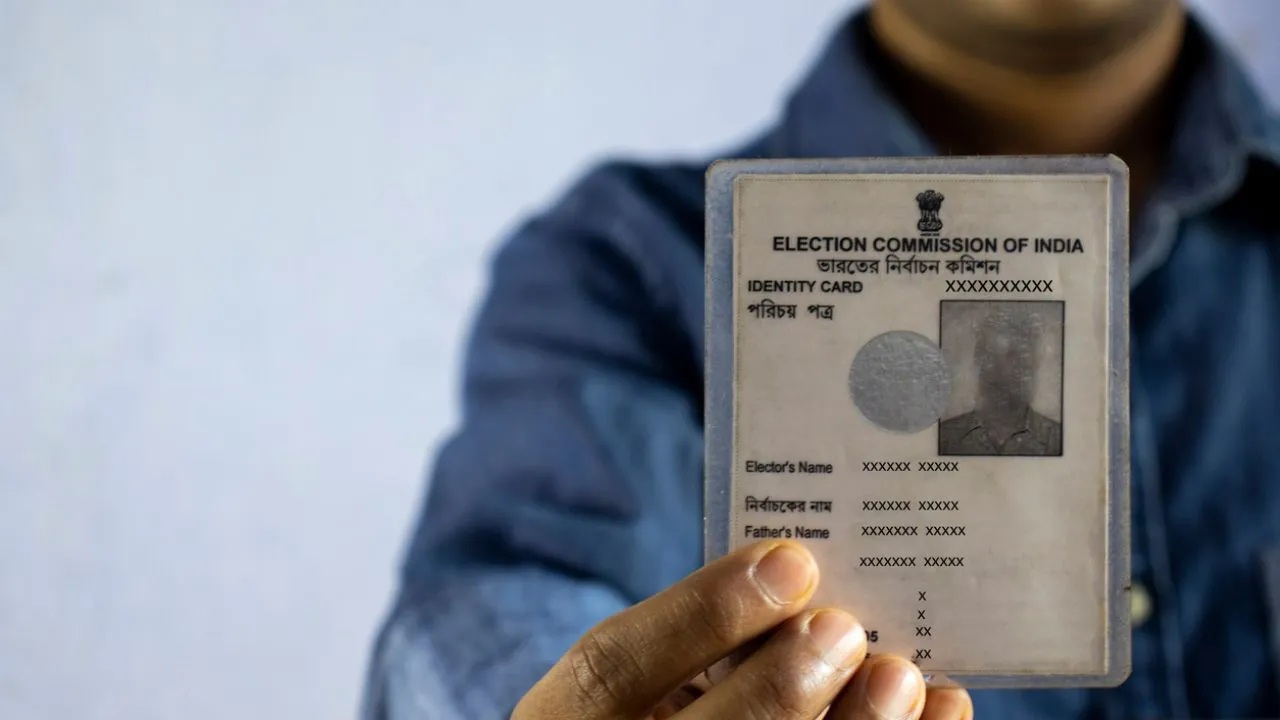
The direction follows reports of bulk Form 7 applications seeking the deletion of eligible Muslim voters from the electoral rolls.

Synopsis: In the letter, Revanth Reddy wrote: “The Special Intensive Revision in Telangana has now reached the stage where the numbers themselves invite the Commission’s attention. Measured against the roll of 3.38 crore electors as it stood on 10.06.2026, some 73.39 lakh entries (21.7 per cent) have been placed under the Absent, Shifted, Dead and Duplicate heads. Out of the 2.65 crore enumeration forms digitised so far, 60.50 lakh stand flagged for anomalies and 32.36 lakh for want of a link to the earlier roll.”
After Karnataka Chief Minister DK Shivakumar wrote to the Election Commission of India last week, requesting an extension of the claims and objections period for SIR, Telangana Chief Minister Revanth Reddy also has written to the ECI on Saturday, 29 August.
DK Shivakumar in the letter written to CEC ( Chief Election Commissioner of India) Gyanesh Kumar, noted that “SIR raised serious concerns with over 1.08 crore electors marked under ASDDO and around 43 lakh electors facing notices for logical discrepancies.”
In the letter, Revanth Reddy wrote: “The Special Intensive Revision in Telangana has now reached the stage where the numbers themselves invite the Commission’s attention. Measured against the roll of 3.38 crore electors as it stood on 10.06.2026, some 73.39 lakh entries (21.7 per cent) have been placed under the Absent, Shifted, Dead and Duplicate heads. Out of the 2.65 crore enumeration forms digitised so far, 60.50 lakh stand flagged for anomalies and 32.36 lakh for want of a link to the earlier roll.”
“The two sets are distinct and do not overlap; they add up to 92.86 lakh and each of those electors is to be put on notice. Stated plainly, something close to one third electorate of the State must now either prove its entitlement afresh or lose its place on the final roll. The composition of the Absent, Shifted, Dead, and Duplicate (ASDD) list is a matter of grave concern. Of the 73.39 lakh flagged entries, 45.19 lakh (nearly 62%) are classified as “permanently shifted.”
He further requested the CEC to:
“The Government of Karnataka stands ready to extend all possible assistance to the Election Commission, including mobilising the local administration for Gram Sabha and Ward Committee meetings, undertaking widespread public outreach, and providing all necessary coordination and logistical support to ensure that the process is completed effectively,” the letter read.
The letter noted that that there is no Distinction Between Temporary Absence and Permanent Relocation, “A voter who was simply at work, traveling, or temporarily away when the Booth Level Officer (BLO) visited is treated identically to someone who has permanently relocated.”
“Electors who have actually moved were given no assistance to file application for enrolling as voters at new address, yet their names are routinely marked for deletion at their previous residence.”
“Deletions under the “shifted” category bypass formal notice procedures entirely notices are issued only for data anomalies or unmapped entries,” it said, adding, “Consequently, a large number of eligible citizens are systematically denied natural justice and will likely discover their disenfranchisement only when they are turned away at the polling booth on election day.”
“The entire SIR load is also distributed very unevenly across the State. Hyderabad, Medchal-Malkajgiri and Rangareddy districts hold a third of the State’s electors between them, yet account for 58.6 per cent of all ASDD entries and 41.9 per cent of all verification notices. These are the very districts in which tenancies are short, work draws families across ward and district boundaries several times in a decade, and a continuous paper record of residence is hardest to assemble. In a city of Hyderabad’s density, a shift of a few hundred metres is enough to place a household in another polling station. Changing one’s home for work or on marriage is an ordinary incident of Indian life, and should not lead to disenfranchisement. I would urge that the revision be so calibrated that ordinary mobility does not, in effect, operate as a disqualification for the electors.”
Asking for enlarging the window for claims and objections, the letter asked, “The period presently notified runs from 17.08.2026 to 16.09.2026, with the final publication fixed for 19.10.2026. One month is a very short schedule for a mammoth exercise of this size, and barely a fortnight of it is now left. I would request that this period be extended by four weeks, so that electors whose names are missing from the draft roll the ASDD class particularly -have a sufficient time to find out where they stand and to file Form 6 claims. Since no election is due in Telangana in the near future, such extension may kindly be considered.”
He further suggested the following:
2. Public reading of the draft rolls: ECI Manual on Electoral rolls contemplates that the draft roll be read out at Gram Sabhas and, in urban areas, at Ward Committee meetings, so that omissions surface while there is still time to correct by & then by the concerned electoral officers. I would suggest that the Chief Electoral Officer be asked to direct District Election Officers specifically to convene these meetings at least twice – in all villages and Municipal wards with publicity given well in advance.
3. Allowing an elector a reasonable period to reply to the notice: A week to respond, with a second notice to follow, may not be sufficient at all, particularly for vulnerable categories like daily-wage earners, migrant workers or elderly persons, least of all where the document called for must be sought from another district or another State. I would request that not less than three to four weeks be allowed to each elector to reply and produce papers, so that the elector can establish his/her eligibility.
4. Opening Helpdesks: Helpdesks may be opened, particularly in urban districts, to help electors respond to the notice. In urban areas, it will be useful if the Helpdesks are opened at Booth Level. The electors put on notice, must be actively assisted by helpdesks. regarding the documents that are admissible and also in obtaining these documents from the concerned authorities.
5. Settling a list of documents that an elector can actually obtain: The Commission has held, by its letter No. 23/SIR/TEL/2026-SS-III dated 11.08.2026, that the Family Register Certificate issued under G.O. Ms. No. 172 dated 25.07.2026 will not be accepted in SIR verification. While the Commission has given certain reasons for the same, its practical consequence in the urban districts, however, is that a significantly vast number of electors may not possess any of the other admissible documents. I would therefore



