

Published Mar 27, 2026 | 7:49 PM ⚊ Updated Mar 27, 2026 | 7:49 PM

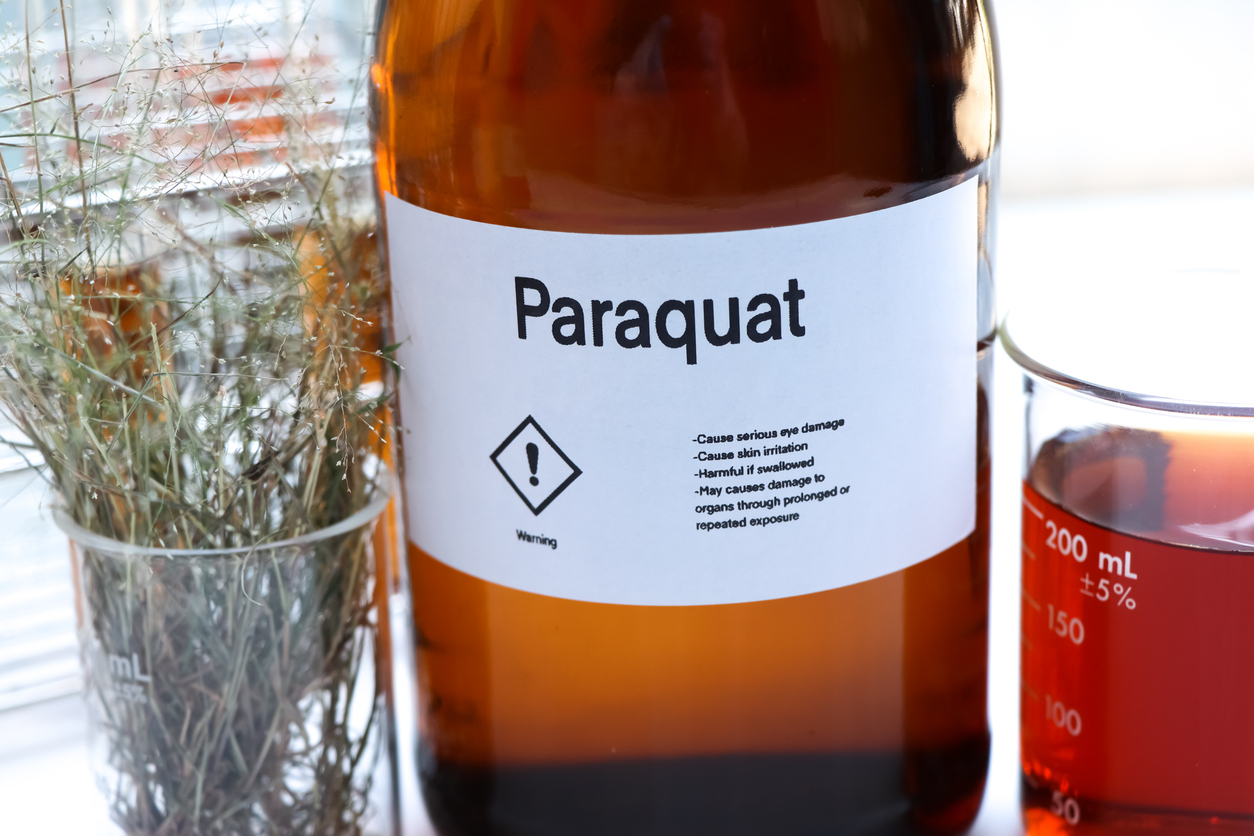
Paraquat is a highly toxic herbicide. It has no antidote.
Synopsis: Paraquat dichloride ranks as the most acutely toxic herbicide in use, and even minimal exposure through ingestion, inhalation or skin contact causes lung, kidney and liver failure. There is no known antidote.
Telugu actor Rahul Ramakrishna has made a passionate plea for banning paraquat, after his brother died of poisoning by the herbicide.
Known for his roles in films such as Arjun Reddy, Ala Vaikunthapurramuloo and RRR, Rahul made the plea on X, tagging Prime Minister Narendra Modi and Telangana Chief Minister A Revanth Reddy, on Thursday, 26 March.
“Lost my brother today to paraquat poisoning. It’s terrifyingly lethal and widely misused for self-destruction. Shocked by how easily it is available everywhere. Doctors are overwhelmed by the number of cases. Please ban it ASAP, save lives,” he wrote.
His post arrived as pressure on the central government has been building to ban the powerful herbicide.
Honourable Sirs @TelanganaCMO @PMOIndia,
Lost my brother today to Paraquat poisoning. It’s terrifyingly lethal and widely misused for self-destruction. Shocked by how easily it is available everywhere. Doctors are overwhelmed by the amount of cases.Please ban it ASAP-save lives🙏🏽— Rahul Ramakrishna (@eyrahul) March 26, 2026
On Friday, Dr Kadiyam Kavya, Member of Parliament from Warangal, raised the issue in Parliament. She told the House that paraquat dichloride ranks as the most acutely toxic herbicide in use, and even minimal exposure through ingestion, inhalation or skin contact causes lung, kidney and liver failure, and that no antidote exists.
She noted that over 70 countries, including China and the United Kingdom, have already banned the substance. Dr Kavya called on the Agriculture Minister and the Chemicals and Fertilisers Minister to ban the herbicide in India.
Dr Manjusha Yadla, Head of Nephrology at Gandhi Hospital in Hyderabad, has tracked paraquat cases since 2014.
Over ten years, her team followed 400 patients who arrived at the hospital after ingesting paraquat. Of those, 295 died, a mortality rate of 73.7 percent.
The average age of the patients was 30. Three in every four were men. Nine in 10 cases were intentional.
“Even now, we see at least two new patients every week,” she told South First.
A separate decade-long study at a quaternary care hospital in South India, published in the Indian Journal of Critical Care Medicine, examined 166 cases between 2015 and 2024 and recorded a mortality rate of nearly 80 percent. The median survival time was five days.
In February 2023, the Government of India banned 66 pesticides. Paraquat appeared on the list. However, paraquat exists in two chemical forms: paraquat dichloride and paraquat sulphate.
The circular banned one, while the other was left untouched. The herbicide continued to move through supply chains, pesticide shops and online platforms.
On 3 March 2026, the Indian Medical Association’s Telangana chapter held a meeting that brought together representatives from the Congress party, the Bharatiya Janata Party and the Bharat Rashtra Samithi on the same platform. Family members of paraquat victims travelled from across Telangana’s districts to attend the meeting.
Dr Bandari Rajkumar, a critical care specialist representing the IMA, called paraquat poisoning “not merely a medical problem but a national health and social emergency.”
Doctors’ associations announced a ‘Chalo Delhi‘ march to push the central government to enforce a complete ban.
Dr Karthik Nagula, a forensic expert at Gandhi Hospital, said paraquat accounted for six or seven in every ten poisoning deaths his team examines. “This clearly shows how common and deadly paraquat poisoning has become,” he said.
The herbicide costs between ₹100 and ₹200 a bottle. It sits in farm storage alongside seeds and tools. It has no antidote.
If you need support or know someone who has suicidal thoughts, please reach out to your nearest mental health specialist or contact: Tele-MANAS: 14416; Call: 9152987821; Arogya Vani: 104; Sahay Helpline: 080-25497777; Roshni: 9166202000.
(Edited by Majnu Babu).


