

Published Jul 07, 2026 | 7:52 PM ⚊ Updated Jul 07, 2026 | 7:52 PM

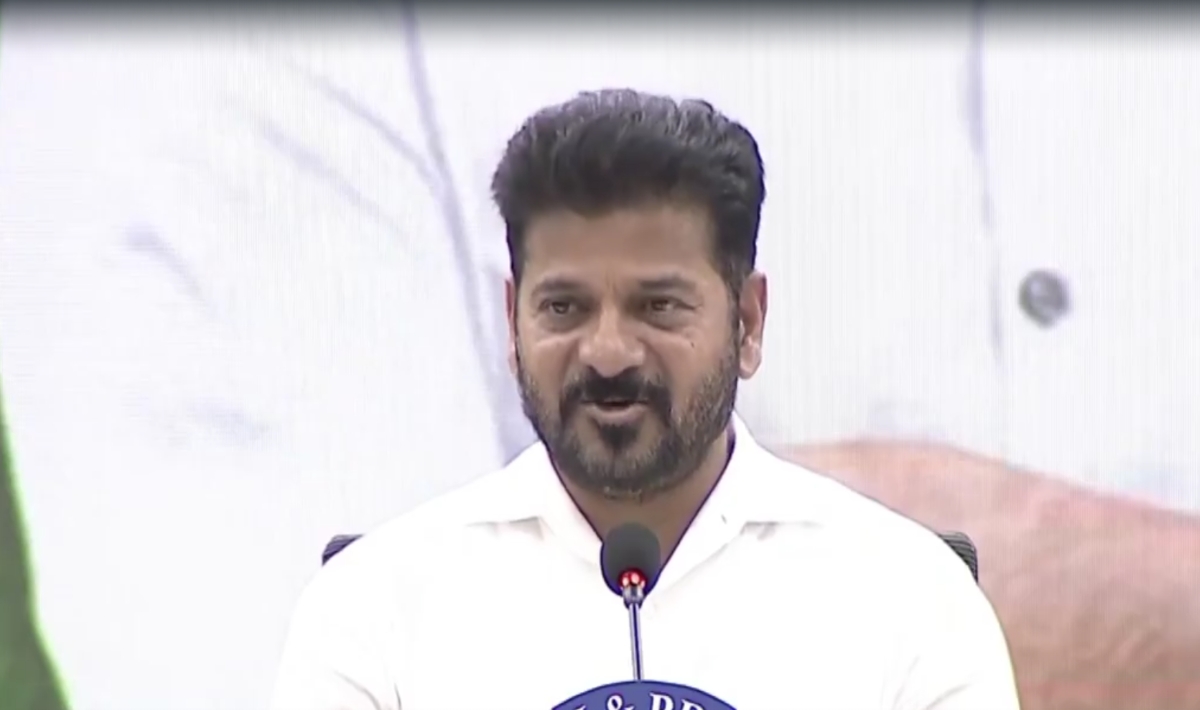
Telangana Chief Minister Revanth Reddy. (Supplied)

Synopsis: Telangana Chief Minister A Revanth Reddy recently announced plans to close 23,000 government schools in the state, sparking outrage. Eminent individuals and activists from Telangana have written to the chief minister urging him to withdraw the closure plan. They also made suggestions to improve the condition of public schools.
Eminent citizens in Telangana have urged Chief Minister A Revanth Reddy to reconsider his government’s proposal to reduce the number of government schools in the state from 27,000 to 4,000.
In an open letter to the chief minister on Tuesday, 7 July, over 125 educationists, retired judges, activists, academics, journalists and civil society representatives also demanded that the government immediately withdraw its plan to merge or close the remaining 23,000 schools.
The letter referred to the chief minister’s remark during a panel discussion at The Hindu Huddle in Bengaluru on 6 June, in which he spoke of closing at least 23,000 government schools, citing low enrolment.
Revanth had also revealed the government’s plan to remodel the remaining 4,000 schools into Telangana Public Schools with free food and travel.
Also Read: Revanth unflinchingly delivers hydra-headed ‘taken inspiration from Hitler’ gaffe
The statement triggered widespread concern among students, parents and educators across the state. The letter argued that the move would violate Article 21A of the Constitution and the Right to Education (RTE) Act, which guarantee free and compulsory education to children aged six to 14.
The signatories estimated that of the state’s 12,769 gram panchayats, around 8,769 villages could permanently lose access to a government school if the government went ahead with the plan, disproportionately affecting children from marginalised, tribal and economically weaker backgrounds. The letter highlighted that girls would face a higher risk of dropping out without a nearby school.
They also accused the Congress government of falling short of its election manifesto commitment to allocate 15 per cent of the state budget to education, noting that the current spending stood at about 8.2 per cent.
It contrasted the chief minister’s proposal with an earlier manifesto pledge to reopen with better facilities roughly 6,000 schools that were closed during the previous BRS government.
Also Read: Revanth irks Congress leaders with the Donald Trump Avenue
Pointing to administrative gaps, the signatories noted that 25 of the state’s 33 districts lacked a regular District Education Officer (DEO), and 612 of 633 mandals were without a Mandal Education Officer. They argued that such vacancies were driving a decline in enrolment in government schools, where, they said, only about a third of children now remain.
Rather than merging schools, the letter placed five demands before the government: withdraw the closure announcement; fill vacant teaching and administrative posts; ensure basic infrastructure such as toilets, drinking water and furniture; establish primary schools in every village as promised; and strictly enforce RTE regulations governing private schools.
Signatories include former High Court judges B Chandra Kumar, Rajani, Radharani, and Nimma Narayana; senior journalists N Venugopal, K Srinivas, C Vanaja; Telangana ideologues Prof Kondaram, Goreti Venkanna, Deshapati Srinivas; former NAAC director VS Prasad; former NCRPC chairperson Shantha Sinha; writers Ranganayakamma and Jupaka Subhadra; Professors K Nagesshwar, C Kasim, D Narayana Reddy, Kalpana Kannabiran, and other academics from Osmania University, Kakatiya University, NIT Warangal, and Hyderabad Central University, among others.
The letter was signed by the Telangana Save Education Committee (TSEC)’s Prof K Laxminarayana and the All India Forum for Right to Education (AIFRTE)’s Prof G Haragopal and Prof Chakradhar Rao. TSEC and AIFRTE have been vocal critics of Revanth’s announcement.
The TSEC raised similar concerns earlier at a round-table meeting with student and teacher groups on 13 June. The organisations released a media statement strongly condemning the closure plan, alleging it would breach distance norms under Section 5(1)(a)(b) of the RTE Act, 2009.
The Act mandates a government school within one kilometre for children up to Class 5 and within three kilometres for those in higher classes.
The note also pointed to the Performance Grading Index, in which Telangana’s national rank slipped from 26th to 28th, with its 28 districts placed between 300th and 675th of 783 districts nationwide. The rankings were on par with Bihar, Jharkhand and Uttar Pradesh.
Rather than shutting schools, TSEC proposed redirecting funds allocated for newly built “Young India Integrated Residential Schools” towards upgrading the state’s 27,000 existing government schools. It demanded that the government should raise education spending to 20 per cent of the state budget.
“We had not received any response from the chief minister or the education department after our roundtable. That’s why we have released another letter today by reaching out to other activists,” said TSEC’s Prof Laxminarayana.
Speaking to South First, Laxminarayana added, “We will wait for 15 days for a positive response to our demands from the government. After that, we’ll reach out to the general public. TSEC has district committees in 30 districts of Telangana. We are planning to go to districts and villages through our committees to mobilise parents against the closure of schools.”
(Edited by Majnu Babu).



