


Published Jan 07, 2026 | 2:35 PM ⚊ Updated Jan 07, 2026 | 6:02 PM

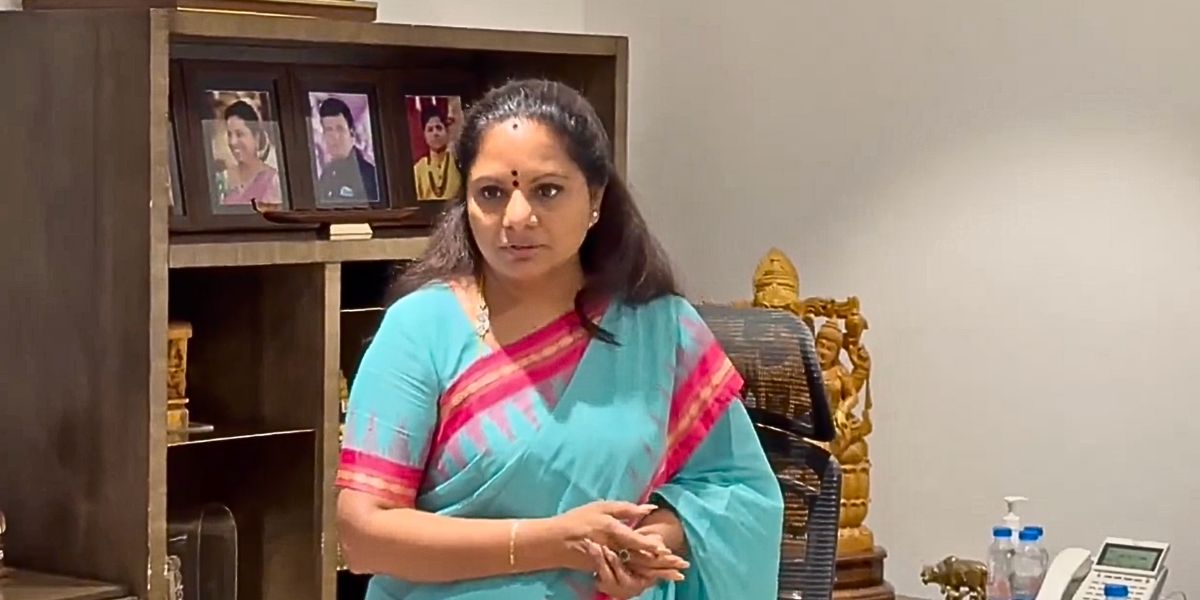
K Kavitha.
Synopsis: The resignation, accepted with effect from 6 January, comes nearly four months after Kavitha had submitted it on 3 September, a day after she was suspended from the BRS. The prolonged delay in its acceptance had fuelled intense political speculation and debate.
Telangana Legislative Council Chairman Gutta Sukhender Reddy on Tuesday, 6 January, accepted the resignation of Bharat Rashtra Samithi (BRS) MLC Kalvakuntla Kavitha from the Nizamabad Local Authorities Constituency.
The acceptance of Kavitha’s resignation has opened a new battlefront in the state’s already volatile political landscape.
The resignation, accepted with effect from 6 January, comes nearly four months after Kavitha had submitted it on 3 September, a day after she was suspended from the BRS. The prolonged delay in its acceptance had fuelled intense political speculation and debate.
Kavitha, daughter of former chief minister and BRS president K Chandrashekar Rao, is a prominent figure in Telangana politics. Elected to the Legislative Council in 2020, she earlier represented Nizamabad in the Lok Sabha from 2014 to 2019 and played an active role in the Telangana statehood movement.
Her exit underscores a dramatic political and familial rupture within the BRS, which has been struggling to regain its footing since losing power to the Congress in the 2023 Assembly elections.
Also Read: ‘We’re contesting’, Kavitha Kalvakuntla fires up political speculation
The Chairman’s decision followed Kavitha’s emotional farewell address in the Council on 5 January, during which she broke down several times. In a charged speech, she reflected on her political journey and the alleged internal sabotage and widespread corruption within the BRS during her father’s tenure as the chief minister.
“I am leaving as an individual, but I will return as a force,” she declared. Swearing in the name of Lord Lakshmi Narasimha Swamy and her children, Kavitha said her fight was for Telangana’s self-respect and not driven by personal vendetta. Her remarks, laced with personal anecdotes and political barbs, pointed to an intense power struggle within the party.
The delay in accepting her resignation had itself become contentious. Kavitha met Chairman Reddy on 5 January, urging him to accept her resignation and seeking an opportunity to speak in the House for the last time.
“I resigned from my MLC post four months ago, when the BRS suspended me from the party. To date, my resignation has not been accepted,” she said at the time.
With the resignation now formally accepted, the stage is set for a by-election in the Nizamabad Local Authorities Constituency, a contest that is expected to intensify competition among the BRS, the ruling Congress and other emerging political players.
Following her suspension from the BRS, Kavitha has moved to revitalise Telangana Jagruthi, the cultural organisation she founded in 2006 to promote Telangana’s arts, literature and traditions. Though initially non-political, Jagruthi has steadily evolved into a platform for grassroots mobilisation.
Since September 2025, Kavitha has undertaken extensive district tours under the banner “Jagruthi Janambata,” engaging with rural communities on issues such as OBC reservations, women’s welfare and local governance.
She has been sharply critical of the Congress government for what she describes as its failure to implement key election promises, including higher pensions and the payment of ₹2,500 a month to women.
As part of a postcard campaign addressed to Congress leader Sonia Gandhi, Kavitha demanded implementation of the party’s “six guarantees,” saying that the promises remained unfulfilled even 18 months after the Congress came to power in the state.
This renewed activism indicates Kavitha’s attempt to carve out a political space in Telangana’s fragmented landscape by positioning herself as a champion of backward classes and women. Her path, however, has not been without setbacks, with some Telangana Jagruthi office-bearers resigning in September 2025 over differences following her exit from the BRS.
Kavitha’s political ambitions crystallised during her Council speech, when she announced that Telangana Jagruthi would be transformed into a full-fledged political party to contest the next Assembly elections, due in 2028 or earlier if the House is dissolved.
“Telangana Jagruthi will emerge as a political party and contest the next elections. It will definitely emerge as a force,” she said. She reiterated the intent in December 2025, asserting that Jagruthi would “definitely be in the contest” in the coming polls.
Her departure has further compounded the BRS’s troubles. Already weakened by defections and electoral setbacks, the party now faces a family schism that could erode its core support base, particularly in rural Telangana.
Kavitha’s allegation of “rampant corruption” during KCR’s regime also echoes opposition narratives, potentially undermining the BRS’s defence against sustained attacks from the Congress.
(Edited by Majnu Babu).


