

Published Mar 07, 2026 | 5:42 PM ⚊ Updated Mar 07, 2026 | 5:42 PM

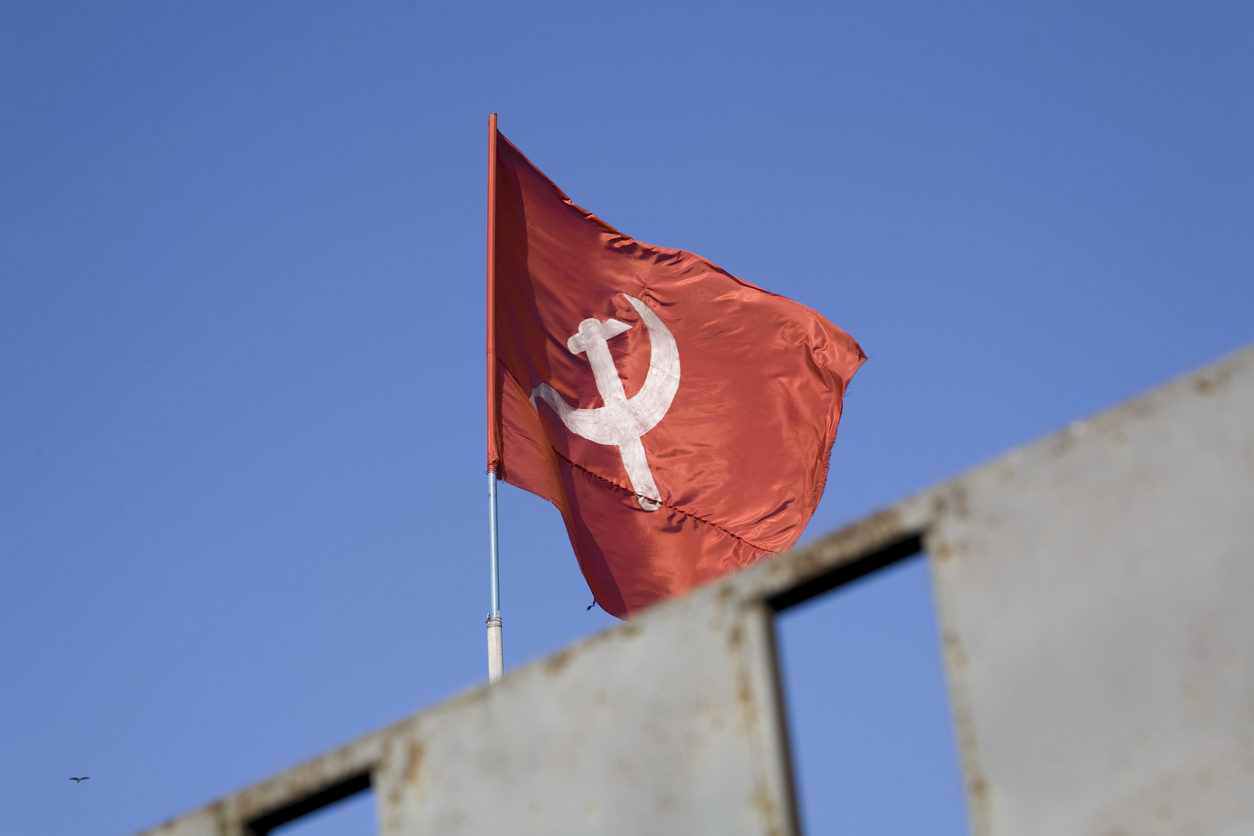
Representational image of the banned CPI (Maoist) flag. Credit: iStock
Synopsis: As many as 130 Maoists, including senior leaders, surrendered in Telangana before Chief Minister A Revanth Reddy, handing over 124 firearms. This follows last week’s surrender of four top leaders. Under the state’s rehabilitation policy, benefits and financial support are being extended to help former cadres reintegrate into mainstream society.
As many as 130 Maoists surrendered in the presence of Telangana Chief Minister A Revanth Reddy, handing over their weapons to the police.
Among those who surrendered were three state committee members, one regional committee member, 10 divisional committee members, 46 area committee members, and 70 party members.
The surrendered Maoists handed over 124 firearms to the police, which includes one INSAS LMG rifle, 31 AK-47 rifles, 21 INSAS rifles, 20 SLR rifles, 18 .303 rifles, and 33 other firearms.
This comes on the heels of surrender of of four senior leaders of the proscribed Maoist last week in Telangana.
Politburo Member Tippiri Thirupati alias Devuji alias Kumma Dada, central committee member Malla Raji Reddy alias Sangram, Telangana state committee secretary Bade Chokka Rao alias Damodar alias Jagan, and state committee member Nune Narsimha Reddy alias Ganganna alias Sannu Dada formally renounced violence in the presence of Telangana Director General of Police B Shivadhar Reddy, the police said in a statement issued on Tuesday, 24 February.
Calling the surrender of the four senior-most leaders a “moral victory”, Telangana Police reiterated their appeal to remaining underground cadres, especially those native to the State, to abandon violence and return home.
“Lay down arms and leave the underground, join the mainstream of public life,” the DGP said.
Under the Telangana Government’s Rehabilitation Policy, the four Maoist leaders were eligible for a reward of ₹90 lakh. The amount was disbursed through demand drafts and cheques under the State and Centre’s relief and rehabilitation framework.
Police said all benefits under the rehabilitation policy would be extended to help them rebuild their lives with dignity and security.


