

Published Aug 12, 2026 | 1:34 PM ⚊ Updated Aug 12, 2026 | 1:35 PM

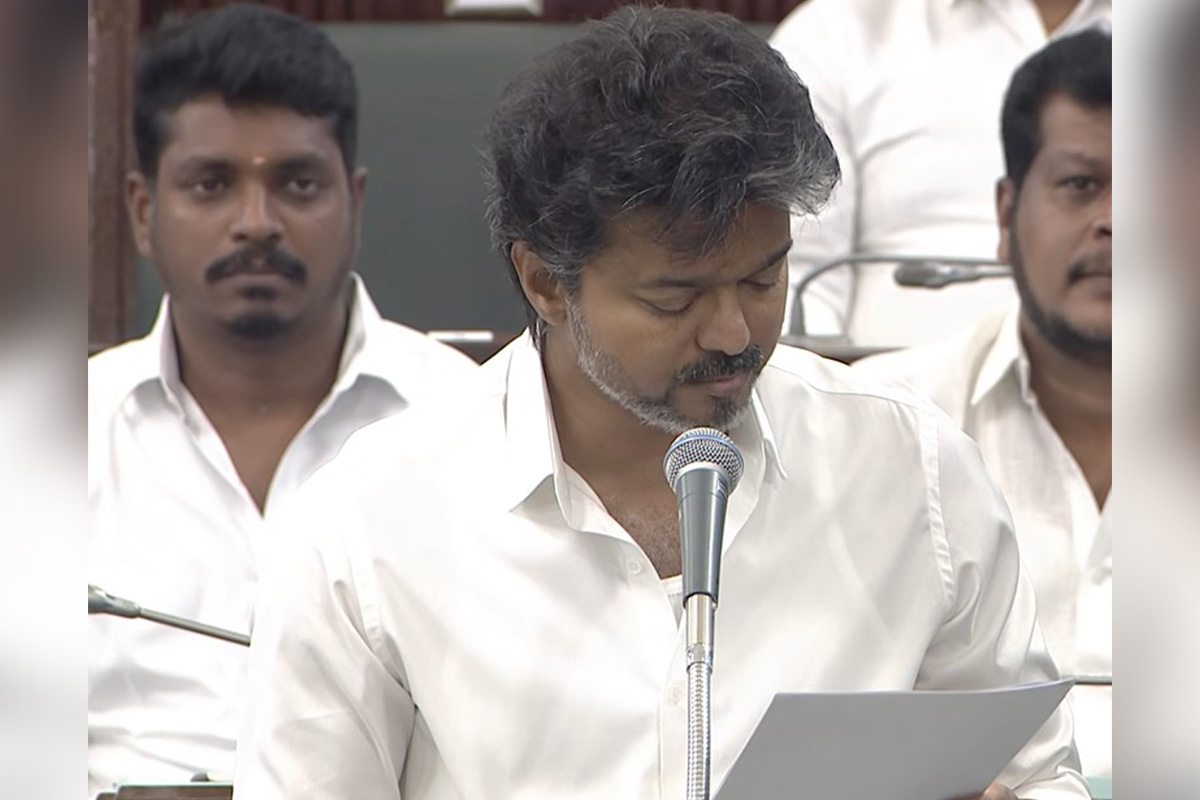
CM Vijay speaking in the Tamil Nadu Assembly. (File Photo)

Synopsis: The Tamil Nadu Assembly passed a resolution opposing the proposed delimitation exercise and urged the Centre to permanently freeze Lok Sabha seats at 543. Chief Minister C. Joseph Vijay said the move would protect Tamil Nadu’s parliamentary representation. The DMK backed the resolution, highlighting concerns that population-based delimitation could disadvantage southern states.
Tamil Nadu Chief Minister C. Joseph Vijay on Wednesday, 12 August, moved a government resolution in the Assembly opposing any delimitation exercise based on the population data after the 1971 Census that could reduce the state’s parliamentary representation.
The resolution argued that southern states such as Tamil Nadu, which have successfully implemented population-control measures and achieved economic growth and improvements in healthcare and welfare, should not be penalised for their performance by reducing their parliamentary presence through delimitation.
Speaking while moving the resolution in the Assembly, CM Vijay called for the immediate implementation of the 33% reservation for women.
“The 33% reservation for women should be implemented in the 2029 Lok Sabha elections itself, based on the existing 543 constituencies. The 33% reservation for women should not be delayed any further. In Tamil Nadu, more women have voted than men. Providing reservation for women is not a concession; it is a matter of social justice. The 33% reservation for women must be implemented without any further delay,” Vijay said.
“We can’t deny the important role women played in the past and present. Because of sisters, elders, mothers, I got this place,”he added.
Also Read: TN Speaker Prabhakar backs anti-abortion rally, says will bring issue to CM Vijay’s notice
The DMK welcomed the resolution and extended support for the move, while stressing that the issue was first raised by the party.
Leader of the Opposition in the Assembly, Udhayanidhi Stalin asserted that Tamil Nadu should not be adversely affected by the delimitation exercise under any circumstances.
Udhayanidhi said the DMK had been among the first to raise the issue and recalled the resolution passed by the then government in 2024, along with an all-party meeting and consultations with southern state chief ministers and leaders under the banner of ‘Fair Delimitation’.
He said the DMK’s position was that delimitation should not be undertaken for the next 25 years and that the 1971 Census should continue to be the basis for representation.
He also stressed that his party supported the 33 per cent reservation for women and would back any legislation concerning the same.
AIADMK general secretary Edappadi K. Palaniswami stated his party’s objection to the resolution, but supported the provision seeking 33 per cent reservation for women in the Lok Sabha and State Assemblies.
Palaniswami argued that through the delimitation exercise, Tamil Nadu’s existing 7.18 per cent share of parliamentary representation could be increased by 50 per cent, potentially giving the state 20 additional Lok Sabha seats and taking the total to 59.
He said delimitation based on voter population could be considered for administrative reasons, but insisted that Tamil Nadu should not suffer any reduction in its existing representation. He also recalled the AIADMK’s efforts in 1998 under the late former Chief Minister J. Jayalalithaa to secure 33 per cent reservation for women in legislatures.
Palaniswami also questioned the timing of the move and alleged that the state government had brought in the resolution for political reasons.
The DMDK, BJP and PMK also opposed the move. However the resolution was passed in the Assembly with the support of DMK and other parties.
Also Read: Tamil Nadu Assembly adopts ‘Tamil Thai Vazhthu’ resolution
In its resolution, the TVK-led government pointed out that for the last five decades, the number of Lok Sabha and Legislative Assembly constituencies has been determined based on the 1971 Census and raised concern that if a delimitation is carried out based on latest population figures it would adversely impact the southern states, including Tamil Nadu.
Referring to the Constitutional Amendment Bill introduced in Parliament in April 2026, which sought to remove the 50-year restriction on delimitation and enable it based on the 2011 Census to increase the strength of the Lok Sabha from 550 to 850 members, the resolution raised concern regarding the impact on southern states.
“Under these circumstances, based on the understanding that the aforementioned Constitutional Amendment Bill is to be reintroduced, it is a stark reality that if delimitation is carried out based on any census taken after 1971, the parliamentary representation of southern states, including Tamil Nadu—which havsfe effectively controlled their population—will be permanently affected,” the resolution stated.
It called on the Union Government to fulfill its promise and “ensure that no State that has efficiently implemented population control programmes, achieved good economic growth, and carried out proper healthcare and public welfare schemes is adversely affected by the delimitation.”
It urged the government to “permanently maintain the existing strength of the House of People (Lok Sabha) at 543, to maintain the Inter-State distribution of seats permanently, and to maintain the current House of People (Lok Sabha) – Council of States (Rajya Sabha) ratio at 2.2 : 1, while simultaneously implementing 33 percent reservation for women in the 2029 election to the House of People (Lok Sabha), without delay, based on the existing 543 seats.”
(Edited by Fayisa CA)



