

Published Dec 19, 2025 | 2:05 PM ⚊ Updated Jan 26, 2026 | 8:56 AM

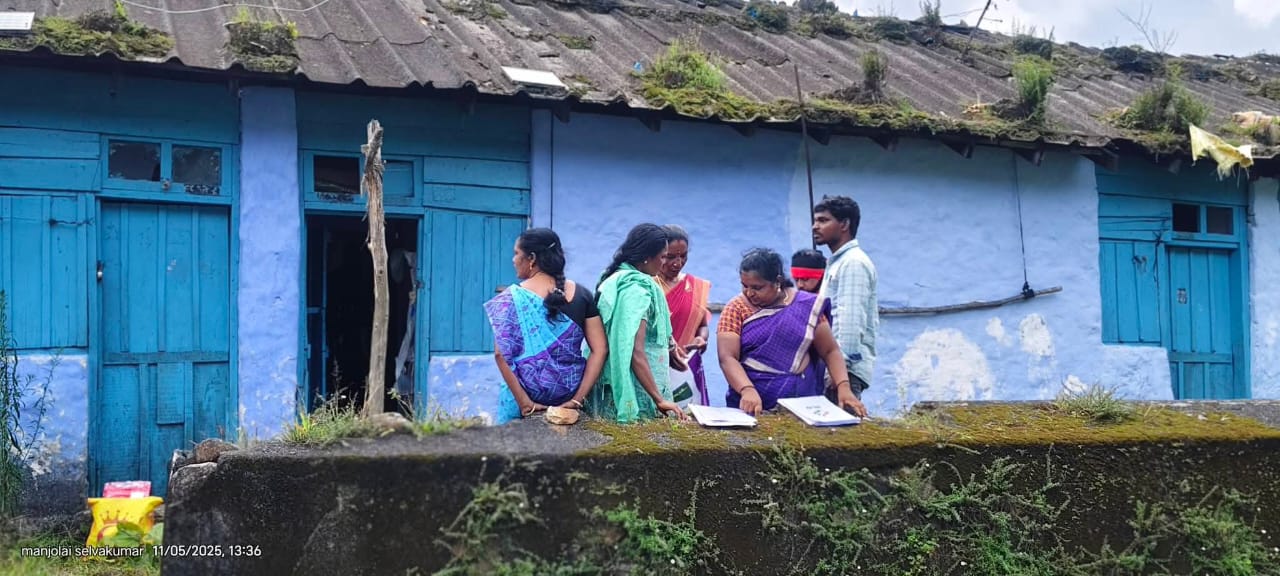
BLO's issuing forms in Manjolai
Synopsis: Manjolai previously had a ration shop, school campus, Anganwadi, and other government facilities, and three buses operated daily. Residents said all these services stopped, and the bus services reduced to one. The government attributed the development to people migrating elsewhere. But residents said people were forced to leave after the government snapped their supply lines and livelihoods.
Nearly 2,000 people of Manjoli in Tamil Nadu’s Tirunelveli district have been stripped of the cover guaranteed by the Indian Constitution.
Their rights — to work, lead a decent life, and even to vote — have been taken away, after the tea company, where they had worked for generations, ceased its operations.
Today, the Special Intensive Revision (SIR) of electoral rolls, initiated by the Election Commission of India (ECI), threatens to strip them of their right to adult franchise, a right guaranteed under Article 326 of the Indian Constitution, even as Tamil Nadu stands on the threshold of another election.
The guarantees, made by the Constitution, the ECI and politicians, seem not to be working for the people of Manjoli, who had to temporarily leave their permanent residence in search of work in the foothills.
For the outsider, Manjoli is picturesque, with rolling hills, verdant forests, and a cool climate. For the 1,906 residents belonging to scheduled castes, the beauty does not reflect in their lives, as they fight for existence, identity, and rights that they fear would soon be denied. They are a generation at the edge of being erased.
The threat did not come with SIR alone. It has a back story, going back almost a century.
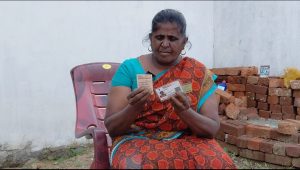
Stella Mary, a Manjolai Resident. Her Aadhaar, and other documents were issued in her Manjolai address.
In 1929, the Bombay Burmah Trading Corporation (BBTC) took 8,373.57 acres of the Manjolai tea estate on a 99-year lease from the Singampatti zamindari. Until 2024, the company primarily carried out tea cultivation along with coffee, pepper, and other crops.
The company needed workers, and it brought in hundreds of workers from across Tamil Nadu, mainly from Tirunelveli. These people mostly belonged to the Scheduled Castes. They were provided accommodation within the estate, which also boasted of a hospital and school. The amenities ensured that the workers did not move out of the estate.
The workers were happy. Four generations from 520 families lived and worked in the five estates located on the hills: Nalumukku, Kudiraivetti, Oothu, Kakachi, and Manjolai.
According to BBTC records, 456 permanent workers and over 200 temporary workers were employed. Based on this record, the families of permanent workers included retired and temporary workers. Residents said around 2,000 people from 520 families resided in Manjolai.
Although the company’s lease was valid until 2028, BBTC decided to close it down in 2024. The residents alleged that the decision was made because if the company continued operations until 2028, it would have to pay several thousand crore rupees in taxes to the government. The company claimed that its profits were insufficient to pay the taxes.
Following the closure decision, the company allegedly abandoned the workers and instructed them to immediately vacate the company-provided houses in Manjolai.
In protest, the Manjolai residents approached the Madras High Court and Supreme Court, demanding protection of livelihood and relief.
Amid this, during the ongoing Special Intensive Revision of electoral rolls, the district administration informed residents that over a thousand voters would be removed from the Manjolai polling stations because no one lived there anymore.
The residents were both surprised and alarmed. They have been living in Manjolai under the Ambasamudram Assembly constituency for generations.
Manjolai has five polling stations listed in the electoral roll published in January 2025: Manjolai West polling station No. 98; polling station No. 99 covering Kakachi and Nalumukku estates; polling station No. 100 at Nalumukku East; polling station No. 101 at Oothu; and polling station No. 102 at Kudiraivetti.

Reddiarpatti resettlement area.
Since no one currently lives in Kudiraivetti, polling station No. 102 has been merged with 101. Polling station No. 99 has been merged with No. 100. Polling station No. 98 continues to function independently.
An all-party meeting chaired by the District Special Deputy Collector on 2 December 2025, was told that these five polling stations together had a total of 1,906 voters.
Of these, enumeration forms for 1,182 voters were collected and digitised.
According to information collected by Sundaram, a government employee in Tirunelveli district, 412 forms were distributed among the voters of Booth No. 99 (Nalumukku). Of the 412 forms, 257 were filled out and returned; 97 voters were marked as shifted, and four as deceased.
In Booth No. 102 (Kudiraivetti), 73 forms were distributed, 63 were returned, nine voters were recorded as having shifted, and one death was reported.
In Booth No. 101 (Oothu), 540 forms were distributed, of which 355 were returned; 31 voters were recorded as deceased and 133 as shifted.
In Booth No. 98 (Manjolai), 607 forms were distributed, 355 were returned, 16 deaths were recorded, while the status of those marked as shifted remains unclear.
Sundaram said neither Manjolai residents nor their representatives were present at the all-party meeting. “No one even called them. They simply announced deletion (of names from the voters’ lists).”
However, on 28 November, Sivan Babu, an AIADMK local functionary and former chairman of the Manimuthar Town Panchayat, submitted a petition to the election officer stating that no one lives in these polling station areas.
He said that the BBTC’s lease had expired and all residents had vacated, and that the uploaded enumeration forms were illegal. He demanded that the four booths be cancelled.
Following this, on 29 November, the Cheranmahadevi Sub-Collector (in charge), along with voter registration officials, conducted a field inspection in Manjolai. Their report stated that only 93 voters were residing in Manjolai: 45 in Booth 98’s area, 21 in 99, 17 in 100, and 10 in 101.
The report further claimed that 1,813 voters had migrated out of Manjolai and could apply for voting rights elsewhere using Form 6.
Subsequently, the voter registration officer and the Sub-Collector issued memos to Booth Level Officers (BLOs) in Manjolai on 8 December.
They said the voter registration officer’s inspection had revealed that forms had been illegally filled out and uploaded for non-residents of Manjolai. The memos sought an explanation from the BLOs.
In May 2024, BBTC issued notices asking workers to vacate their allotted residences. However, due to continuous litigation, the deadline was extended by a few months.
Currently, a case filed by Manjolai estate workers John Kennedy, P Amutha, and Chandra is pending before the Supreme Court, demanding housing under the Samathuvapuram scheme, ₹25 lakh compensation, and other reliefs.
After initially attempting various methods to evict residents, the company is now dismantling buildings and equipment. With operations shut down, Manjolai residents have been without work for over a year.
Speaking to South First, 51-year-old Manjolai estate worker Stella Mary said that they had been living there until two months ago.
“We had no work for over a year. Three months ago, the ration shop was also closed. How are we supposed to eat? That is why we came down the hills to do whatever work we get. On holidays, at least two days a week, we return to our homes in Manjolai,” she said.
Manjolai previously had a ration shop, school campus, Anganwadi, and other government facilities, and three buses operated daily. Residents said all these services stopped, and the bus services reduced to one. The government attributed the development to people migrating elsewhere.
Mary offered a different view. The facilities were wound up not because of people leaving the place. “It is because they cut all these services that people are forced to come down and look for work.”
As proof that people continue to reside there and that Manjolai remains their permanent address, she showed ration purchase bills from August 2025.
Like Mary, hundreds of Manjolai workers are now moving downhill in search of work, renting houses in different places, and doing whatever jobs they can find.
“They mostly work in hotels, daily-wage catering jobs, earning ₹100–200 a day. The work is not permanent. Many stay at the workplace and return to Manjolai after work. Some have rented houses,” she said.
One such person is 45-year-old Amutha, who has rented a house in Tirunelveli. She worked in the Manjolai estate for 30 years and is the first petitioner to move the Supreme Court.
In eight months, Amutha has changed six jobs—oil company work, hotel work—all daily-wage jobs.
Vimal, a native of Manjolai, said caste is a major factor behind their difficulties. “Here, jobs and rental houses are given based on caste. Dalits from Manjolai cannot get stable housing or work,” he claimed.
Amutha sounded helpless. “We have spoken to so many media outlets, gone to the Supreme Court, and nothing changed. What are we supposed to do?”
What the Collector says
The Tamil Nadu Urban Habitat Development Board has provided houses in Reddiyarpatti and South Pappankulam in Tirunelveli for those who had left Manjolai.
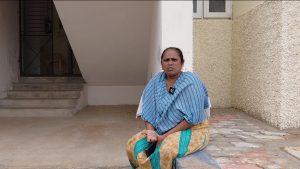
Mariammal, settled in Reddiarpatti
But out of around 500 Manjolai families, fewer than 100 have received the houses.
District Collector R Sukumar told South First that over 90 people bought houses in Reddiyarpatti, over 40 in South Pappankulam, and some requested houses under the Kalaignar Housing Scheme. He said updated numbers would be shared later.
A look at the Reddiyarpatti allotment list revealed that only 62 houses have been allocated. On visiting the site, residents said only 15 families were living there.
The housing colony is located at a remote location over three kilometres from the Reddiyarpatti main area, in a remote location.
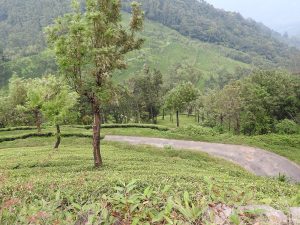
Manjolai (Wikimedia Commons/ Yercaud-Eelango)
M. Mariyammal, 50, felt cheated. “They deceived and sent us here. There is no work. The government said it would provide employment, but nothing has happened. For eight months, we have had no income, no food. If we had known this, we would never have come.”
Most of those who bought the houses were retirees or nearing retirement, residents said.
V. Vellaiyammal, 60, was a fourth-generation worker at the estate. “They promised all facilities. But we can’t even get a ration. They told us we could buy it anywhere, but when we went to the shop here, they demanded ₹200 for goods worth ₹100. Without work, how are we supposed to survive?”
Those who bought government houses have been given Form 6, and their names may be included in the Reddiyarpatti or South Pappankulam voter lists. But inclusion in the electoral rolls would not provide them with livelihoods.
However, beyond these hundred families, the government has no mapping of where the remaining 400-plus families have gone or what they are doing.
“Some bought government houses. Others returned to their native villages. Some came down from the hills and are living in other places, especially Vagaikulam and Azhagiyapandipuram. But knowing where each person is is a long process,” the Collector said.
Thus, even technically, the district administration does not have complete information about where Manjolai residents currently live or whether they have permanent addresses.

Advocate E. Robert Chandrakumar.
As a result, voters removed from Manjolai polling stations now face the risk of not being included anywhere else.
Many like Amutha live across the Tirunelveli district in rented houses or at workplaces, returning to Manjolai during holidays. Their belongings and household items remain in their Manjolai homes. Their Aadhaar, ration cards, and all other official documents carry their Manjolai address.
They lack address proof outside Manjolai, which is mandatory for Form 6.
“This creates a situation where if voters are removed from the Manjolai rolls, they cannot register anywhere else,” E. Robert Chandrakumar, a Manjolai native and an advocate practising in the Madurai Bench of the Madras High Court, said.
He added that this was not just about their voting rights, but also about citizenship.
“With a Supreme Court case pending, the government keeps arguing that fewer than 100 people live there. If voting rights are taken away, it becomes easy to prove in court that no one lives there, destroying our long legal struggle,” Chandrakumar said.
He expressed suspicion that the government was using the SIR process to strip Manjolai residents of both voting rights and citizenship.
Collector Sukumar said he had visited the place three to four times. “Only 93 people live there. Thousands have left.”
Chandrakumar countered. “They stopped rations, blocked NGO aid, and don’t allow supplies uphill. People come down for work and return on holidays. Will they delete voters because houses were empty when officials visited?”
Notably, no eviction notice has ever been issued by the government. Officials base their claim solely on inspections during which people were absent.
But residents have documented evidence, photos of enumeration forms collected on-site, Aadhaar cards, ration bills up to August, ration cards, voter IDs — all showing their Manjolai addresses, their roots.
Over 300 Manjolai residents have now sent a signed letter to the Tamil Nadu State Election Commission and ECI, demanding the protection of their voting rights.
They questioned the deletion of their names from the voters’ list when there is no proof of them leaving the place.
“I studied up to Class 5 in Manjolai. My mother, her mother, and her mother all lived there. It took four generations for me to become a lawyer, travelling 250 kilometres to Tirunelveli and Madurai. Now, by trying to erase our voting rights, they are trying to erase four generations of our lives. This is a human rights violation,” Chandrakumar said.
(Edited by Majnu Babu).


