

Published Jan 20, 2026 | 11:50 AM ⚊ Updated Jan 20, 2026 | 11:50 AM

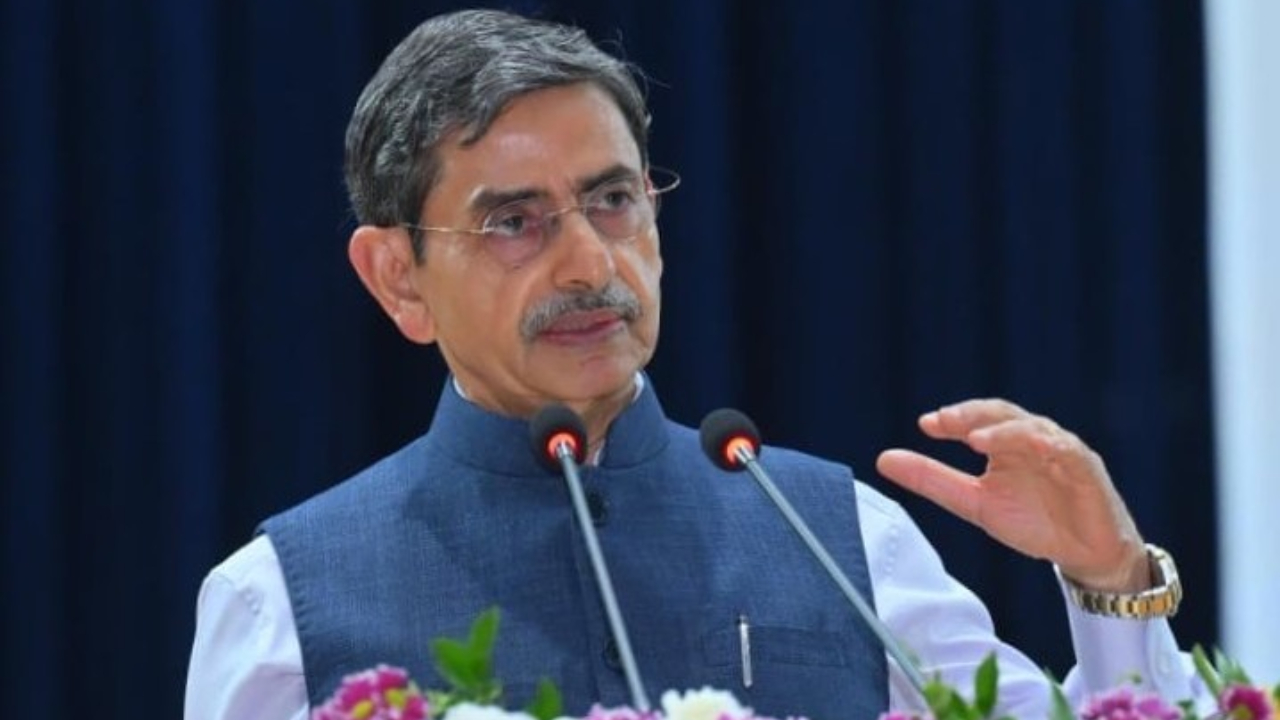
Tamil Nadu Governor RN Ravi. Credit: x.com/lokbhavan_tn
Synopsis: Tamil Nadu Governor RN Ravi walked out of the Assembly on 20 January 2026, refusing to deliver the customary address, citing 13 objections including “misleading” investment claims, rising crimes, drug abuse, Dalit atrocities, and governance lapses. CM Stalin accused him of violating constitutional norms. Meanwhile, the Assembly deemed the address read, continuing a standoff recurring since 2023.
Tamil Nadu Governor RN Ravi on Tuesday, 20 January declined to read the customary government address at the start of the first session of the Legislative Assembly for 2026 and walked out of the House, triggering a fresh confrontation between Raj Bhavan and the DMK-led State government.
Subsequently, Raj Bhavan issued a detailed statement in which the Governor said he had pointed out 13 reasons for declining to read the address, setting off sharp political exchanges between the gubernatorial and the elected government.
In the statement, Ravi alleged that he was repeatedly prevented from speaking, with his microphone being switched off, and said he was not allowed to place his views on record. He claimed that the government’s address contained several unsubstantiated and misleading statements, while ignoring issues of serious concern to the people of the State.
Questioning the government’s claim that Tamil Nadu had attracted investments worth over ₹12 lakh crore, Ravi said many memoranda of understanding signed with investors remained only on paper and that actual investments were only a fraction of the projected figures. He also stated that Tamil Nadu, once the fourth-largest recipient of FDI among Indian states, was now struggling to remain in sixth place.
Ravi flagged women’s safety as a major omission in the address, alleging a more than 55 percent increase in POCSO cases and over a 33 percent rise in incidents of sexual molestation. He expressed concern over what he described as rampant drug abuse, particularly among youth and school students, claiming that over 2,000 people, mostly young, had died by suicide in a year due to drug addiction.
He further alleged a rise in atrocities against Dalits, including sexual violence against SC women, which he said had not been addressed in the address.
The statement cited suicide figures, claiming that around 20,000 people died by suicide in Tamil Nadu in a year, nearly 65 suicides a day and alleged that the State was being referred to as the “suicide capital of India”.
He also accused the Tamil Nadu government of ignoring declining standards in education, pointing to large-scale faculty vacancies and unrest among guest lecturers. He alleged a breakdown of grassroots democracy, stating that thousands of village panchayats had remained defunct for years due to the non-conduct of elections and were being run by special officers.
Concerns were raised about temple administration, with the Governor claiming that several thousand temples were without boards of trustees and under direct government control. He alleged mismanagement and non-implementation of directions issued by the Madras High Court on preserving ancient temples.
The statement also highlighted stress in the MSME sector, noting that Tamil Nadu had only about four million registered MSMEs compared to over 55 million across the country, forcing entrepreneurs to move to other States. It further referred to dissatisfaction among lower-rung employees across sectors, whose grievances, according to the Governor, were not reflected in the address.
Finally, among the 13 reasons cited, Ravi alleged that the National Anthem had been disrespected during the proceedings, calling it a violation of a fundamental constitutional duty.
Responding in the House, Chief Minister MK Stalin accused Ravi of deliberately violating constitutional provisions by leaving the Assembly without reading the Governor’s Address.
Stalin said Ravi had once again disregarded constitutional norms and established conventions, adding that such conduct was unbecoming of the office he holds. He underlined that, under the Constitution, the Governor’s Address is prepared by the elected State government and must be read in full in the Assembly, without insertion, alteration, omission, or selective skipping based on personal views.
Following the Governor’s departure without delivering the address, Stalin moved a resolution stating that the English version of the Governor’s Address, which had already been sent and uploaded in the computer system, should be deemed as having been read in the House and recorded accordingly in the Assembly proceedings. The resolution was adopted.
Subsequently, Assembly Speaker M Appavu read out the Governor’s Address in the Assembly.
Stalin also announced that efforts would be made to amend the Constitution to remove the practice of the Governor’s Address at the beginning of legislative sessions.
This episode follows a pattern in recent years. Since 2023, Governor Ravi has never completed the address. In 2024, he cited alleged disrespect to the National Anthem in the Assembly, repeated the same charge in 2025, and raised the same allegation again this year.
(Edited by Amit Vasudev)


