

Published Jan 23, 2026 | 12:44 PM ⚊ Updated Jan 23, 2026 | 12:44 PM

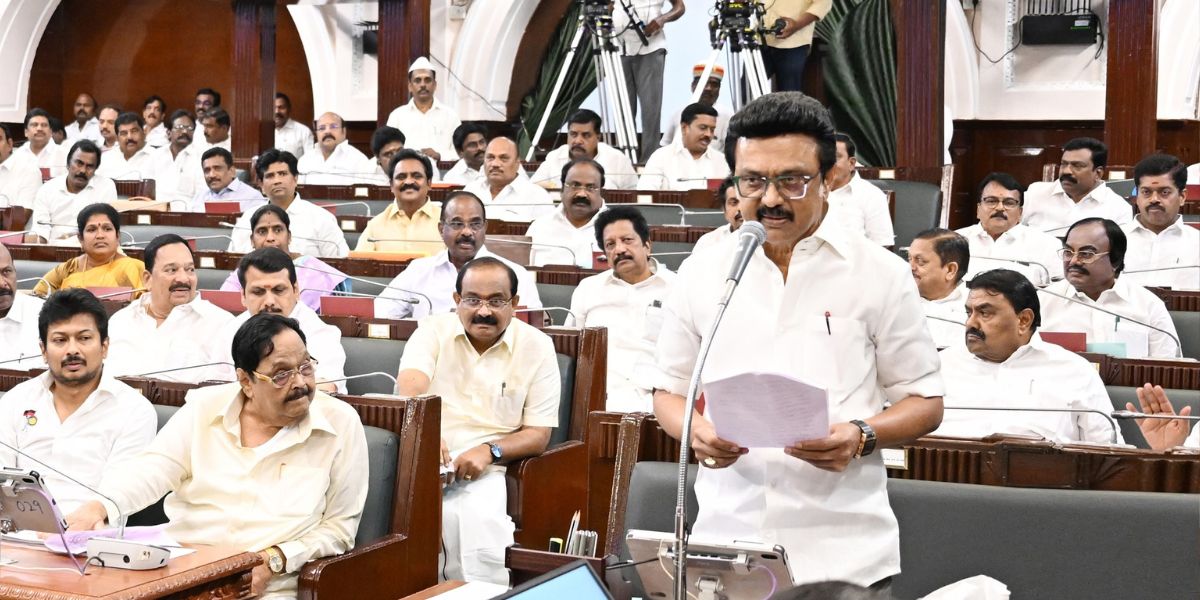
Tamil Nadu Chief Minister MK Stalin.
Synopsis: The Tamil Nadu Legislative Assembly unanimously adopted a resolution urging the Union government to safeguard the right to work for rural people under the Mahatma Gandhi National Rural Employment Guarantee Act (2005) and to ensure timely and adequate fund release for the scheme.
The Tamil Nadu Legislative Assembly on Friday, 23 January, unanimously adopted a resolution in the Legislative Assembly opposing the Union Government’s Viksit Bharat Guarantee for Rozgar and Ajeevika Mission (Gramin) (VB G Ram G) scheme.
Chief Minister MK Stalin moved the resolution urging the Union government to safeguard the right to work for rural people under the Mahatma Gandhi National Rural Employment Guarantee Act (2005), to ensure timely and adequate fund release for the scheme, allow states to frame work guidelines, and allocate funds based on states’ performance and efficiency.
On 18 December, the BJP-led NDA government pushed through the VB G Ram G Bill in the Lok Sabha amid fierce protests by the Opposition, both inside and outside Parliament. After the Bill was passed in the Rajya Sabha, the President gave assent on 21 December, making it an Act.
The legislation replaces the Mahatma Gandhi National Rural Employment Guarantee Act (MGNREGA), one of the Congress-led United Progressive Alliance’s flagship welfare schemes that guaranteed at least 100 days of employment to one member of every rural household.
Opposition parties, including the Congress, the CPI(M), the CPI, the DMK and the Trinamool Congress, have denounced the move, warning that it would weaken employment guarantees for rural workers and shift the financial burden onto State governments.
The resolution noted that the Union government has not released ₹1,026 crore due to Tamil Nadu under the scheme so far, resulting in hardship for poor households and farmers. It questioned what it termed as “step-motherly treatment” despite Tamil Nadu’s strong track record in implementing the programme.
Highlighting the scheme’s impact in the state, the House pointed out that 100 days of employment are assured, benefiting around 65 lakh families every year. The resolution stressed that sustained allocations are crucial to protect the livelihoods and social security of women, persons with disabilities, Scheduled Castes and Scheduled Tribes, who form the majority of beneficiaries.
The Assembly opposed the Union government’s move to replace demand-driven funding with allocations based on notional estimates, and demanded a return to the earlier practice of allocating funds based on actual demand for work. Respecting the spirit of federalism, it sought greater flexibility for states to frame guidelines and determine allocations according to local needs.
The resolution also objected to the proposed new funding pattern, which would increase the state’s financial burden to about 40 percent, and called for continuation of the existing cost-sharing structure under the scheme.
Strongly opposing the removal of Mahatma Gandhi’s name and the renaming of the programme as VB–GRAM G, the House insisted that the scheme must continue in Mahatma Gandhi’s name, citing its historical and social significance.
(Edited by Muhammed Fazil with inputs from Subash Chandra Bose.)


