

Published Oct 06, 2026 | 2:26 PM ⚊ Updated Oct 06, 2026 | 2:26 PM

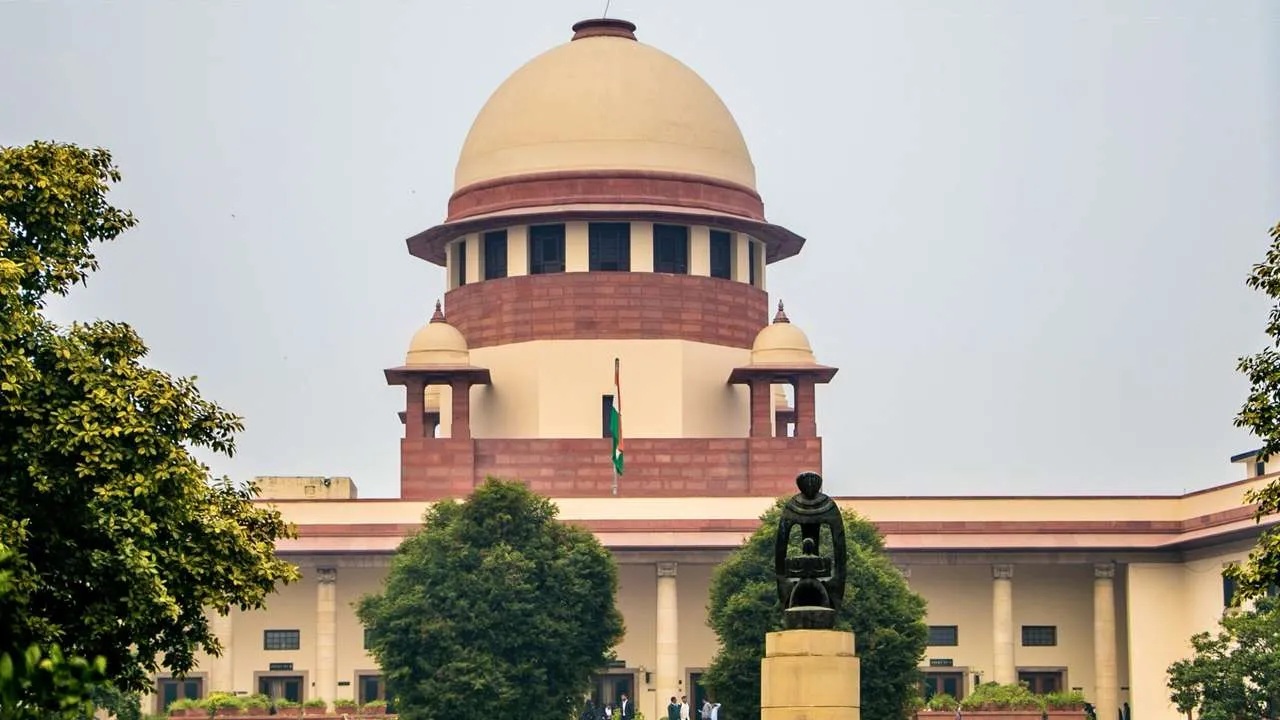
Supreme Court

The Supreme Court on Tuesday, 6 October, closed a long-pending case concerning the limits of legislative privileges and their interplay with freedom of speech, after noting that the Tamil Nadu Legislative Assembly had withdrawn the resolution that had triggered the case.
A seven-judge Constitution Bench headed by Chief Justice of India Surya Kant, comprising Justices Aravind Kumar, Prashant Kumar Mishra, Joymalya Bagchi, Vipul M. Pancholi, Shree Chandrashekhar and V. Mohana, disposed of the matter as having become infructuous.
The case dates back to 2003, when the Tamil Nadu Legislative Assembly passed a resolution against journalists of The Hindu over an editorial critical of the then AIADMK government headed by J. Jayalalithaa. The Assembly had sentenced five journalists — then Editor N. Ravi, Executive Editor Malini Parthasarthy, Publisher S. Rangarajan, Chief of Bureau V. Jayant and Special Correspondent Radha Venkatesan — to 15 days’ simple imprisonment for breach of privilege and contempt.
The journalists approached the Supreme Court, which stayed their arrest.
The case raised significant constitutional questions concerning the relationship between Article 19(1)(a), which guarantees freedom of speech and expression; Article 21, which protects life and personal liberty; and Article 194(3), which deals with the powers and privileges of State legislatures.
The matter was initially referred to a five-judge Constitution Bench and was subsequently referred to a seven-judge Bench in 2004 because of an apparent conflict between earlier Supreme Court decisions concerning legislative privileges and fundamental rights.
However, the Supreme Court was informed that the Tamil Nadu Assembly had withdrawn its November 7, 2003 resolution through another resolution dated July 30, 2004. In view of this subsequent development, the seven-judge Bench closed the case as infructuous.
Importantly, the Court said that the larger questions of law remain open and can be considered in an appropriate future case.
The case had remained pending for more than two decades before the Supreme Court decided earlier this year to take it up for hearing from October 6, 2026.
(Edited by Sumavarsha, with inputs from Subash Chandra Bose)



