

Published Nov 29, 2025 | 7:00 PM ⚊ Updated Nov 29, 2025 | 7:00 PM

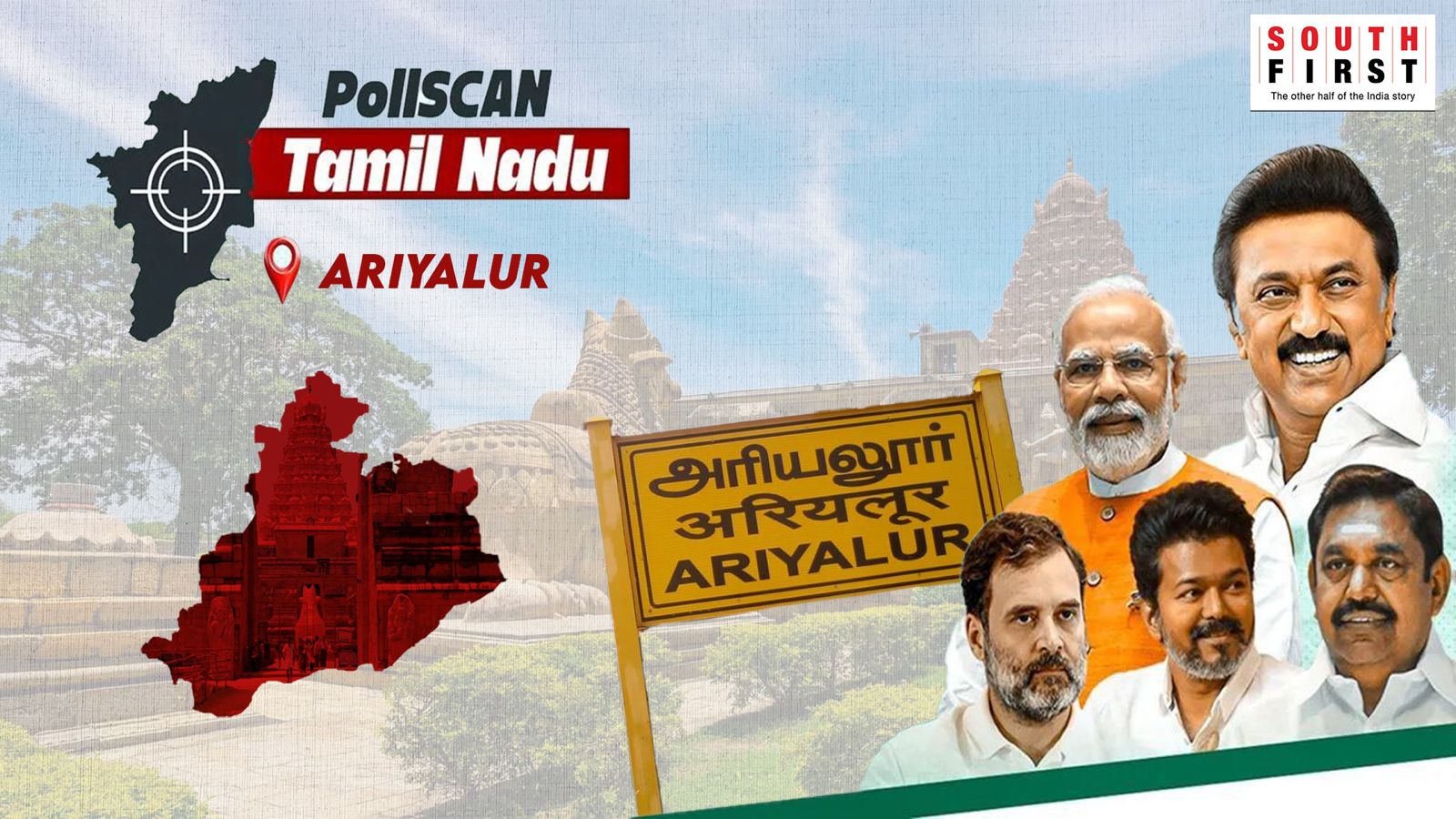
Ariyalur.
Synopsis: The district has only two Assembly constituencies — Ariyalur and Jayankondam — with 2,66,232 women voters, 2,62,440 men voters, and 19 others, totalling 5,28,691 voters. Small pockets such as Senthurai from Kunnam Assembly segment in Perambalur district are also part of Ariyalur.
Ariyalur in central Tamil Nadu never ceases to spring a surprise. From dinosaur eggs to fossils, the region — the Mecca of Geological Researchers — is a treasure trove of prehistoric wonders.
Beyond science, Ariyalur offers evidence of ancient human presence. Archaeological findings indicate that people lived here from 200,000 BCE to around 300 CE. From the Sangam age to the rule of the Cholas, Pallavas, Oori — one of the Kadaiyezhu Vallalgal — the Pandyas, Vijayanagara Empire, Palayakkarars, Bijapur Sultans, Marathas and the Nawabs of Karnataka, almost every major dynasty has left its imprint on this small but historic district.
Ariyalur is not only historically rich; it also holds political significance. It is the home district of S Anitha, the young student whose fight against the National Eligibility and Entrance Test (NEET) went all the way to the Supreme Court. Her death by suicide in protest had shaken India.
It is also the native district of Thol. Thirumavalavan, leader of the Viduthalai Chiruthaigal Katchi.
The district has only two Assembly constituencies — Ariyalur and Jayankondam — with 2,66,232 women voters, 2,62,440 men voters, and 19 others, totalling 5,28,691 voters. Small pockets such as Senthurai from Kunnam Assembly segment in Perambalur district are also part of Ariyalur.
Ariyalur falls under the Chidambaram Lok Sabha constituency, currently represented by Thirumavalavan.
Despite being home to some of the world’s oldest life forms and holding immense historical value, Ariyalur is today classified as one of Tamil Nadu’s most backward districts.
Residents say that although the district is rich in mineral resources, especially limestone, industrial development and employment opportunities remain limited, keeping the region economically stagnant.
With the 2026 elections approaching rapidly, the political mood and expectations of Ariyalur’s voters merit close attention.
The district headquarters, Ariyalur, is a significant constituency that has alternated between the DMK, AIADMK, and Congress over the years. It has 1,32,760 women voters, 1,31,291 men voters, and 9 others, totalling 2,64,060 voters.
The current MLA is K Chinnappa of the MDMK, who contested on the DMK’s Rising Sun symbol.
After winning two consecutive elections here, the AIADMK lost the seat to the DMK in 2021.
Socially, the region is dominated by Vanniyars, followed by Dalits, Moopanar, Udaiyar and other communities.
Although the area is rich in minerals and hosts several cement factories, mostly in the private sector, residents allege that these units prefer hiring North Indian migrant labourers instead of local youth — a major election issue.
Another recurring complaint is that although the constituency has a medical college and hospital, advanced treatment facilities are lacking. For specialised care, people are forced to travel 40 km to Thanjavur Medical College Hospital.
Beyond community-based voting patterns, these civic and economic issues are expected to influence the 2026 election significantly.
Named after a Chola victory, Jayankondam was a major urban centre during the Chola period, located close to Gangaikonda Cholapuram, the imperial capital.
The constituency has 1,33,472 women voters, 1,31,149 men voters, and 10 others, totalling 2,64,631 voters. Its current MLA is Ka. So. Ka. Kannan of the DMK.
This seat has also alternated between the AIADMK, DMK, and Congress. With strong Vanniyar support in the district, the PMK has also won here once. In 2011, J Guru, popularly known as Kaduvetti Guru, was elected from this constituency.
Communities such as Vanniyars, Dalits, and Mudaliars are spread across the region.
Agriculture is the mainstay, and farmers have several demands. Given the abundance of cashew farms, locals want the long-announced cashew processing factory to be established. They also ask for more agri-based industries.
Residents also note that the international footwear factory, for which the foundation stone was laid years ago, is yet to become operational.
Despite having all the factors necessary for growth, Ariyalur remains underdeveloped. Residents blame successive governments for failing to invest adequately and prioritise the district.
A key grievance is that the Government Cement Factory in Ariyalur has over 1,000 vacancies, yet no permanent appointments are made. Instead, workers are hired on low-wage contracts. Similarly, locals allege that private cement companies extract the region’s natural resources but do not employ local youth.
Several quarries are also accused of operating illegally, with little enforcement of regulations.
More than 20 years after the district was formed, residents still lack an integrated court complex — a long-pending demand.
Ariyalur does not have many prominent leaders from the major parties. The most notable figure today is Transport Minister S. Sivasankar, the MLA from Kunnam, who serves as the DMK’s key face in the region.
Other notable local leaders include Advocate Balu of the PMK and former AIADMK whip Tamarai Rajan.
Youth support for Tamilaga Vettri Kazhagam is estimated at around 10–12%, but locals believe its chances of winning remain slim.
Given the widespread unemployment, lack of industries, and inadequate basic amenities, livelihood issues are likely to play a decisive role in the 2026 election.
While the DMK currently holds an upper hand, with six months left for the elections, voters say they will support whichever party offers credible solutions to their everyday problems.
(Edited by Majnu Babu).


