

Published Jun 19, 2026 | 8:31 AM ⚊ Updated Jun 19, 2026 | 8:31 AM

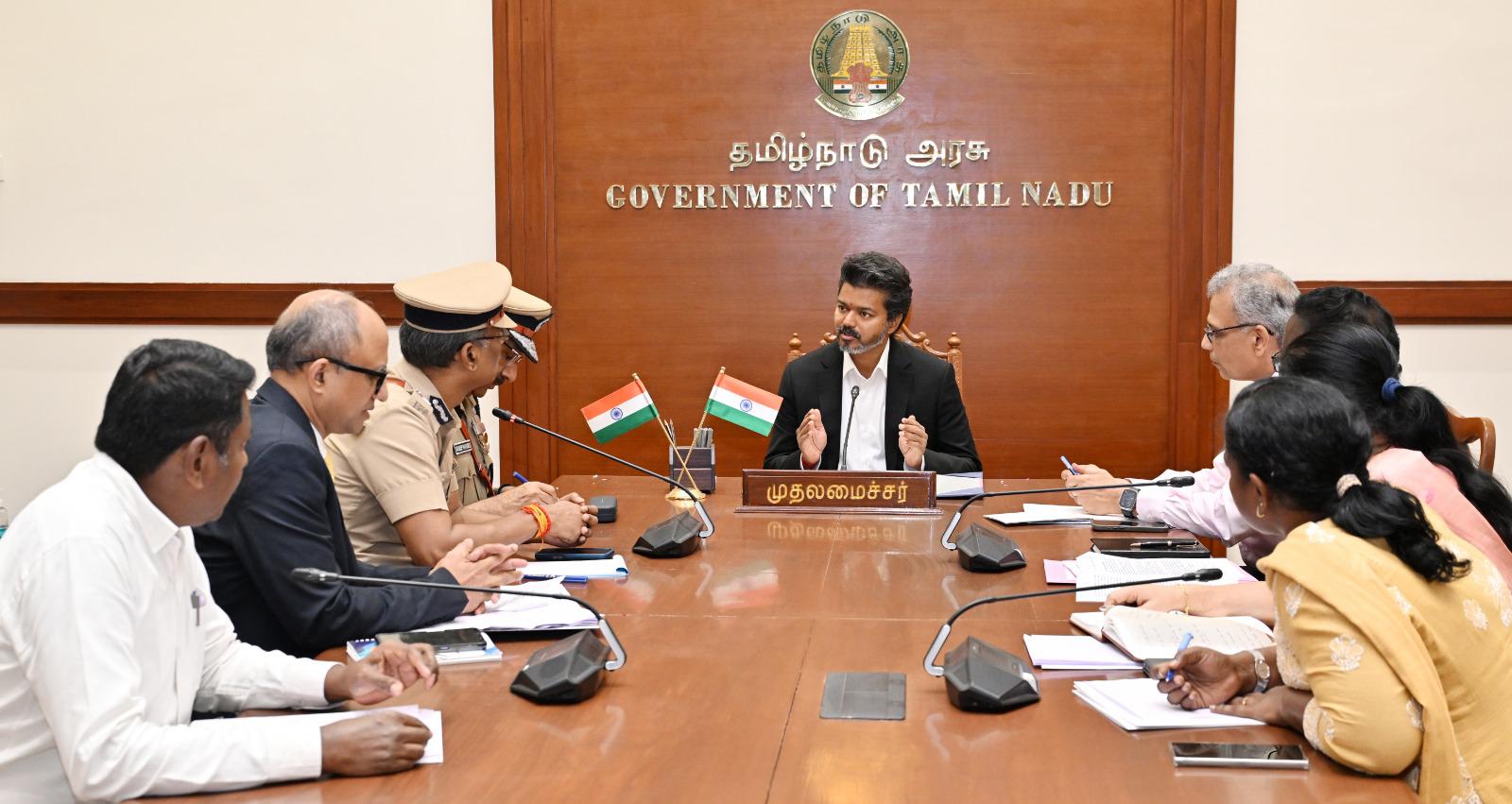
Close to 200 senior officers have been transferred ever since C Joseph Vijay assumed charge as the Chief Minister.

Synopsis: After coming to power in Tamil Nadu, the TVK government led by C. Joseph Vijay carried out a massive bureaucratic reshuffle, transferring 193 IAS and IPS officers, including most of the key officials whose removal Vijay had demanded before the elections. While the changes are seen as a restructuring of power centres linked to the previous DMK regime, experts argue the transfers largely reflect a routine post-election administrative realignment rather than outright political punishment.
The TVK-led government in Tamil Nadu has effected a massive shake-up of the senior bureaucracy in the state, transferring close to 200 IAS and IPS officers in over a month.
Some transfers were anticipated as the TVK founder-president and the present Chief Minister C Joseph Vijay, had complained against certain officers before the 23 April Assembly elections.
In March, weeks before the polls, Vijay had accused the then DMK government of using the state bureaucracy and police machinery for political gains and formally sought the transfer of several top officers occupying key positions.
Director General of Police (DGP), Chennai Police Commissioner, ADGP (Law and Order), ADGP/IG Intelligence and DG Armed Police, Chief Secretary, Home Secretary, Secretary (Public), Secretary-1 to the Chief Minister, Finance Secretary and Greater Chennai Corporation Commissioner, were on Vijay’s complaint list.
The complaint was then largely viewed as an election-period political routine. But a review of the government orders issued after the new government assumed office on 10 May revealed a striking pattern.
A month after Vijay assumed power, almost every officer he had publicly objected to had been transferred.
While governments routinely reshuffle officials after assuming office, the present exercise stood out not for the scale of transfers, but for the very bureaucratic power centres Vijay had questioned before elections.
Between 10 May and 15 June, the government transferred, newly posted or placed under disposal 96 IPS officers and 97 IAS officers, taking the overall number to 193.
The reshuffle shook up nearly all alleged major power centres. Changes were made in the police leadership and key bureaucratic positions, including that of the chief secretary and home secretary, among others.
The scale of transfers suggested that the new government has moved quickly to reorganise the same administrative structure it believed had been compromised under the previous regime.
Also Read: Chennai police’s WhatsApp summons, queries on spouse
Among all transfers and new postings, the one involving former Chennai Police Commissioner A Arun stood out.
During the election period, TVK had specifically objected to Arun continuing in office and sought his transfer.
The Vijay administration did not shift Arun to an insignificant post. Instead, he has been assigned the charge of the Director of the Directorate of Vigilance and Anti-Corruption (DVAC), one of the most powerful and politically sensitive positions in Tamil Nadu.
The decision caught attention because Arun has been a controversial officer, with repeated allegations raised by YouTuber Savukku Shankar. The YouTuber had accused the officer of blatantly supporting the previous DMK regime and engaging in politically motivated actions.
While those allegations lacked legal backing, Arun’s appointment came as one of the biggest contradictions in a broader reshuffle otherwise seen as targeting officers opposed by TVK.
Also Read: Fall of an intel chief: Inside story of Tamil Nadu fake passport scam
Another transfer that grabbed attention was that of S Davidson Devasirvatham.
Before the election, Devasirvatham was serving as DGP and Director, DVAC. In April, the Election Commission placed him on compulsory wait following TVK’s complaints.
After the new government assumed office, he was posted as the Chief Vigilance Officer of Aavin, the largest dairy cooperative in the state, marking a sharp shift from the powerful position he had previously held.
Devasirvatham’s transfer has an additional political context. He was one of the senior officers who had officially briefed the media on the Karur stampede, one of the major controversies during the election campaign.
TVK had then vehemently blamed the DMK government and police administration for their handling of the incident.
Another 19 police officers, including those who were on duty during the Karur stampede, were also shifted.
Also Read: IPS officer who ordered Thoothukudi firing accused of sexual abuse
Another curious development was the return of the controversial IPS officer, S Selvanagarathinam.
The officer had earlier been placed on compulsory wait, but the new government brought him back and appointed him as Superintendent of Police-I, Cyber Crimes Division, Chennai.
Earlier, a woman had accused him of sexually exploiting her on the promise of marriage and threatening her. Disciplinary proceedings were initiated against him following the allegation, and the matter reached the courts.
He also faced criticism for ordering the police to fire during the 2018 anti-Sterlite protests in Thoothukudi, which left 13 people dead.
Despite such controversies, the new government has brought him back and given him a fresh posting in Chennai.
Also Read: Stalin questions Vijay’s silence day after Chennai sees 12 sexual assault cases
The reshuffle has also brought significant changes in Tamil Nadu’s Intelligence Department, one of the most politically sensitive arms of the state police.
Dr KA Senthil Velan, who had been serving as the Inspector General of Police of the Intelligence wing during the election period, was among the senior officers placed on compulsory wait by the Election Commission.
After the new government assumed office, Velan was not brought back to his earlier role. Instead, he has now been posted as Inspector General of Police / Additional Director, Tamil Nadu Police Academy, in the existing vacancy, marking another case where an officer occupying a key position flagged by Vijay before elections has now been shifted out.
The Vijay government has now appointed B Bala Naga Devi, a 1995-batch IPS officer, as the Director General of Police (DGP), Intelligence, making her the first woman officer in Tamil Nadu’s history to head the intelligence wing.
She was previously serving as DGP, Economic Offences Wing, while also holding the additional charge of DGP, Civil Supplies CID.
Her elevation has been viewed as significant, considering that the intelligence was one of the departments where Vijay had specifically sought changes.
TVK had also sought the transfer of Dr Maheshwar Dayal, who was serving as ADGP (Law and Order) during the election period. He has now been posted as ADGP, Administration, Chennai, after downgrading the existing vacant post of DGP (Administration).
While the reshuffle in the police department has attracted larger public attention, changes carried out on the administrative side have been equally significant.
Several of the 97 IAS officers now transferred or placed under disposal had faced TVK’s wrath before the elections.
Among them, former Chief Secretary N Muruganandam and former Home Secretary Dheeraj Kumar were first transferred by the Election Commission following TVK’s complaints.
After the new government assumed office, Muruganandam was posted as Additional Chief Secretary / Commissioner of Revenue Administration and Disaster Management, while Dheeraj Kumar was moved as Additional Chief Secretary to the Government, Tamil Nadu Entrepreneurship Development and Innovation Institute (EDII).
T Udhayachandran was shifted from the Finance Department and posted as Additional Chief Secretary and Chairman and Managing Director of Tamil Nadu Industrial Investment Corporation Limited (TIIC).
Dr P Umanath, who had served in the Chief Minister’s Secretariat, has now been posted as Principal Secretary and Chairman and Managing Director of Tamil Nadu Civil Supplies Corporation.
J Kumaragurubaran, former Greater Chennai Corporation Commissioner, has been posted as Secretary, Commercial Taxes, Registration and Religious Endowments Department.
However, Reeta Harish Thakkar, Secretary (Public Department), has been untouched.
Barring a few exceptions, nearly all officers whose transfers Vijay had demanded before elections have since been moved out, with many of them ending up in positions that appear considerably less powerful than those they had occupied under the previous regime.
Retired IAS officer G Balachandran opined that it would be incorrect to view the reshuffle entirely as a politically motivated exercise aimed at punishing officers who were perceived as close to the previous regime.
“Generally, one may look at these transfers and say that the new government is sending a message, that if officers act against us politically, we too can act against them after coming to power. But I do not think these transfer orders can be viewed entirely from that perspective because some officers have, in fact, been given good postings,” he said.
Balachandran argued that if the intention behind the present reshuffle was purely punitive, the transfer orders would have looked far more severe.
Citing an earlier example, he said former Chief Minister J Jayalalithaa had once posted a DGP-rank officer to a much smaller and less significant assignment after a change in government. Something of that nature has not happened in the current reshuffle.
It may be recalled that senior IPS officer Jaffer Sait, widely considered close to the DMK government and who had served as ADGP (Intelligence) during the 2006–2011 DMK regime, was shifted by the Jayalalithaa-led AIADMK government and posted as Special Officer at the Mandapam refugee camp in Ramanathapuram.
“If this government intended to send that kind of message, we would have seen much harsher postings. That has not happened here,” Balachandran said.
He added that the current government might still be finding its administrative footing.
“They are relatively new to both politics and governance. They themselves may still be figuring out how they want to run the administration. Perhaps after gaining more experience, we may see a clearer pattern emerge. For now, I do not see this as a uniform punishment posting exercise,” he added.
On the large number of transfers, Balachandran said such exercises were common whenever a new government assumed office.
“This is a routine exercise meant to establish administrative control, besides signalling to officers that transfers and postings ultimately remain under the authority of the government. Beyond that, I do not see these transfers as punishment postings,” he said.
A senior journalist who closely tracks Tamil Nadu police administration echoed Balachandran’s view.
“Every government goes through such reshuffles after coming to power. Officers, too, gradually adjust themselves to the priorities of the ruling dispensation. That has always been the nature of the system,” the journalist said, requesting anonymity.
(Edited by Majnu Babu).



