

Published Dec 29, 2025 | 3:34 PM ⚊ Updated Dec 29, 2025 | 3:34 PM

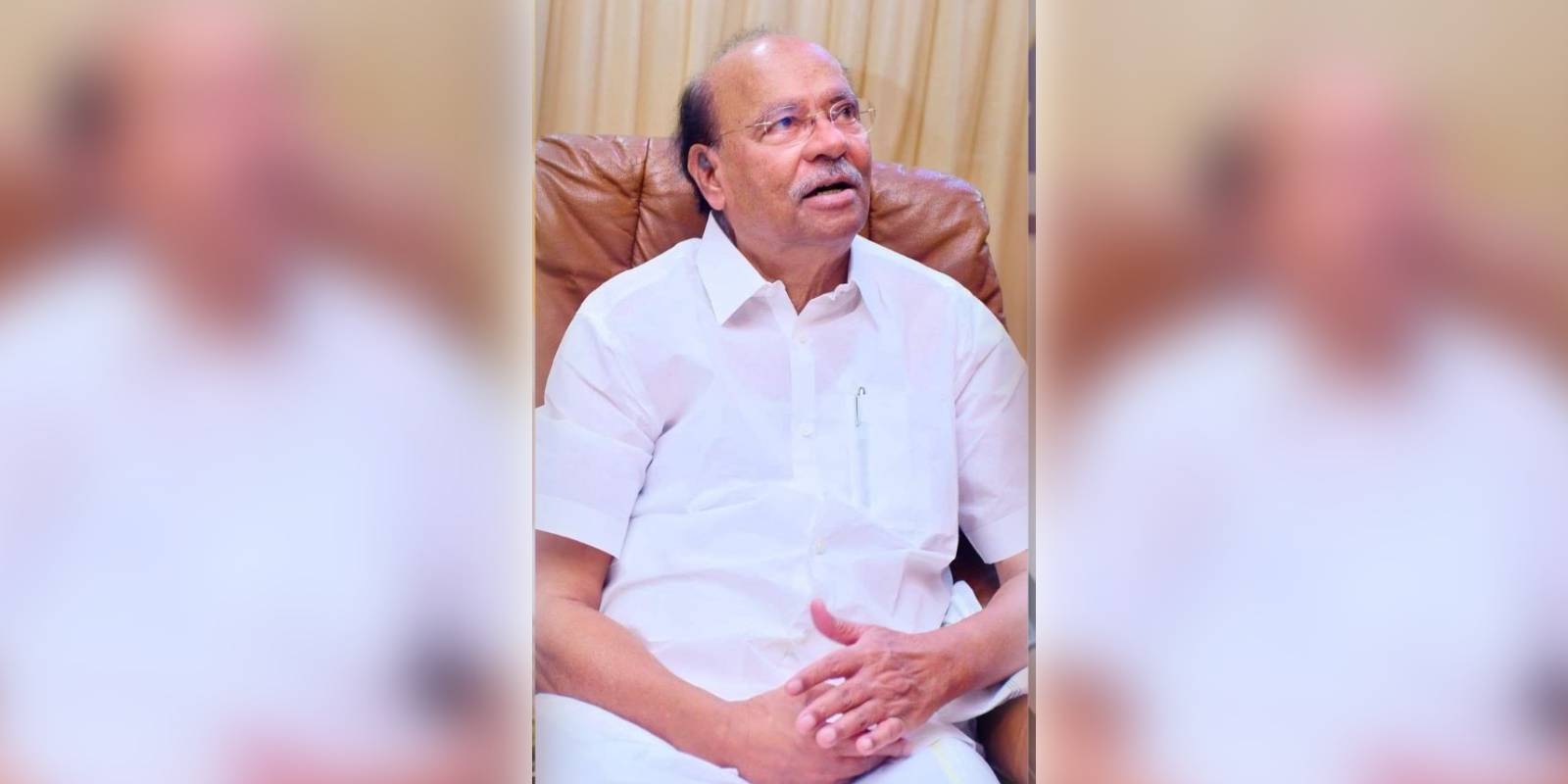
PMK founder S Ramadoss. (X)
Synopsis: The rift in PMK — and in its first family — further widened as Ramdoss and his daughter Srigandhi trained guns at detractors without naming anyone. The meeting also ratified the removal of Sowmya Anbumani, wife of Anbumani, as the president of the party’s women’s wing.
PMK founder S Ramadoss was re-elected as the party’s president at a state-level meeting in Tamil Nadu’s Salem on Monday, 29 December.
The general council and executive committee meeting of the Pattali Makkal Katchi (PMK), held amidst a power struggle between Ramadoss and his son and former minister Anbumani Ramadoss, also ratified the removal of Sowmya Anbumani, the latter’s wife, as the president of Pasumai Thayagam.
Ramadoss’s elder daughter Srigandhi Ramadoss will now head Pasumai Thayagam, PMK’s women’s wing.
The meeting, organised under the banner “Bidding Farewell to 2025, Welcoming 2026,” marked a decisive moment in PMK’s internal power realignment following months of organisational conflict and legal proceedings.
The council endorsed the state executive committee and general council’s earlier decisions and confirmed GK Mani as its honorary president, Murali Shankar as general secretary, and Syed Mansoor Hussain as treasurer.
Widening the rift within the PMK, Anbumani had expelled senior leader and Pennagaram MLA Mani from the party on 26 December.
The resolutions adopted at Salem traced the leadership dispute within the party to the expiry of Anbumani’s three-year tenure as PMK president on 28 May 2025.
Ramadoss had objected to the continuation of Anbumani as president and challenged documents submitted to the Election Commission to extend the term.
After the Election Commission advised him to seek a judicial remedy, Ramadoss moved the Delhi High Court. The court’s order on 4 December 2025, which the party described as a “historic victory”, upheld his position while granting liberty for civil remedies if required.
Following this, the party’s internal bodies met on multiple occasions between May and December 2025 to reinstate Ramadoss as president and remove Anbumani from all party positions, including primary membership.
The Salem general council formally ratified all these decisions.
Addressing the general council, Srigandhi launched a sharp attack on party critics and questioned the legitimacy of Anbumani’s claim to the post of party president.
Referring to allegations repeatedly raised from public platforms branding the PMK leadership as “DMK agents” or “DMK slaves”, Srigandhi said those making such accusations were themselves aligned with the RSS.
“Those who go from stage to stage calling us DMK agents, when you look at who they are, they are all RSS loyalists,” she said.
She asserted that decisions on political strategy, including alliances and seat-sharing, had already been carefully planned by Ramadoss.
“Who we ally with and who gets seats has been decided by ‘Ayya’ (Ramadoss). What we need is a change in government, and PMK must have a share in that change,” she said.
Srigandhi also questioned Anbumani’s claim to leadership, accusing him of neglecting the party for years.
“Can someone who ignored the party all this time now suddenly claim to be its leader?” she asked.
She said that if Anbumani sought a leadership position, he was free to chart his own political course. “If Anbumani wants a party post, he can start a separate party,” she said.
Her speech was received with loud applause from party cadres, reinforcing the leadership’s attempt to project unity and decisiveness following months of internal turmoil.
Ramadoss delivered an emotionally charged speech, repeatedly invoking his four-and-a-half decades of association with the PMK and its grassroots base.
He described party workers as “dearer than life” and said the emotional bond he shared with them was the source of his political strength.
Ramadoss said he had struggled to sleep due to the turmoil within the party, but found peace when meeting PMK cadres, whom he described as the party’s true foundation.
Referring to internal dissent, Ramadoss said individuals whom he had mentored and entrusted with responsibility had now turned against him, subjecting him to public humiliation through what he called “orchestrated attacks”.
Without naming individuals, he expressed anguish over the alleged humiliation of senior leader Mani, saying it was something he could not accept after his three decades of service to the party and the people.
Ramadoss claimed that “95% of PMK supporters” continued to stand with him, dismissing the influence of rival factions within the party.
He also addressed the intense speculation among cadres regarding PMK’s alliance for the 2026 Assembly elections, acknowledging the anticipation around when and with whom the party would align.
Ramadoss said the decision would be taken at the appropriate time and assured cadres that he would build a “winning alliance”.
Calling on party workers to intensify their efforts, he urged unity, discipline, and commitment at the grassroots level to ensure electoral success.
A key resolution granted Ramadoss full authority to hold alliance negotiations with other political parties for the 2026 Tamil Nadu and Puducherry Assembly elections.
He was also authorised to finalise seat-sharing arrangements, select candidates, and sign statutory nomination forms (Forms A and B).
The party resolved to strengthen its organisational structure down to the village and booth levels, appointing functionaries to ensure higher voter mobilisation in every constituency.
Among the 27 resolutions adopted, PMK reiterated its long-standing policy positions, including:
(Edited by Majnu Babu).


