

Published Nov 23, 2026 | 7:41 PM ⚊ Updated Nov 23, 2026 | 7:41 PM

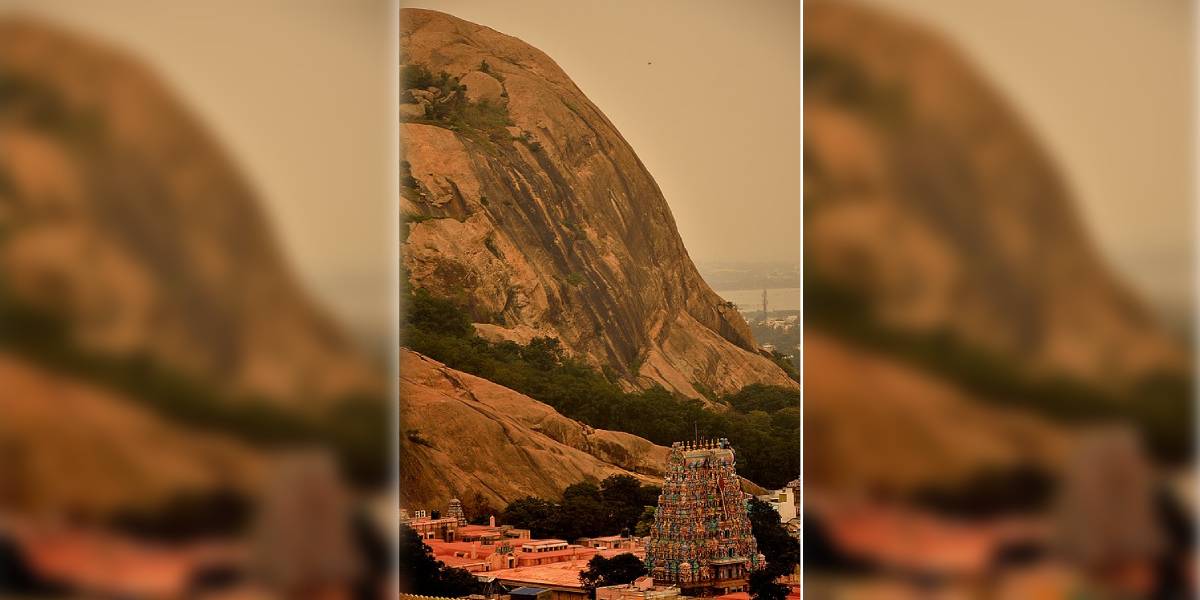
Tiruppanarankundram in Madurai, Tamil Nadu.

Synopsis: More than 1,700 police personnel have been deployed at Thiruparankundram hill in Madurai ahead of Karthigai Deepam on 24 November, when the ceremonial lamp is to be lit at the ‘Deepathoon’, a stone pillar near the Sikandar Badusha Dargah. The Supreme Court permitted the lighting as a one-time arrangement on 20 November, subject to strict safeguards, while the Tamil Nadu government has filed a review petition challenging the order.
More than 1,700 police personnel have been deployed at Thiruparankundram hill in Madurai, Tamil Nadu, ahead of the lighting of the ceremonial lamp at the ‘Deepathoon’, a stone pillar near the Sikandar Badusha Dargah, on Karthigai Deepam on Tuesday, 24 November.
Police personnel have been stationed near the entrance to the hill along the Palani Andavar temple route. Barricades have been erected to prevent the public and devotees from accessing the hill. Bomb detection and disposal personnel have also installed screening equipment along the route.
In an interim order on 20 November, the Supreme Court permitted the ceremonial lamp, usually lit at the Uchi Pillaiyar temple at the base of the hill, to be lit at the ‘Deepathoon’ as a one-time arrangement, subject to strict safeguards and with access restricted to authorised persons and officials.
The court said the arrangement would not establish any customary, religious or proprietary right and left all questions concerning the site and the dispute open for further adjudication.
The Tamil Nadu government has filed a review petition challenging the order. The State has argued that allowing the ceremony could irreversibly alter the existing position before the dispute is adjudicated.
Separately, preparations for the traditional lamp-lighting ceremony at the Uchi Pillaiyar temple are also under way.
Also Read: Trisha welfare outfit launched in Tirunelveli; founder hopes actress will enter politics
The dispute began after writ petitions were filed by individuals seeking permission to light the Karthigai Deepam at the ‘Deepathoon’, situated about 50 metres from the Sikandar Badusha Dargah, instead of at the traditional location at the Deepa Mandapam near the Uchi Pillaiyar Temple.
The temple administration has opposed the demand, maintaining that there was no established custom of lighting the lamp at the stone pillar and that the ceremony had been held at the Deepa Mandapam for more than 150 years.
In December 2025, a single-judge Bench of the Madras High Court permitted devotees to light the lamp at the ‘Deepathoon’, ruling that the ritual would not infringe on the dargah’s rights and that denying permission would violate the petitioners’ rights.
According to a report by the Department of Archaeology, the ‘Deepathoon’ is a Global Positioning Survey (GTS) pillar dating to the colonial period.
The report, Documentation of the Great Trigonometrical Survey Stations (GTS) in Tamil Nadu, lists Thiruparankundram among the locations with GTS stone pillars featuring a hole at the top. Images numbered 22 to 27, on pages 41–46, document the locations of GTS survey stations, the pillars and the triangulation measurements conducted using them. The report also documents the hole at the top of the pillar and measurement markings on the surrounding rocks.
On 6 January, a Division Bench of the Madurai Bench of the High Court upheld the single judge’s ruling and dismissed the State government’s contention that the ‘Deepathoon’ was merely a British-era survey stone.
The Bench also rejected the State’s law-and-order concerns as an “imaginary ghost” used to pit communities against each other.
(Edited by Dese Gowda)



