

Published Aug 15, 2025 | 9:36 AM ⚊ Updated Aug 15, 2025 | 9:36 AM

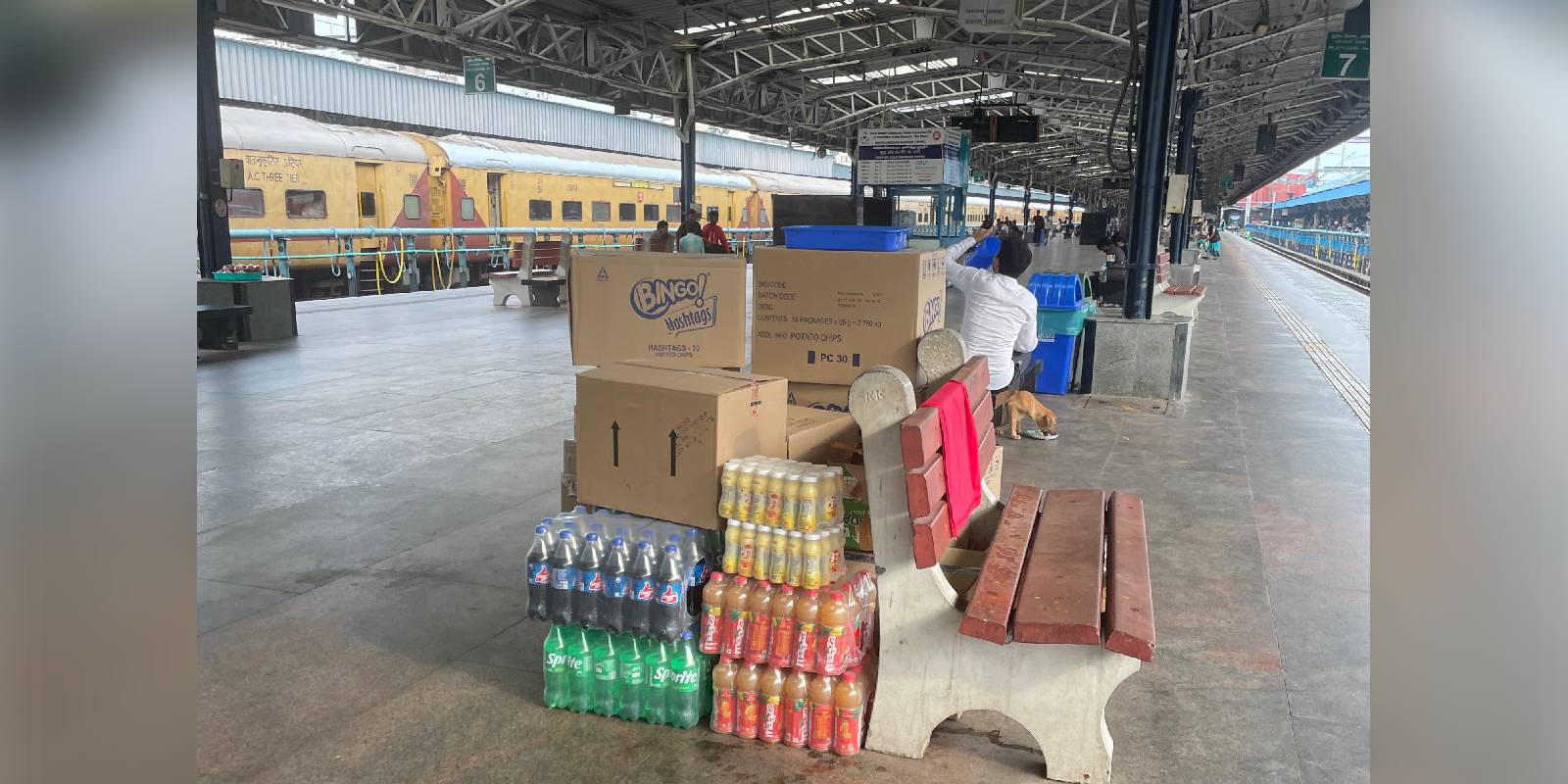
Packaged soft drinks and snacks at Chennai Central Railway Station. (Veni EN/ South First)

Synopsis: At Chennai Central, inconsistent pricing and unreadable expiry or MRP labels on packaged drinks and snacks are causing consumer confusion and exploitation. Vendors often overcharge, with prices varying throughout the day. Experts stress that unclear labeling and price manipulation violate fair trade and consumer rights.
At Chennai Central Railway station, a bottle of mango juice priced at ₹40 in the morning might suddenly cost ₹50 by noon, and drop back to ₹45 later in the day.
When questioned, some vendors insist on the higher price, telling customers to “pay if you want it, or leave.” Others, when confronted, backtrack and agree to sell it at the printed MRP.
The lack of consistency, not just between stalls but within the same stall at different times, has left passengers confused and exploited. In some instances, passengers simply hand over the correct price printed on the bottle and walk away, even if the vendor mutters under his breath.
These irregularities observed at a major station like Chennai Central, which sees a steady stream of travellers from across the country, highlights the need for stricter enforcement of retail norms in high-footfall public spaces.
Unlike popular drinks such as Coca-Cola or Pepsi and water bottles, these packed juice bottles often carry expiry, manufacturing, and MRP details that are either extremely hard to read or poorly printed, to the point where customers and even vendors struggle to locate them.
Although the labels instruct customers to check the bottle neck for details, the information there is barely legible. In one case, a blackish layer at the bottom of the bottle raised concern, prompting a closer inspection—but the expiry date was difficult to locate. When assistance was requested, even the vendor struggled to find it and casually remarked, “Why do you need an expiry date? These packs just came in this morning.”
However, it’s not just the expiry date legibility that is a concern. With the price either faint or inconsistently marked, the same product is being sold at different prices in different shops. One person may be charged the actual MRP, while the next customer might be asked to pay more for the exact same item.
While IRCTC-authorised shops generally adhere to the MRP, many private stalls within station premises sell even the popular beverages—Coca-Cola, Pepsi, or Maaza—for either at MRP or at whatever rate comes to their mind, like ₹42, ₹45, or even ₹50.
Some stalls simply round everything off to ₹50, regardless of the brand or size. The same practice extends to biscuits and other packaged snacks.
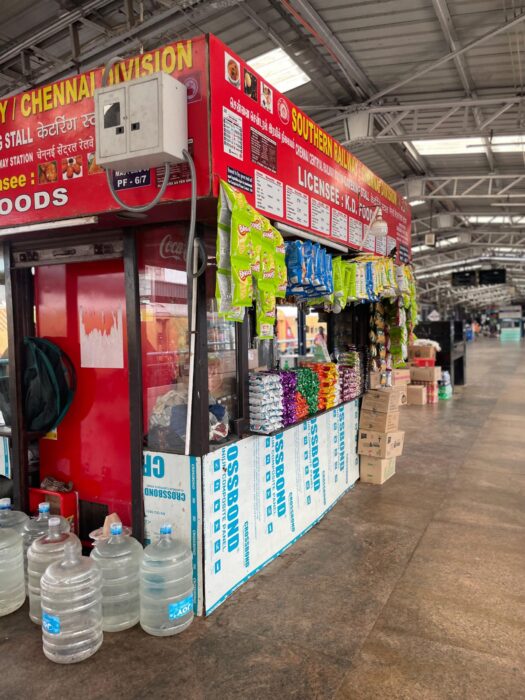
A stall at the railway station. (Veni EN/ South First)
“Any pre‑packaged commodity must carry an MRP, an expiry date if it is edible, and manufacturer details like complaint number and email address,” said Vijay Gopal, an advocate at Telangana High Court and founder of Forum Against Corruption, speaking to South First.
He explained that these are mandated under the 2013 Legal Metrology Packaged Commodity Rules and added that “any trader not keeping these details on the products is liable for a minimum fine of ₹25,000.”
He also mentioned that repeated violations can lead to jail time. “There are exceptions in law only if the products are for institutional uses and not for retail sale, which do not apply to the railway platform situation described,” he added.
According to him, the Consumer Protection Act, 2019, which has been in force since July 2020, strengthens the rights of buyers.
The law gives consumers not only the right to file grievances but also the right to clear information about products they buy, at the cost clearly marked on the product as its MRP. He stressed that traders or wholesalers cannot claim such information is unnecessary, because the law makes it compulsory.
While he admitted that the details might technically be printed in some cases, he emphasized that making information practically unreadable defeats its purpose.
“Even if legal requirements are met in form, any practice that hides or confuses expiry or price information still harms the consumer. It may pass legal scrutiny, but it doesn’t make it right,” he said.
He further added, “Selling products at different MRP and without a clearly visible expiry date and other details goes against the basic spirit of consumer protection rules, as these details are meant to guide buyers and safeguard their health. Shoppers depend on this information to know how much to pay and whether the item is still safe to use. When such details are unclear or inconsistently applied, it raises serious concerns about product quality and accountability.”
“One bottle gives us only a small margin, but over the day, we usually make ₹3000 to ₹4,000 in profit,” said a vendor from a private shop inside the station, adding that fresh stock usually arrives daily or at most once in two days.
Vijay Gopal pointed out that selling products at different rates in the same location shows that the MRP is not being followed. “The reason why they are not putting up MRP clearly is to ensure that the consumers are exploited and exorbitant amounts are collected from them,” he said.
He also questioned the role of the railway department in allowing such sales to continue and noted that the authorities generally take action when these issues are brought to their attention publicly.
(Edited by Sumavarsha)



