

Published Aug 05, 2026 | 9:59 AM ⚊ Updated Aug 05, 2026 | 5:48 PM

Finance Minister N Marie Wilson (inset) is expected to announce several plans linked to TVK's election promises.

Synopsis: Presenting the Revised Budget Estimates, Finance Minister Marie Wilson urged the Centre to scrap the controversial National Eligibility cum Entrance Test (NEET) and revert to the earlier system of admitting students to medical colleges based on their Class 12 marks.
Tamil Nadu Finance Minister N Marie Wilson presented the Tamilaga Vettri Kazhagam (TVK)-led government’s maiden Budget in the State Legislative Assembly on Wednesday, 5 August.
Presenting the Revised Budget Estimates, Wilson urged the Centre to scrap the controversial National Eligibility cum Entrance Test (NEET) and revert to the earlier system of admitting students to medical colleges based on their Class 12 marks.
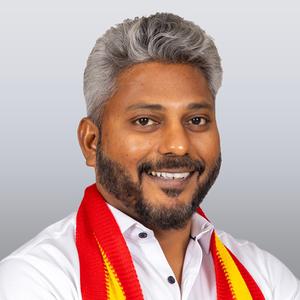
Finance Minister N Marie Wilson.
The Budget put emphasis on education, infrastructure development and increasing state revenues.
Wilson also outlined the government’s ambitious plan for making Tamil Nadu a $1.5 trillion economy by 2036.
Major highlights of the Budget are as follows:
Outstanding Liabilities: ₹10,98,768 crore (27.01% of GSDP)
Government projects:
A total allocation of ₹775 crore has been made for the Department of Tourism, Art and Culture.
The Quaid-e-Millath Award will be presented every year on Thiruvalluvar Day in recognition of his deep commitment to the Tamil language.
A total allocation of ₹708 crore has been made for the Hindu Religious and Charitable Endowments Department.
₹1,375 crore for the construction of integrated court complexes.
Overall, a total allocation of ₹2,486 crore has been made for the Department of Justice Administration.
An allocation of ₹838 crore has been made for a new medical insurance scheme for government employees. Under the scheme:
₹47,840 crore has been set aside for pensions and other retirement benefits.
To boost the granite industry, Granite Polishing and Design Centres will be established in Pudukkottai and Perambalur.
A total allocation of ₹438 crore has been made for the Department of Natural Resources.
Over the past two months, the government has intensified action against illegal mining activities.
The enforcement drive has resulted in:
The government will establish special task forces and border check-posts across the state to strengthen surveillance and prevent revenue leakage.
A new Road Safety Policy will be introduced, built around five key pillars:
₹200 crore has been allocated to the Chief Minister's Accident Relief Fund.
A further ₹130 crore has been allocated for road safety initiatives.
Overall, a total allocation of ₹330 crore has been made for these initiatives.
A Rehabilitation Fund will be created as part of the initiative towards a Drug-Free Tamil Nadu.
The fund will provide rehabilitation support for individuals recovering from substance abuse.
An allocation of ₹70 crore has been made to help build a drug-free Tamil Nadu.
A total allocation of ₹39,609 crore has been made for the Department of Rural Development and Panchayat Raj.
₹14,830 crore has been allocated to the Department of Food and Consumer Protection.
: An allocation of ₹354 crore has been made for the Singa Pengal Special Task Force.
The Singa Pengal Empowerment Scheme has been introduced to transform women’s Self-Help Groups into micro-enterprises.
During the current financial year, loans worth ₹38,000 crore will be extended under the scheme.
To enhance the entrepreneurial capacity of Self-Help Group enterprises, eligible groups will receive an investment subsidy of ₹5 lakh.
The Vetri 150 Additional Employment Guarantee Scheme has been introduced under the Rural Employment Guarantee and Livelihood Scheme.
Families that complete 125 days of employment will be provided an additional 25 days of work, ensuring a total of 150 days of employment.
An allocation of ₹100 crore has been made for the scheme.
The Tamil Nadu Rural Empowerment, Transformation and Rejuvenation Initiative will integrate all infrastructure schemes of the Rural Development Department.
An allocation of ₹1,000 crore has been made for villages adjoining urban areas.
Hill village panchayats will receive ₹100 crore annually.
Overall, a total allocation of ₹6,000 crore has been made for the initiative.
The Vetri Veedu Scheme, a new state housing scheme, has been introduced.
In its first year, approval will be granted for the construction of 70,000 houses.
The scheme will be implemented at an estimated cost of ₹3,500 crore.
The housing assistance amount has been increased from ₹3.10 lakh to ₹5 lakh.
A total allocation of ₹9,264 crore has been made for the Water Resources Department.
A total allocation of ₹1,762 crore has been made for the Department of Environment, Climate Change and Forests.
An allocation of ₹500 crore has been made to procure 1,000 new air-conditioned electric buses for Chennai.
A subsidy of ₹7,675 crore has been provided to the State Transport Corporations, including:
Overall, a total allocation of ₹13,561 crore has been made for the Transport Department.
Budget sets aside ₹9,300 crore for the Integrated Road Infrastructure Development Scheme.
₹250 crore for road maintenance and repair.
₹21,524 crore for the Department of Highways and Minor Ports.
The Primary Ring Main Project will be implemented at a cost of ₹3,108 crore to integrate all drinking water sources.
The project aims to ensure equitable and uninterrupted drinking water supply across Chennai by 2030–31.
A total allocation of ₹29,863 crore has been made for the Department of Municipal Administration and Water Supply.
Under the "Housing for All" initiative, construction of 24,131 apartment units will be completed during the current financial year. Construction will also commence on 14,194 new apartment units. An allocation of ₹1,253 crore has been made to provide quality housing.
The My Home Urban Youth and Family Housing Scheme will be introduced in the Chennai Metropolitan Area.
The scheme will be implemented under the Public-Private Partnership (PPP) model with an investment of ₹15,000 crore.
Over the next seven years, 1 lakh homes will be developed to provide safe and quality housing for low-income families and young people.
The government will provide ₹3,500 crore as Viability Gap Funding (VGF).
A total allocation of ₹8,852 crore has been made for the Department of Housing and Urban Development.
The Chief Minister's Integrated Urban Development Scheme will be implemented to improve drinking water supply, roads, wastewater management, transport, green infrastructure, and e-governance under a single programme.
The scheme aims to develop world-class cities by 2031.
An allocation of ₹2,117 crore has been made for the initiative.
An AI-enabled online planning approval platform will be introduced to provide faster and more transparent project approvals. An allocation of ₹40 crore has been made for the initiative.
Comprehensive Master Plan for the expanded Chennai Metropolitan Area, covering 5,904 sq. km.
The plan will provide an integrated framework to manage the rapid expansion of the Chennai Metropolitan Area and serve as a roadmap for its long-term growth and transformation.
An allocation of ₹25 crore has been made for the initiative.
The government will take steps to ensure uninterrupted and quality power supply.
Under an investment of ₹1,543 crore, 178 new electricity substations will be established.
An allocation of ₹2,000 crore has been made to replace 40,000 old distribution transformers.
An allocation of ₹50 crore has been made to establish 20,000 public EV charging stations over the next five years.
The government will also provide subsidies for setting up EV charging stations in residential complexes, with an allocation of ₹5 crore for the scheme.
Power generation projects with a combined additional capacity of 2,640 MW will be expedited.
The ₹550 crore Vellimalai Pumped Storage Hydroelectric Project will be implemented.
An ₹8,000 crore ETPS expansion project will be taken up.
A new policy will be introduced to position Tamil Nadu as India's BESS (Battery Energy Storage Systems) hub.
Under the Rooftop Solar Subsidy Scheme, a subsidy of up to ₹1 lakh will be provided for the installation of rooftop solar panels.
An allocation of ₹50 crore has been made for the scheme.
Smart meters will be installed for all electricity consumers in Chennai as part of efforts to modernise power services.
The programme will also be expanded to cover 50 lakh industrial and commercial consumers across the rest of the state.
Power distribution infrastructure will be strengthened through the implementation of the Coimbatore–Ariyalur 765 kV transmission line project at a cost of ₹4,000 crore.
Green energy transmission infrastructure will be strengthened.
The power distribution capacity in Chennai will be upgraded at a cost of ₹1,390 crore.
The Green Energy Corridor Phase II and Phase III projects will be expanded.
The Virudhunagar–Coimbatore 765 kV transmission project and the Coimbatore–Ariyalur 765 kV transmission line project will be taken up.
The government will implement the Green Energy Corridor Phase III project at an estimated cost of ₹6,884 crore. The project will be capable of handling 11,760 MW of renewable energy.
All e-Sevai centres will be upgraded to e-Sevai 2.0, offering high-speed internet connectivity and additional citizen-centric services.
The number of services available through the Namma Arasu WhatsApp platform will be expanded from 76 to 275.
The Tamil Nadu Institute of Design will be established as a state institution of strategic importance for the textile, apparel, and handicrafts sectors.
The institute will serve as an integrated centre for design, innovation, research, and entrepreneurship development, and will be established at an estimated cost of ₹60 crore.
A total allocation of ₹398 crore has been made for the Department of Artificial Intelligence, Information Technology and Digital Services.
The Tamil Nadu Palmyra Development Corporation will be established with an allocation of ₹16 crore.
Tiruppur Textiles Technology Centre will be established with an allocation of ₹10 crore.
The Tamil Nadu Artificial Intelligence Mission (TN AI Mission) will be launched
A Space Industrial Investment Zone will be established in Thoothukudi and Tirunelveli.
The investment zone will be developed in collaboration with IN-SPACe and will include advanced common technology facilities.
Leveraging the region's geographical advantage for space launches, the zone is expected to drive significant industrial growth in the southern districts.
A feasibility study will be undertaken at an estimated cost of ₹5 crore for establishing India's first dedicated Artificial Intelligence City.
The proposed project will include an AI University, an International Skill Development Centre, a semiconductor testing laboratory, and an integrated centre for artificial intelligence, quantum technology, and research.
A total allocation of ₹4,414 crore has been made for the Department of Industries, Investment Promotion and Commerce.
A Green Steel Production Initiative will be launched to promote environmentally sustainable steel manufacturing.
The initiative will be implemented over the next five years at an estimated cost of ₹300 crore. For the current financial year, an allocation of ₹60 crore has been made.
A total allocation of ₹2,142 crore has been made for the Department of Micro, Small and Medium Enterprises (MSMEs).
The government has set a target of achieving a $1.5 trillion economy by 2036.
Seven Memorandums of Understanding (MoUs) worth ₹35,062 crore have been signed, with the potential to generate 14,790 direct and indirect employment opportunities.
The government remains focused on promoting industrial investment and creating employment.
The government will take steps to establish multi-modal logistics parks, dry ports, petrochemical industrial parks, and ancillary industrial units.
It will also study the feasibility of developing new ports to further accelerate industrial growth.
An Overseas Tamil Investment Services Division will be established.
New industrial parks with world-class infrastructure and investor-friendly facilities will be established in backward districts.
Under the Kaalnadaigal Kaappom (Protect Livestock) Scheme, a new livestock insurance scheme will be introduced to provide farmers with financial protection against unforeseen losses. An allocation of ₹31 crore has been made for the scheme.
An allocation of ₹6.7 crore has been made to ensure the availability of quality cattle feed at affordable prices for farmers.
An allocation of ₹13 crore has been made to promote green fodder cultivation.
The fishing ban period assistance for fishermen has been increased from ₹6,000 to ₹7,000.
The enhanced assistance is expected to benefit 1.93 lakh fishermen's families. An allocation of ₹135 crore has been made for the scheme.
An allocation of ₹57 crore has been made for a scheme to provide dairy cows free of cost to 10,000 eligible women every year.
A total allocation of ₹4,880 crore has been made for the Department of Animal Husbandry, Dairy Development, Fisheries and Fishermen Welfare.
The government has set a target of achieving a $1.5 trillion economy by 2036.
A total allocation of ₹8,028 crore has been made for the Cooperation Department.
The Kuruvai Package Scheme will be implemented with an allocation of ₹134 crore to encourage paddy cultivation in both delta and non-delta districts.
₹14,984 crore for the Department of Agriculture and Farmers' Welfare.
Under the Vetri Women's Goat Rearing Scheme, five goats will be provided with a 100% subsidy.
The scheme will benefit widows, destitute women, transgender persons, and persons with disabilities. A total of 30,000 beneficiaries will be covered under the scheme, with an allocation of ₹110 crore.
An allocation of ₹122 crore has been made for strengthening veterinary healthcare infrastructure. The allocation is for:
A hub-and-spoke telemedicine network will be established with an allocation of ₹33 crore.
₹10 crore has been allocated to establish five regional cancer care hospitals. The funding will also support research and development activities related to cancer care.
A total allocation of ₹23,357 crore has been made for the Department of Health and Family Welfare.
Skill development training and subsidised loans for self-employment will be provided to transgender persons.
A subsidy will be provided for bank loans of up to ₹50,000 taken for self-employment.
'Aran' shelter homes will be established in five districts, while short-stay accommodation facilities will be set up in 15 districts.
₹9,818 crore for the Department of Social Welfare and Women’s Rights.
₹33 crore to establish mobile healthcare units for senior citizens.
At an estimated cost of ₹23 crore, Service and Support Centres for pregnant women will be established across the state. Women approaching their expected date of delivery can stay at these centres and avail themselves of free food, medical assistance, and continuous medical monitoring, among other services. services.
A total allocation of ₹1,485 crore has been made for the Department for the Welfare of Persons with Disabilities.
A scheme has been announced to provide an 8-gram gold coin and a silk saree to women in Tamil Nadu on the occasion of their marriage. An allocation of ₹812 crore has been made for the scheme.
The Chief Minister's Breakfast Scheme has been renamed the Perunthalaivar Kamarajar Breakfast Scheme.
An allocation of ₹710 crore has been made for the scheme, which is expected to benefit 1.514 million (15.14 lakh) students.
An allocation of ₹6.6 crore has been made to establish 12 old-age homes across 12 districts.
In the first phase, Senior Citizens' Recreation Centres will be set up in five districts, featuring libraries, yoga and meditation facilities, and indoor recreational amenities.
New buildings will be constructed for 500 dilapidated Anganwadi centres.
Educational scholarships for minority students will continue.
The Haj pilgrimage subsidy has been increased from ₹25,000 to ₹35,000.
An allocation of ₹1.05 crore has been made for Christian and Muslim women's self-help associations.
₹34 crore for the development of Kabristhans and Christian cemeteries.
A total allocation of ₹1,485 crore has been made for the Department for the Welfare of Persons with Disabilities.
An allocation of ₹250 crore has been made under the Tribal Development Scheme to improve basic amenities in tribal habitations. The scheme will cover the construction of houses, roads,
drinking water facilities, street lights, livelihood initiatives, healthcare infrastructure, educational welfare assistance, and the development of schools and hostels.
A total allocation of ₹3,937 crore has been made for the Department of Social Justice.
The government will take firm measures to protect the 69% reservation policy.
An allocation of ₹462.41 crore has been made towards educational scholarships for Backward Classes, Most Backward Classes, and Denotified Communities; financial assistance covering fees under the 7.5% medical education quota; and incentive schemes to prevent dropouts among girl students.
For transforming Scheduled Caste and Scheduled Tribe agricultural labourers into landowners, priority will be given to women.
The scheme provides a full exemption from stamp duty and registration charges, along with training in modern agricultural technologies for cultivation. An allocation of ₹20 crore has been made for the initiative.
An allocation of ₹300 crore has been made for the Ayothidasa Pandithar Habitat Development Scheme, aimed at improving basic infrastructure in Scheduled Caste habitations.
Under the Annal Ambedkar Overseas Education Scholarship Scheme, scholarships will be provided to 362 students during the current financial year. An allocation of ₹131 crore has been made for the scheme.
The Vetri Entrepreneurship Scheme will be implemented to improve the livelihoods of Scheduled Caste and Scheduled Tribe communities and ensure sustainable development. An allocation of ₹75 crore has been made towards capital subsidy and interest subsidy under the scheme.
An allocation of ₹165 crore has been made for the Annal Ambedkar Industrial Pioneers Scheme, which aims to promote entrepreneurship among Scheduled Castes and Scheduled Tribes.
Young school students aged 8 to 18 years who demonstrate interest and talent in sports will be identified and selected to receive world-class training. ₹5 crore has been allocated for the initiative.
A total allocation of ₹1,051 crore has been made to the Department of Youth Welfare and Sports Development.
₹2,022 crore for the Labour Welfare and Skill Development Department.
₹17,150 crore for the Special Programme Implementation Department.
₹50 crore for establishing 10 Olympic Centres of Excellence.
₹42 crore for conducting Tamil Nadu Rural Games to take Tamil traditional sports to the global stage.
The government will launch the AI Economy Mission to build a self-reliant Artificial Intelligence ecosystem in Tamil Nadu. The mission will create an enabling environment for AI professionals and technology entrepreneurs to thrive.
By 2031, the government will provide free AI training to five lakh students studying in government, aided and private educational institutions.
Under the TN SPARK programme, 2,600 schools will be selected from among 5,000 government schools to strengthen coding and digital learning infrastructure.
An allocation of ₹150 crore has been made for the Vettri Thiran Scheme, which includes:
An allocation of ₹338 crore has been made to provide free coaching in Tamil for competitive examinations conducted by SSC, RRB, IBPS and other recruitment agencies at the Union and State levels.
The government has allocated ₹90 crore to establish five new Industrial Training Institutes (ITIs).
An allocation of ₹10 crore has been made to introduce a new training programme in Artificial Intelligence (AI) at government Industrial Training Institutes (ITIs).
An allocation of ₹3 crore has been made for a Minor and Child Labour Skill Development Programme, under which 22,500 beneficiaries, including 12,500 migrant workers, will be trained over the next five years.
The government has allocated ₹8,393 crore to the Higher Education Department in the 2026–27 Budget.
The government has announced the Vettri Laptop Scheme, under which laptops will be distributed to college students. An allocation of ₹2,000 crore has been made for the scheme.
The government has announced the TN Sudar Scheme, under which integrated student hostels with one lakh modern bed spaces will be developed through the Public-Private Partnership (PPP) model.
An allocation of ₹44,500 crore has been made for the School Education Department in the 2026–27 Budget.
The government has reiterated its strong opposition to the NEET.
The Tamil Nadu government has urged the Union government to abolish the NEET and reiterated that admissions to medical courses should be based on Class 12 board examination marks.
To curb drug abuse in schools, anti-drug committees and volunteer groups will be established.
The 10581 helpline number will be prominently displayed in schools, and a "Drugs Free Tamil Nadu" mobile application will be launched to enable the public to report drug-related information. ₹7 crore has been allocated for these initiatives.
An allocation of ₹10 crore has been made for the modernisation and renovation of public libraries.
A scheme to upgrade infrastructure in 3,734 schools will be implemented at an estimated cost of ₹2,132 crore. An allocation of ₹300 crore has been made for the project in the current financial year.
A new Kamarajar Modern Residential School for students of Classes 9 to 12 will be established. The government has allocated ₹125 crore for the project.
The government is committed to transforming Tamil Nadu into a $1.5 trillion economy by 2035. To achieve this goal, it will implement all the initiatives outlined in the TVK Vision Document.
The state's debt has doubled over the past five years.
Tamil Nadu's financial constraints have limited the funds available for implementing various government schemes and projects.
The government has undertaken several measures to ease Tamil Nadu's financial constraints. As part of these efforts, it has enhanced transparency in the tendering process and removed several cumbersome regulations governing government procurement.
The government has ensured that public tenders are not cornered by any single political party or individual.
Additional levies have been imposed on liquor manufacturing units. The government expects these measures to generate an additional ₹1,000 crore in annual revenue.
The government expects to generate an additional ₹15,000 crore in revenue through faceless assessments in the Commercial Taxes Department, faceless document registration in the Registration Department, and end-to-end computerisation of the Mines Department.
Finance Minister N Maria Wilson said the government has made a strong start by focusing on key principles such as poverty eradication, transparent governance, and building a drug-free society.
He highlighted initiatives including free electricity units, the waiver of farmers' loans, the establishment of the Singappen Task Force for women's safety and empowerment, anti-drug reforms, and several other welfare and governance measures already implemented by the government.



