


Published Apr 04, 2026 | 11:22 AM ⚊ Updated Apr 04, 2026 | 11:22 AM

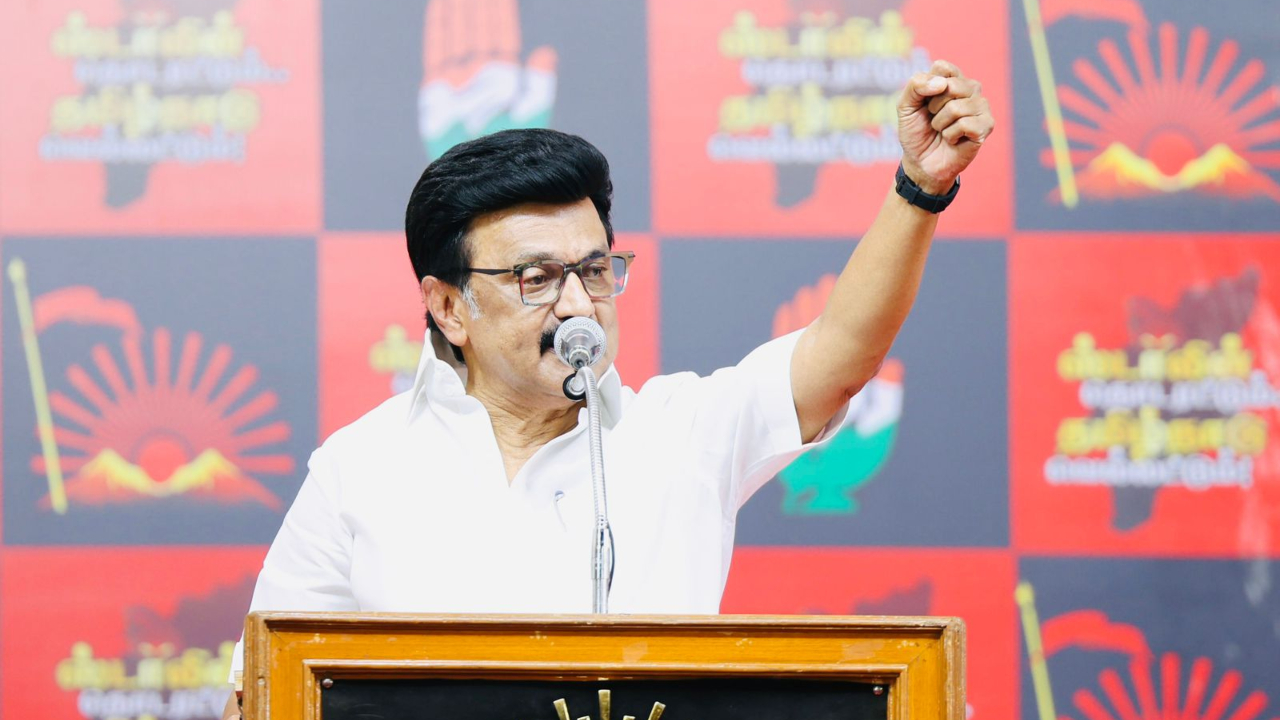
Tamil Nadu CM MK Stalin. Credit: x.com/mkstalin
Synopsis: “For students in southern states, this is nothing but compulsory Hindi by another name,” Stalin said, questioning the lack of reciprocity. He asked whether students in Hindi-speaking states would be required to learn languages such as Tamil, Telugu, Kannada, Malayalam, Bengali, or Marathi, pointing out that the absence of clarity exposes structural bias.
Tamil Nadu Chief Minister MK Stalin on Saturday, 4 April, strongly criticised the recent CBSE curriculum changes linked to the National Education Policy 2020, calling them “a deeply concerning and well-planned attempt” that validates long-standing fears of Hindi imposition.
In a sharply worded statement, Stalin said the move goes beyond routine educational reform and reflects a political agenda by the BJP-led NDA government to prioritise Hindi under the guise of promoting “Indian languages.” He argued that the three-language policy, in practice, serves as a tool to expand Hindi in non-Hindi-speaking states.
“For students in southern states, this is nothing but compulsory Hindi by another name,” Stalin said, questioning the lack of reciprocity. He asked whether students in Hindi-speaking states would be required to learn languages such as Tamil, Telugu, Kannada, Malayalam, Bengali, or Marathi, pointing out that the absence of clarity exposes structural bias.
Highlighting inconsistencies, Stalin noted that the Union government has failed to make Tamil compulsory in Kendriya Vidyalaya’s or ensure adequate appointment of Tamil teachers, even as it claims to promote linguistic diversity.
He also raised concerns over the practical feasibility of the policy, questioning the availability of trained teachers, infrastructure, and financial resources required for its implementation. “This appears to be yet another centrally driven scheme lacking planning, resources, and accountability,” he said.
Framing the issue as one of federalism and equity, Stalin warned that the policy could create structural advantages for Hindi-speaking students in higher education and employment, thereby deepening regional inequalities.
At a time when students must be equipped for emerging sectors such as artificial intelligence, animation, VFX, gaming, and comics, Stalin said imposing additional linguistic burdens would hinder their progress and critical thinking.
Accusing the Union government of ignoring repeated democratic concerns raised by states including Tamil Nadu, he termed the move “an assault on cooperative federalism” and a direct affront to India’s linguistic identity.
“India’s strength lies in its diversity, not in enforced uniformity,” Stalin asserted, warning that any attempt to disturb this balance is not only misguided but dangerous.
He also questioned the stand of the AIADMK under Edappadi K. Palaniswami and its NDA allies, asking whether they would accept such imposition or “stand up, at least once, for the future, identity, and rights of our students.”
(Edited by Sumavarsha, with inputs from Subash Chandra Bose)


