

Published Dec 04, 2025 | 6:03 PM ⚊ Updated Dec 04, 2025 | 6:03 PM

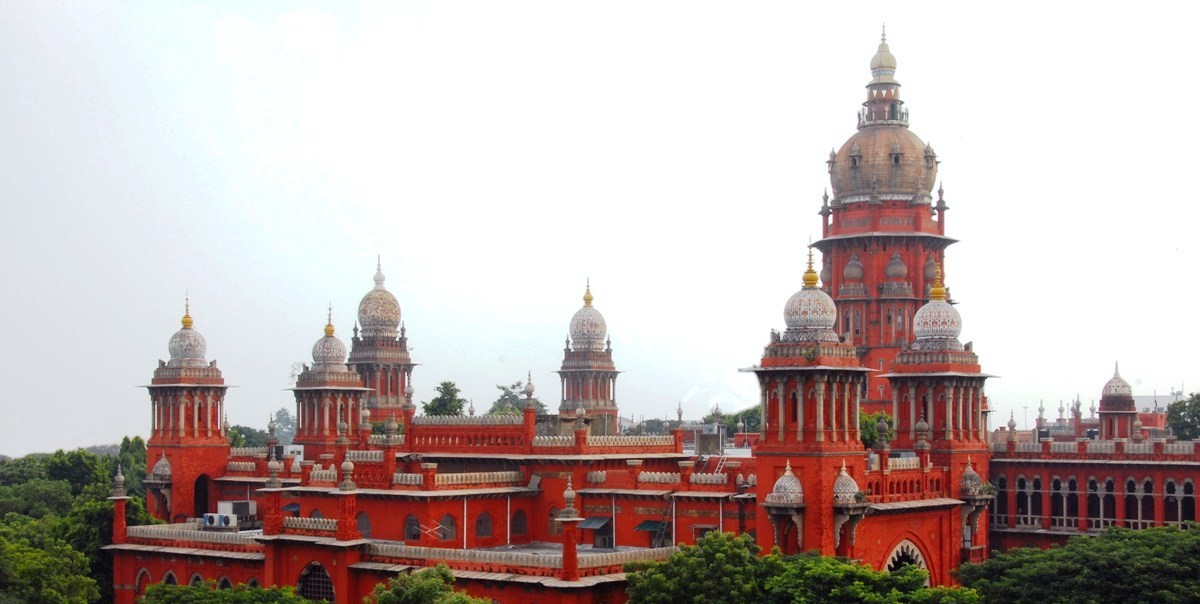
Madras High Court. (Wikimedia)
Synopsis: The division bench of justices G Jayachandran and KK Ramakrishnan noted that there was nothing wrong on the part of the single judge in having directed CISF to accompany the petitioner for lighting the lamp on the Deepathoon.
The Madurai bench of Madras High court on Thursday, 4 December, dismissed the petition filed by the government challenging the contempt of court proceedings with regard to court-ordered lamp lighting at Tiruppanarankundram .
The division bench of justices G Jayachandran and KK Ramakrishnan noted that there was nothing wrong on the part of the single judge in having directed CISF to accompany the petitioner for lighting the lamp on the Deepathoon.
It also said that government officials had filed the present appeal only to escape punishment in contempt proceedings.
According to Livelaw, the bench further observed that devotees were permitted to light the lamp since single judge’s initial order was not complied with by the temple administration. Such modification in the initial order, the division bench said, was sustainable.
It noted, “This Court finds that the order in contempt was not one altering the earlier order of the court. When the court found its earlier order was not complied with, the court directed the devotees to light the lamp…the order only changed the person who was to perform the function as per its order. The appeal, filed with an ulterior motive, is dismissed.”
During the hearing, Justice Jayachandran had orally remarked, “Communal harmony cannot be achieved by preventing one party from doing their religious function. It can be achieved only by co-existence. Once in a year, if they are lighting without affecting anyone, is there any difficulty in allowing them? 100 years ago, the ways were different, understanding was different. Now it’s different. We don’t even know if these will continue after 100 years.”
Justice Swaminathan of the Madurai Bench had earlier directed that the lamp be lit at the deepathoon and instructed the police to provide necessary security.
However, the lamppost at the exact hilltop, as directed by the court, was not lit. Condemning this, Hindu Munnani functionaries marched towards the Thirupparankundram temple and hill, attempting to lay siege.
When protestors tried to push past the barricades, clashes broke out with the police. The situation escalated when some protestors attempted to trek up the hill. Two policemen on duty were injured in the scuffle that ensued.
Subsequently, the Madurai Bench of the Madras High Court ordered that the petitioner, Rama Ravikumar, along with 10 persons, be allowed to go to the lamp pillar under the protection of the Central Industrial Security Force (CISF) to light the lamp.
Following the unrest, areas including the 16 Pillars Mandapam stretch and Thirupparankundram hill were brought under tight police control to maintain law and order.
The State argued that the observation of the single judge that no appeal had been filed was incorrect, pointing out that the law provides a 30-day period to file an appeal. While not disputing the judiciary’s power to initiate contempt proceedings, the State contended that proper procedures must be followed. It was submitted that orders issued in the main case cannot be overridden through directions passed in a contempt petition.
The government highlighted that law and order issues had arisen the previous day, with attempts made to create religious tension. Police personnel were allegedly attacked and barricades damaged. The State questioned how the CISF could be directed to provide security, arguing that their mandate is limited to High Court security, while maintaining law and order falls solely under the police’s jurisdiction.
It was contended that replacing police with CISF amounted to judicial overreach and that the single judge’s order was unfortunate, contrary to established precedents, and exceeded judicial norms.
The State further argued that a presumption of contempt had already been formed by around 5 pm the previous day and that the petitioner’s actions aimed at provoking unrest were the reason for invoking Section 144. The judges questioned the timing of the imposition of the Section 144 order and observed that contempt proceedings ordinarily require four weeks’ time for personal appearance, questioning why extreme urgency was shown in this particular case.
Calling upon the court to intervene in the interest of justice and communal harmony, the proceedings then heard submissions from the Dargah side. They argued that no lamp had been lit at the place referred to as the “Deepaththoon” for the past 100 years, that Karthigai Deepam is traditionally lit only at a specific location, and questioned how a practice not followed for a century could now be enforced using CISF, potentially hurting religious sentiments.
They also claimed that the structure in question was not a lamp pillar but a boundary stone.
Responding, the original petitioner submitted that the main prayer sought either the HR&CE Department to light the lamp or permit them to do so. It was argued that despite a clear judicial order, police protection was not provided, which led to the direction for CISF deployment. The petitioner contended that the situation that unfolded was due to the government’s failure to implement the court’s order. Reference was made to judgments from 1916 and 1965, asserting that the practice predated British rule.
The bench questioned how CISF entered the picture when police protection was sought and asked the State why it had not clearly stated at 6:05 pm that it would not implement the order.
Earlier on Monday evening, Justice Swaminathan had directed temple office bearers to arrange for the deepam lighting ritual to be conducted on the hilltop. He also warned that if they didn’t comply, it would amount to contempt of court.
However, the temple authorities followed the usual ritual and lit the deepam near the Uchchipillaiyar Kovil, also on the hillock. But Hindutva groups wanted the deepam to be lit at the pillar, located near a Dargah.
After 6 pm on Wednesday, Ravikumar went to the court and filed a contempt of court petition. The judge then ordered 10 of them to go to the hill along with the CISF personnel. The police, however, stopped them.
Incidentally, the deepathoon itself became a point of contention after some claimed it was a survey-marker stone, while others said it was a traditional lamppost, remaining unused for over a century.
Those who opposed the lighting of the lamp on the deepathoon said for about a century, the deepam was lit near the Uchchipillaiyar temple — a peaceful practice being followed by the temple.
The tradition, they said, followed the agamas and was decided by the temple’s chief priest. The location has been chosen because it falls in the direct line of sight with the temple garba griha too.
The major question, however, was over the Single Bench Judge Justice Swaminathan’s order.
The opposing faction said pro-Hindutva groups were demanding the deepam to be lit near a dargah, on a survey pillar. The case was filed to light the deepam near the Dargah with malicious intentions to disturb peace. In 2014, a single-judge Bench had dismissed the case.
(Edited by Sumavarsha, with inputs from Subash Chandra Bose)


