

Published Aug 31, 2026 | 7:47 PM ⚊ Updated Aug 31, 2026 | 7:47 PM

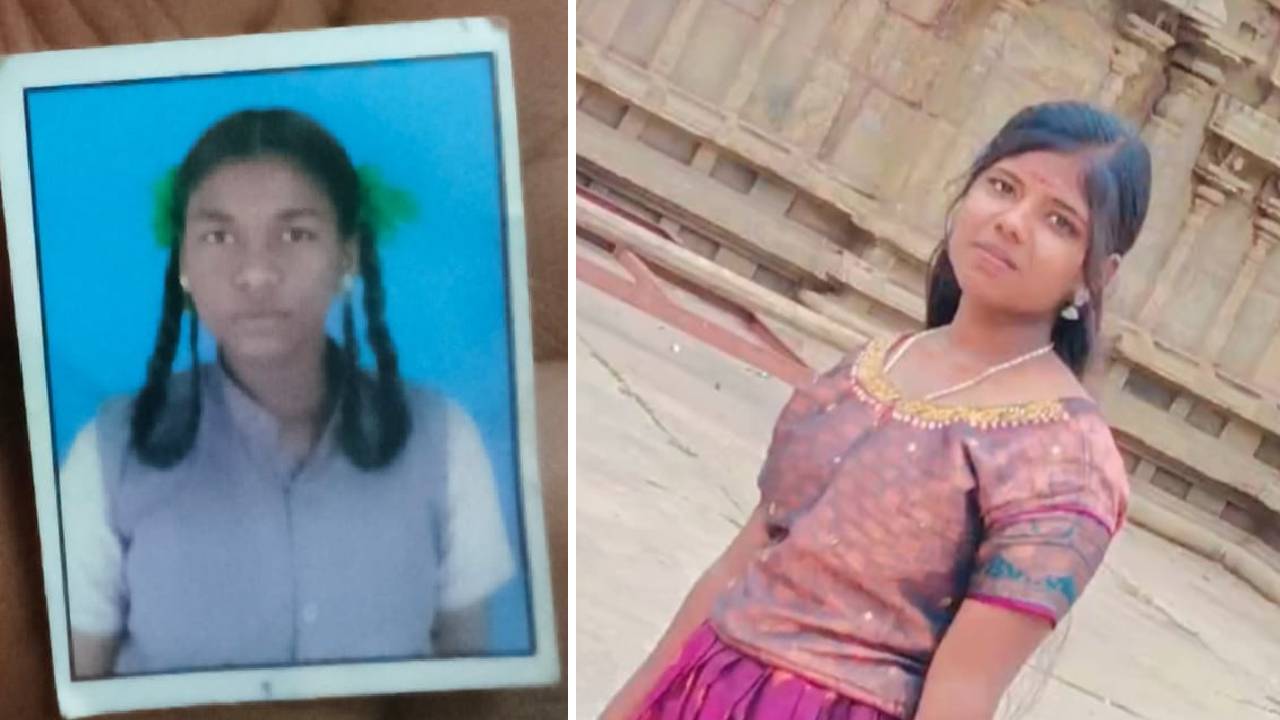
The relatives of both girls said they were humiliated at their respective schools.

Synopsis: Two academically promising Dalit schoolgirls from Madurai district, Nisanthi and Jeevitha, died by suicide on consecutive days, with their families alleging humiliation and mistreatment by teachers. Police have registered cases, including under the SC/ST (Prevention of Atrocities) Act, as the families and Dalit rights organisations demand an investigation into whether caste-based discrimination and alleged harassment by school authorities led to their deaths.
The deaths of two Dalit girl students by suicide in separate incidents in Tamil Nadu’s Madurai district have led to allegations that they were harassed based on their caste at schools.
While Nisanthini, 16, died by suicide on 25 August, Jeevitha, 15, died the next day. The two incidents were interconnected.
Both girls were academically promising and planned to pursue further education.
Two schoolgirls from Madurai district died by suicide on consecutive days. Nisanthini, who scored 412 marks out of 500 in her Class 10 exams, planned to take up nursing as a career. Jeevitha had scored more than 450 marks and was one of the top students in her school.
The families of both girls alleged that they faced humiliation and mistreatment by teachers. They sought a probe into the allegations of caste-based discrimination.
Police have registered separate criminal cases in both deaths, including provisions of the Scheduled Castes and Scheduled Tribes (Prevention of Atrocities) Act, and are investigating.
Also Read: How Tamil Nadu’s digital landscape glorifies caste pride, violence
Nisanthi was the daughter of Palanisamy and Thavamani and belonged to the Dalit Paraiyar community, living in Thottappanayakkanur. She completed Class 10 in Thottappanayakkanur and joined Class 11, opting for the first group at Poochipatti Government Kallar Higher Secondary School.
According to her family, Nisanthi stopped attending the school because she was not interested in continuing there and wanted to pursue nursing.
On 24 August, her mother, Thavamani, took her to the TELC Girls Higher Secondary School in Usilampatti to enquire about the admission process. The family said they were asked to pay ₹5,000 as admission fee. As they did not have the money immediately, they told the school they would return after two days.
On the advice of a relative, Thavamani then took Nisanthi to the Usilampatti Government Model Higher Secondary School to seek admission.
During that visit, according to the family’s complaint, an altercation took place involving the school’s headmistress, Vimala Devi.
According to local sources, the headmistress belonged to the Pramalai Kallar community.
The headmistress contacted the head teacher of the girl’s former school. The previous school reportedly described Nisanthi as a well-behaved, studious student.
According to the complaint, while Thavamani was speaking to the headmistress, she stood with her hands folded. Nisanthi allegedly moved her mother’s hand away.
The family alleged that the headmistress was infuriated.
Tamil Nadu Untouchability Eradication Front state secretary S Muthu Rani alleged that the headmistress berated Nisanthi and ordered the child to leave the school.
The family alleged that the headmistress accused Nisanthi of being arrogant, said she must have behaved similarly at her previous school, and said she was not fit to study there.
Nisanthi returned home upset. Her family said she went to bed hungry and was inconsolable.
The next evening, when Thavamani returned home from work, she found a room locked. Neighbours forced the door open and found the girl hanging.
Nisanthini’s father, Palanisamy, demanded immediate action against the headmistress.
“My daughter’s death must get justice. The headmistress should be arrested immediately, and the government should take action. Otherwise, we will go on a hunger strike until our death,” he said.
Police have registered a case in connection with Nisanthi’s death under Section 108 of the Bharatiya Nyaya Sanhita and Section 3(2)(v) of the SC/ST (Prevention of Atrocities) Act.
Also Read: Tamil Nadu village’s ‘punishment’ for inter-caste marriage
The following day, 15-year-old Jeevitha died by suicide.
Jeevitha was the daughter of Ananda Lakshmi, wife of late Anthiswaran, and belonged to the Dalit Paraiyar community. The family is from Ambedkar Colony in Periya Ilanthaikulam, Vadipatti taluk, Madurai district, and was residing near the Samayanallur railway station in Burma Colony.
Jeevitha was studying in Class 11. Around 10 pm on 26 August, Ananda Lakshmi approached the Samayanallur police station and lodged a complaint after Jeevitha was found dead.
According to the complaint, Jeevitha had earlier been reprimanded by her mother and brother after the family discovered that she had exchanged SMS messages on her phone. The family said she did not repeat the behaviour after being warned.
The complaint also stated that Jeevitha had previously told her family that a teacher was beating her.
Her family said that they did not realise the extent of the distress she was experiencing.
When Jeevitha was found dead, books and notebooks were found scattered around the room. A handwritten note addressed to her mother was also found.
In the note, Jeevitha repeatedly said that she had not committed any wrongdoing. She apologised for mistakes she believed she had made in the past and asked her mother to believe her. She also referred to the treatment she had received from a teacher and asked her mother to take care of her brother.
Also Read: TN Dalit man made to fall at feet of caste Hindus
The allegations in Jeevitha’s case are reflected in the report submitted by Inspector S Rajadurai of the Samayanallur police station.
According to the police report, Jeevitha’s English teacher, Arul Nirmala, allegedly assaulted her in front of other students in the classroom.
The report stated that the teacher allegedly slapped Jeevitha on the cheek, pinched her hand and verbally abused her, including asking her where she had gone “roaming”. The report further stated that Jeevitha was made to stand at the back of the classroom.
According to the police investigation, Arul Nirmala belongs to the Christian Nadar community.
The police report stated that the alleged conduct caused mental distress to Jeevitha and contributed to the circumstances that led to the 15-year-old’s suicide.
Jeevitha’s maternal uncle, Tamilselvan, said the public humiliation at school had a direct impact on her.
“Jeevitha was a very good student. She stood first in her school in Class 10. She was humiliated in front of all the students and the school. That caused her severe mental distress, and she took this decision,” he said.
In Jeevitha’s case, Samayanallur police registered a case under provisions including Sections 296(1)(b), 115(2) and 107 of the Bharatiya Nyaya Sanhita, along with provisions of the Scheduled Castes and Scheduled Tribes (Prevention of Atrocities) Act, 1989.
The family said the police promised action against those responsible for the girl’s death.
The deaths have now become the focus of a wider campaign.
The Tamil Nadu Untouchability Eradication Front, Neelam Cultural Centre and Viduthalai Chiruthaigal Katchi, among other organisations, have joined the families in demanding action against those accused and a thorough investigation into the deaths.
The organisations demanded that the authorities establish whether the alleged treatment of the two girls contributed to their deaths and take action against those found responsible.
(Edited by Majnu Babu).



