


Published Mar 24, 2026 | 1:00 PM ⚊ Updated Mar 24, 2026 | 2:03 PM

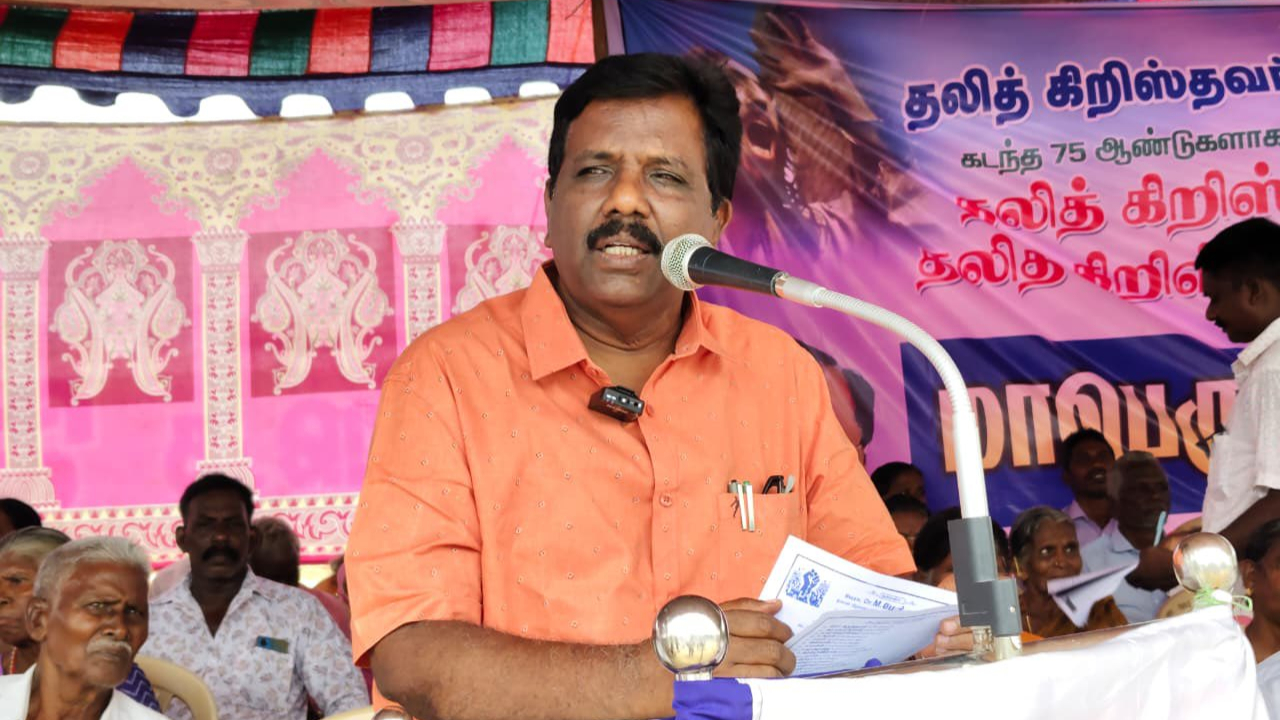
VCK MP D Ravikumar. Credit: x.com/WriterRavikumar
Synopsis: VCK says delays in DMK’s seat‑sharing talks stem from Congress’ pressure, not friction within the alliance. MP D. Ravikumar argues VCK has a strong statewide organisation and deserves a double‑digit share but is avoiding hard bargaining to protect long‑term credibility. On Tuesday, 24 March, the DMK and VCK concluded their seat-sharing talks. VCK will contest from eight constituencies in the 23 April polls.
With the 2026 Assembly elections in Tamil Nadu and Puducherry just days away, seat-sharing talks within the DMK alliance witnessed delays, before the Front decided to field Viduthalai Chiruthaigal Katchi (VCK) candidates in eight constituencies.
South First spoke to VCK senior leader and Member of Parliament D. Ravikumar about how many seats the party may win, reasons behind the delay, and the role played by Congress and other alliance partners.
Question: Even though VCK is a long-time, committed ally of DMK, why does it seem like your party is being allocated seats only at the last stage? How do you interpret this?
Ravikumar: No, that’s not the case. They had already initiated this agreement with us earlier. We didn’t show any urgency. We told them clearly, “You first conclude talks with the Left parties and other allies. We don’t want to bargain aggressively or pressurise on you.” So this delay is not because of them. There is a clear understanding between our two parties, and there is no issue at all.
Question: It’s understandable that you are being generous, but it appears that DMK is taking advantage of this. There is a perception that if CPM asks for one seat, VCK would easily give it up. Is it true that such a request was made?
Ravikumar: No, nothing like that happened. What we have asked is simple. In the 2011 elections, we contested 10 seats in Tamil Nadu and 2 in Puducherry. Today, we have the second-largest party structure in Tamil Nadu after DMK. We have a strong presence across all 234 constituencies, with 150 to 175 booth agents in each constituency. We also have the capacity to transfer votes effectively. DMK is aware of all this. Based on that, we have asked them to allocate seats to us. So, what they give to other parties or take from them has nothing to do with what they give us.
Question: How many seats do you think would be fair for VCK?
Ravikumar: Our leader has clearly said we want a double-digit number. Double-digit begins from 10, and that is our goal (The VCK eventually settled for eight). In this context, the pressure exerted by Congress is significant. It is natural for any party to demand more seats. But Congress went to the extent of saying they might ally with Vijay’s party. There were even reports that Rahul Gandhi spoke to Vijay. Because of this pressure, DMK was pushed into a situation where they had to consider what would happen if Congress exited the alliance.
It is based on this situation that smaller parties were brought into the DMK alliance. The current allocation of seats to parties like DMDK and others is a result of the pressure created by Congress. If this hadn’t happened, seat-sharing would have been much smoother and the alliance would have been more stable.
Now, starting from seats allocated to smaller parties and the additional three seats secured by Congress, nearly 25 seats have effectively been reduced from DMK’s share. Given this pressure, we do not want to create additional strain by pushing aggressively. Already, because of Congress’ pressure, DMK’s chances of contesting in constituencies needed for a clear majority are reducing. This could become a setback for the alliance opposing BJP.
Keeping all this in mind, despite our own needs and organisational growth, we are not exerting pressure on DMK. We are acting with a sense of understanding, prioritising Tamil Nadu’s interests and ideological commitment.
Question: Do you think that if VCK had taken a more stubborn stand like other parties, you could have secured more seats?
Ravikumar: This is not about being stubborn, it is about hard bargaining. We also know how to negotiate strongly, and we have the strength to do so. But choosing not to do that does not mean weakness.
Parties that adopt opportunistic politics for immediate gains do not last. Tamil Nadu has many such examples. Take PMK, they negotiate with both sides till the end and then switch alliances. Today, they are in a situation where whichever alliance they join ends up losing. Similarly, DMDK adopted such bargaining tactics even during Vijayakanth’s time, today their vote share has dropped to around 0.5 percent.
We do not follow such opportunistic politics. Congress getting 28 seats is not an achievement. In fact, I fear that Rahul Gandhi’s credibility among Tamil Nadu voters may have declined.
There is another challenge unique to VCK. If PMK switches alliances, voters in the new alliance will still transfer votes to them. But if VCK does the same, vote transfer will not happen because caste biases are deeply entrenched. Even though we have two MPs and political recognition, social acceptance is still difficult.
Our leader has gained wider acceptance only in recent years. If we resort to tactics just to secure a few extra seats, that acceptance could collapse overnight. We could bargain and secure 10 seats, but it would damage our long-term growth and social acceptance. That is why we are handling this patiently.
Question: Do you think DMK believes that giving more seats to VCK may not translate into victories?
Ravikumar: No, this is not about winnability. We must look at why DMDK was included. In 2024, BJP and AIADMK were separate alliances. Now those forces have come together, effectively doubling their strength. In politics, not just our strength but also the opponent’s strength matters.
In southern districts, TTV Dhinakaran has influence and is now part of that camp. If Congress exits the alliance, especially in regions where it is strong, what is the alternative? Based on such calculations, DMK has adopted a scientific approach, bringing in DMDK and smaller parties that can contribute 5,000 to 10,000 votes in certain constituencies. Even gaining 20 additional seats through such vote transfers would be significant.
Similarly, DMK knows that VCK can transfer votes in north, south and delta districts. The Chief Minister himself has acknowledged that VCK is the only party after DMK with a strong organisational structure, and he has expressed a desire to increase our seat share.
So, I don’t think they are underestimating us. They are simply in a difficult situation due to the pressure from Congress, which has led to this 25-seat constraint.
Question: How many seats do you realistically expect this time?
Ravikumar: We asked for 12 seats. DMK has reduced one seat each from parties that contested six seats in the last election. But during talks, they assured us that they would not reduce our share. CM Stalin also said he is willing to give us additional seats.
We are expecting around 10 seats, but that may be difficult. Realistically, we expect to get a number between 6 and 10.
Question: How many seats will you contest in Puducherry?
Ravikumar: DMK has allocated the Uzhavan Thurai constituency to us, and we will contest there. In Puducherry, the seat-sharing has been finalised as 16 for Congress and 14 for DMK. In that context, seats have also been allocated to VCK and the Communist parties.
Till the last moment, there was pressure from Congress hinting at an alliance with Vijay. This approach has shocked Congress’ own secular and neutral cadres. They must change this approach, otherwise, it will have serious consequences for the alliance.
(Edited by Amit Vasudev).


