

Published Sep 29, 2026 | 11:06 AM ⚊ Updated Sep 29, 2026 | 11:09 AM

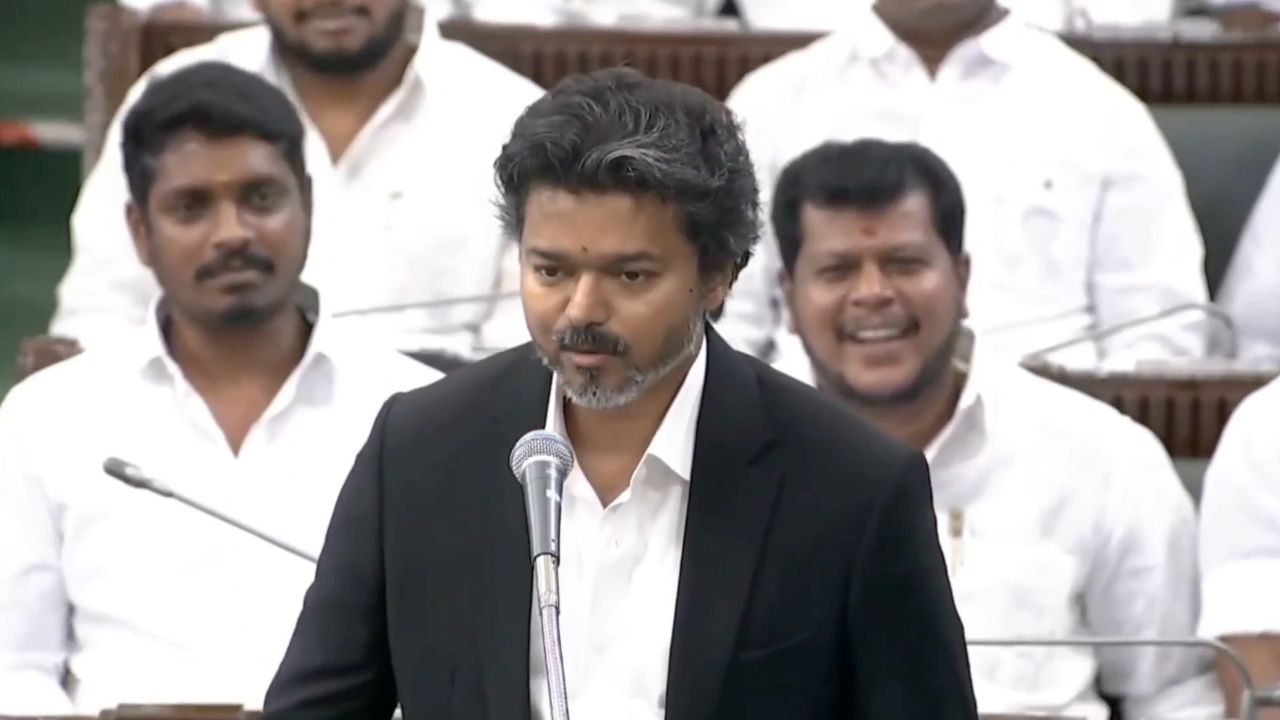
Many of the orders have also prompted suggestions that the government was also acting against democratic principles.

Synopsis: The C Joseph Vijay-led Tamilaga Vettri Kazhagam (TVK) government’s withdrawal of the order exempting the Public (Law and Order) Department from the RTI Act was but its latest U-turn. The reversals have drawn criticism of the TVK government’s functioning, with suggestions that Vijay and the party, both new to power, lack the experience to run the State administration.
The C Joseph Vijay-led Tamilaga Vettri Kazhagam (TVK) government in Tamil Nadu has withdrawn at least five significant orders and departmental directives in less than five months since taking office. Many of the withdrawals followed widespread public backlash.
The latest was the withdrawal of a 21 September order exempting the Public (Law and Order) Department from the Right to Information Act, 2005. The order came to light on 27 September. Energy and Law Minister CTR Nirmal Kumar initially defended it, saying it was intended only to protect certain sensitive information, particularly information relating to communal clashes. Hours later, the order was withdrawn.
The reversals have invited criticism of the TVK government’s functioning, with suggestions that Vijay and the party, both new to power, are too inexperienced to run the State administration and that bureaucrats might actually be in charge.
Many of the orders have also prompted criticism that the government was acting against democratic principles, as in the case of the RTI order.
“On the one hand, none of the ministers in the Tamilaga Vettri Kazhagam Cabinet have experience. On the other hand, they do not seem willing to learn. They seem to believe that projecting Vijay is enough,” senior journalist R Radhakrishnan told South First.
CPI State secretary M Veerapandian told South First that the TVK government should correct itself from such instances of “fumbling” by taking the views of trade unions, organisations and political parties into consideration.
Also Read: Gem Veeramani case: CM Vijay should be questioned over allegations on DMK, says TR Baalu
The TVK government’s first reversal came within days of taking charge on 12 May, after it appointed astrologer and TVK spokesperson Radhan Pandit Vettrivel as Officer on Special Duty (Political) to Chief Minister C Joseph Vijay. The appointment was revoked the next day after public backlash.
Months later, on 18 August, Guziliamparai Tahsildar M Ayyasamy issued a circular directing revenue officials to collect the names and addresses of CPI and CPI(M) members in the taluk. The Dindigul district administration ordered its withdrawal the same day. Ayyasamy was subsequently relieved of the post.
Around the same time, the Higher Education Department issued a highly controversial communication to principals of government arts and science colleges directing them to bar students from participating in protests organised by Left parties and the Tamil Nadu Cockroach Janata Party (CJP).
The government withdrew the communication on 19 August.
Weeks later, on 1 September, the government published a Gazette notification proposing to acquire 22.16 hectares in Melma village, Cheyyar taluk, Tiruvannamalai district, for Phase III of the SIPCOT industrial park. This was despite repeated assurances by Chief Minister Vijay, both before and after the TVK came to power, that farmers’ lands would not be acquired for the proposed industrial projects.
The government withdrew the notification on 18 September, following a recommendation from the Tiruvannamalai District Collector.
Also Read: Does TN Law Minister CTR Nirmal Kumar want to end the Kurian Joseph Committee?
The order exempting the Public (Law and Order) Department from the RTI Act invited perhaps the strongest backlash.
DMK MP Kanimozhi accused the government of attempting to restrict access to information under the RTI Act while failing to restore law and order.
The order also drew criticism from the TVK’s coalition partners, the Left parties and the Congress, as well as the VCK, BJP and PMK.
CPI(M) MP S Venkatesan called for the immediate withdrawal of the order, saying it would keep law-and-order matters away from public scrutiny and describing it as an attempt to turn Tamil Nadu into a “police state”.
CPI(M) State secretary P Shanmugam said the RTI Act was intended to ensure transparency in administration and argued that the exemption could weaken citizens’ access to information.
VCK president Thol Thirumavalavan termed the notification “highly shocking” and said it could pave the way for the suppression of human rights.
Congress MP Karti Chidambaram said exempting the department would set a “bad precedent” and argued that the scope of the RTI Act should instead be expanded.
BJP Tamil Nadu president Nainar Nagenthran said the RTI represented citizens’ right to know what was happening within the government and criticised the move as administrative incompetence.
PMK president Anbumani Ramadoss said law-and-order data was essential to assess how effectively the State was maintaining law and order. Such information, he said, should be used to improve governance rather than restrict it.
Senior journalist R Radhakrishnan said the repeated reversals were a result of the Chief Minister being “inexperienced and inaccessible”.
“They do not take any action against officials. Whenever such problems arise, they simply seek explanations and then leave the matter without taking any further action,” Radhakrishnan said.
“As far as they are concerned, good governance does not appear to be a major concern. It remains merely a slogan. Beyond that, they do not seem to be concerned about much else,” he added.
CPI State secretary M Veerapandian said Chief Minister Vijay must stand with the people and uphold democratic principles.
“The Right to Information Act is a right that was proposed and fought for by the Communists. We are not going to ask for military secrets. Wherever power is concentrated, there is a possibility of excesses. Rights such as this are essential if such excesses are to be exposed. This government should not take away that right,” Veerapandian said.
He said the government must establish that the elected Chief Minister and his Cabinet are the ultimate authority, rather than the bureaucracy.
“Action should be taken against officials who engage in such acts. The system should be improved in such a way that officials follow the decisions of ministers. That would be the right approach,” he said.
MP D Ravikumar from the Viduthalai Chiruthaigal Katchi (VCK), which is part of the governing TVK, offered a slightly more nuanced interpretation.
“It appears that this government is willing to listen to criticism. Generally, when a government rolls back a decision, it creates a negative perception in the public domain. However, this government is willing to listen to its alliance partners and organisations and correct its decisions when they are found to be wrong. I believe that doing so can also help them avoid public embarrassment,” Ravikumar said.
“Even during the previous DMK government, changes were made after listening to the views expressed by our leader, Thol. Thirumavalavan, MP. This government, too, has been seeking our views on several issues and taking our suggestions into consideration. Our leader has been putting forward these suggestions both personally and in the public domain, and the government has been acting on them.
“Only after the elections has the Secular Social Justice Alliance been formed. In the coming days, a Common Minimum Programme and various plans will be formulated. If such issues are discussed and decisions are taken through that process, it can help avoid situations that could cause public embarrassment,” he went on to add.
Also Read:
Inside the Vijay push: Paid reels, PR networks and the ‘next PM’ narrative
(Edited by Dese Gowda)



