

Published Dec 01, 2025 | 9:00 AM ⚊ Updated Dec 01, 2025 | 9:00 AM

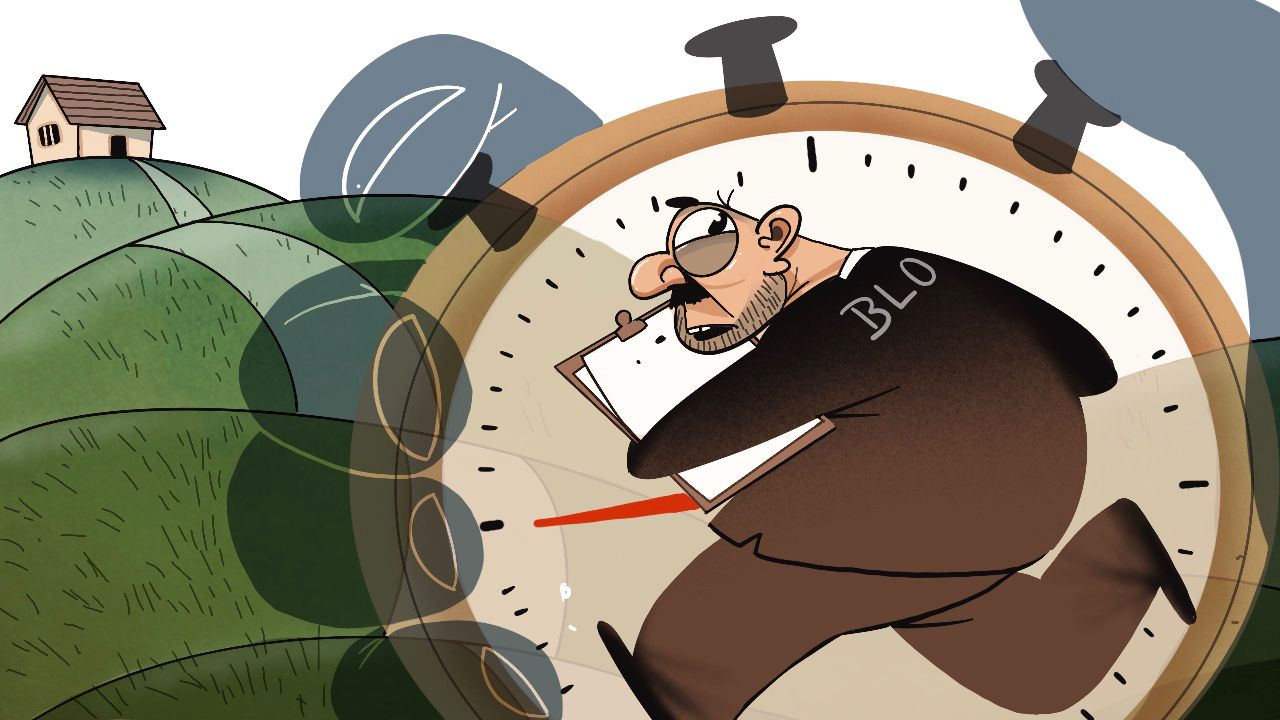
SIR in Tamil Nadu hamlets.
Synopsis: In the hilly, tribal belts of Tamil Nadu, BLOs brave hostile terrains while they race against time. The lack of proper roads and mobile phone penetration has made their task difficult. Adding to the woes are residents who have left the villages to work in big cities. They face the threat of getting dropped from the electoral rolls. Now, a demand has been raised to extend the deadline for voter verification further.
The Election Commission has extended the deadline for the ongoing Special Intensive Revision (SIR) of electoral rolls in Tamil Nadu by a week, from the original 4 December cut-off to 11 December.
But it does little to assuage the fears of several residents of the Kalvarayan Hills in Kallakurichi district that they may yet lose their right to franchise.
Santhakumari, a 48-year-old Booth Level Officer (BLO) from Vellimalai Thoradippattu panchayat, has been racing against time to verify as many voters as she could. She has realised that covering all voters — 1,370 of them — within the Election Commission of India-set deadline would not be possible.
Ever since SIR was rolled out in Tamil Nadu, she has been visiting door-to-door, meeting the voters. Till Friday, 28 November, she has uploaded the forms of around 900 people.
Among the remaining 470 voters, at least 10 people in every village have found that their names missing from the draft voters’ list.
Santhakumari, who has been working under the Illam Thedi Kalvi scheme, knows that some voters are dead, some have shifted away, and many others just do not appear in the list.
The issue is not confined to the Kalvarayan Hills.
In several tribal belts — the Kalvarayan Hills, Servarayan Hills, Kolli Hills, Pachamalai, Palamalai, and others — the voter revision drive has left out large numbers of residents. Many people seemed unaware of the previous SIR in 2002. Others do not have the required documents to prove their eligibility.
They all meet Santhakumari and other BLOs with the question, whether they would be able to vote in 2026, when Tamil Nadu elects its new Assembly.
It was earlier reported that Irular and Kuravar families living in the plains lacked essential documents, putting them at the risk of being removed from the voter list.
South First did a reality check in Jawadhu Hills, Vellimalai, Kalvarayan Hills, and other remote areas.
In many places, people who have been voting for years, were missing from the draft rolls. Even when SIR forms were submitted, election officials could not reach these residents to verify the documents because of a lack of connectivity and accessibility.
Tamil Nadu has hundreds of hill villages with lakhs of tribal residents.
More than 1.5 lakh tribespeople live in these areas.
Most villages lack proper roads. For instance, residents of Vazhaikkadu in Jawadhu Hills must walk nearly 4.5 km through a slippery, rain-soaked forest path every day.
Each hill region has villages cut off from basic roads and facilities — and BLOs must trek through these paths to collect voter forms.
Tamil Nadu’s special revision began on 4 November and was originally scheduled to end on 4 December. On 30 November, the Election Commission of India extended this deadline to 11 December.
The Election Commission has stated that those not submitting forms during this period will not be included in the new draft list.
But unlike the cities and plains — where a BLO can easily visit an apartment — the hills are entirely different.
Villages in Jawadhu Hills like Vazhaikkadu and Nachiyanmalai, in Vellimalai, in Dharmapuri’s Kalvarayan Hills, and in Kolli Hills are often accessible only by foot. BLOs must walk miles through forests and slopes to reach scattered settlements.
A 43-year-old Anganwadi worker who is a BLO in the Salem side of Kalvarayan Hills said she has been assigned over 500 voters. “Until the 28th, I could finish only 300. About 200 more remain — I cannot complete this in just six more days.”
A. Ponnusamy, state secretary of the Tamil Nadu Hill People’s Association, said many villages lacked mobile signal.
“People leave for work by 7 am and return after 5 pm. Visiting villages before sunrise or after sunset is dangerous — no roads, no lights. How can BLOs finish all this in one month?” he wondered.
Santhakumari chipped in, saying she cannot do the work alone. “Local youngsters are helping me. Even then, I’ve crossed only 900 forms. I need at least 20 more days.”
With the deadline fast approaching, thousands of hill residents risk losing their place in the voter roll.
Kullammal, a woman over 60 from Thoradippattu panchayat, has voted in the 2024 elections. Her name is missing from the revised list.
“Every village in this panchayat has at least 10 people whose names are missing. We never received their forms,” Santhakumari said.
In Sembur (Salem Kalvarayan Hills), more than 40 people did not receive forms, said Dharmalingam, a resident. “In some villages, 10 to 50 people have not received forms.”
There are also issues with booth mismatches. V. Annamalai from Thalmathur village said details of people from one village appear under another booth.
“How will they even find it? Many have gone to Karnataka for work — they won’t be back by the 4th. And due to the photo in the draft being unclear, we couldn’t confirm whether the entry belongs to the right person,” he said.
On 27 November, the Tamil Nadu State Election Commission announced that people would be allowed to vote if they submit the SIR forms by the original deadline of 4 December.
With the Election Commission of India now extending the overall Special Intensive Revision deadline to 11 December, officials have clarified that applicants can submit the relevant documents later, during the Claims and Objections period from 9 December 2025 to 8 January 2026.
To prove their identity later, election officials must contact each voter, inform them of the required documents, and receive them at a specified time and place.
In the hills, this is almost impossible.
“There is no mobile signal here. To make a call, we walk a few kilometres. How will officials contact us? If they have doubts regarding the details provided, how will they collect documents? It’s simply not possible,” Loganathan of Kilanur village in Jawadhu Hills said.
In Palamalai, there is zero phone connectivity, Ponnusamy said. “How will officials collect documents from people whom they cannot even reach over the phone?” he asked.
Over 60% of Jawadhu Hills residents have migrated to Karnataka for work, taking their school-going children with them. They return only during the Telugu New Year. Entire families are away — meaning there is no one to fill out SIR forms, said former panchayat leader R Selladurai from Jamunamarathur.
“Even if they want to submit documents during the Claims & Objections period, they won’t be here. So no matter what they do, they cannot include their names,” Selladurai said.
Adding to this, women who have moved after marriage face an additional struggle: many lack documents to prove their identity in their husband’s village.
Most hill residents do have Aadhaar or caste certificates. The real issue is communication — how will the Election Commission reach them to collect documents?
There is also confusion about 2002 SIR data. Many don’t know whether they or their parents were registered voters.
Even if half the people’s SIR details are traced by the Commission, the remaining half must still submit documents in person — something that is nearly impossible without connectivity or road access.
“How can an election officer sitting in the district headquarters contact people in villages with no roads or mobile signal?” Ponnusamy asked.
Residents said the only practical solution is to extend the deadline for hill regions — at least until the Telugu New Year, when migrant families return.
Without this extension, they warned, half the tribal population may lose their voting rights.
Selvaraj expressed the fear bluntly. “The government’s approach is wrong. Why should our political rights be taken away like this? Shouldn’t they think about the tribal people before enforcing such processes? We definitely need more time.”
(Edited by Majnu Babu).


