

Published Nov 18, 2026 | 11:51 AM ⚊ Updated Nov 18, 2026 | 11:51 AM

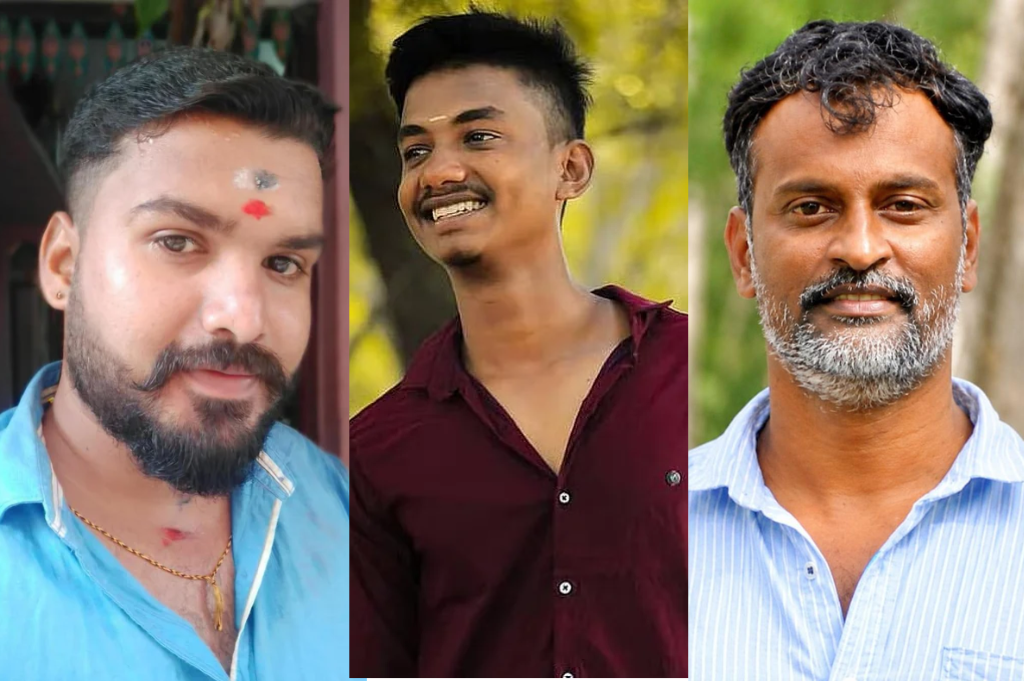
Sabarivarman, Arunachalam and Balakrishnan died in incidents involving police or judicial custody in Tamil Nadu in 2026.

Synopsis: A year after leading a protest demanding justice for families of custodial-death victims under the DMK regime, Chief Minister Vijay faces renewed questions over police accountability. Nine deaths involving police detention, alleged custodial assault and judicial custody have been reported in Tamil Nadu since his government assumed office in May.
On July 13, 2025, Tamilaga Vettri Kazhagam (TVK) president and actor-turned-politician C Joseph Vijay led his party’s first major public demonstration in Chennai, demanding justice for people who had allegedly died in police custody during the Dravida Munnetra Kazhagam’s (DMK) rule.
Addressing the demonstration at Swami Sivananda Salai, Vijay questioned then Chief Minister M K Stalin over the custodial deaths of 24 people during the DMK government’s first four years in office. He demanded that Stalin apologise to the families and provide compensation, accusing the government of failing to ensure accountability.
The protest was held in the aftermath of the death of B Ajith Kumar, a 27-year-old temple security guard from Sivaganga district who died following alleged police torture in June 2025.
A year later, custodial deaths have once again become a subject of scrutiny in Tamil Nadu, this time under the government led by Vijay himself.
Since the TVK government assumed office on May 10, 2026, at least nine deaths have been reported in circumstances involving police detention, alleged police assault or judicial custody. The incidents, reported between June and November, include deaths inside police stations, following questioning and inside prisons.
1. R Venkatesan
The first reported incident emerged less than a month after the TVK government assumed office.
R Venkatesan, a 28-year-old driver from Nesapakkam in Chennai, died hours after being questioned by MGR Nagar police.
According to the police, Venkatesan had allegedly created a disturbance near a TASMAC outlet on June 8 under the influence of alcohol. Police personnel detained him, questioned him at the station and subsequently sent him home with his family after obtaining an undertaking.
His father, L Rajendran, found him unconscious the following morning and rushed him to hospital, where he was declared dead.
The family alleged that Venkatesan had been assaulted during police questioning. The police denied the allegations, maintaining that he had been handed over to his family in a stable condition. They also cited his alleged alcohol addiction and pre-existing health issues.
Senior police officials ordered an inquiry into the death.
2. S Sabarivarman
The death of S Sabarivarman, a 34-year-old differently abled petty shop owner from Eethankattai in Kanniyakumari district, became one of the most serious cases reported during the period.
Sabarivarman was arrested by Thenthamaraikulam police on July 9 in connection with the alleged possession of banned gutkha products. He was subsequently remanded to judicial custody at Nagercoil District Prison.
He died inside the prison on July 13.
The post-mortem examination reportedly revealed 19 external injuries on his body. The findings triggered protests by his family, who initially refused to receive the body and demanded action against those responsible.
The investigation led to the arrest of three prison personnel and eight inmates. The case was subsequently transferred to the Crime Branch-Criminal Investigation Department (CB-CID).
In October 2026, the CB-CID filed a chargesheet against all 11 accused before a Nagercoil court.
According to the chargesheet, a prison warden initially assaulted Sabarivarman after inmates complained that he was shouting inside his cell and demanding to meet his wife and children. The warden allegedly instigated eight inmates returning from kitchen duty to attack him.
The investigation found that the accused tied Sabarivarman’s hands and legs with a lungi and repeatedly assaulted him. When he managed to free himself, they allegedly tied him up again and continued the assault.
3. P Balaji
P Balaji, a 45-year-old resident of Selaiyur near Tambaram, died while lodged in Puzhal Central Prison.
He was arrested on July 12 in connection with a case involving the alleged possession and transportation of banned gutkha products. Police reportedly seized 514 kg of gutkha and pan masala in the case. He was subsequently remanded to judicial custody.
On July 15, Balaji complained of chest pain. Prison personnel rushed him towards Government Stanley Medical College Hospital, but he died on the way.
His family questioned the circumstances surrounding his death and alleged that he had not received adequate medical treatment in prison. His wife also claimed that he had been unwell while in custody.
Prison authorities reportedly cited his history of diabetes and a sudden medical complication. A case was registered and an inquiry initiated.
4. M James
Another prison death was reported on the same day in Tiruchirappalli.
M James, a convicted prisoner lodged in Tiruchirappalli Central Prison, died on July 15. A case was registered at the Government Hospital Police Station in connection with his death.
The subsequent proceedings raised concerns over the delay in conducting the post-mortem examination.
Judicial Magistrate S Mohamed Suhail, who conducted the inquest, wrote to the Director of Medical Education and Research on July 22, expressing concern that the post-mortem had not been conducted even eight days after the death.
The magistrate pointed out that a medical team should have been constituted in accordance with the procedures applicable to custodial deaths, including videography of the post-mortem examination.
5. N Arunachalam
N Arunachalam (24) from Amudha Nagar in Thoothukudi, died on July 23 after spending six days in hospital following his arrest by Thoothukudi South police in connection with a case involving the alleged possession of 120 liquor bottles.
According to the police, Arunachalam collapsed inside the police station lock-up. They maintained that he was examined and subsequently released on station bail after his condition appeared normal.
Meanwhile, his family alleged that he had been assaulted during police custody and that the assault had caused serious head injuries.
A video recorded before his death reportedly showed Arunachalam alleging that three police personnel had assaulted him. His family released the video and staged a protest outside the hospital, refusing to receive his body.
The police, meanwhile, released CCTV footage which showed Arunachalam collapsing inside the station. They maintained that his injuries resulted from the fall and denied the allegations of custodial assault.
A magesterial inquiry was ordered into the death. The Madras High Court, while hearing a petition seeking a CBI investigation into the death has sought a report on the inquiry.
6. S. Anwardeen
S. Anwardeen, a 65-year-old advocate from Palani arrested in connection with an alleged fraudulent registration of temple land, died at Government Rajaji Hospital in Madurai on August 7, hours after being brought back to Madurai Central Prison following three days of CB-CID interrogation.
He had been remanded to judicial custody on July 29 and was reportedly suffering from diabetes, hypertension and complications following a stroke. He developed cardiac complications later that night and was shifted to the hospital, where he was declared dead at around 10.40 pm.
A judicial inquiry was ordered into his death.
7. Paramasivam
54-year-old Paramasivam from Mela Anuppanadi in Madurai died on August 16 nearly a month after he was allegedly assaulted by the Chinthamani police following a dispute with his neighbour over vehicle parking.
Paramasivam’s wife, Ayyammal, alleged that police personnel assaulted him at the police station on July 19. According to the family, he subsequently developed headaches and vomiting. Paramasivam was initially treated at Government Rajaji Hospital and was later shifted to a private hospital, where he underwent surgery for a serious head injury.
Police claimed the injury resulted from a fall at his residence and cited his medical treatment and subsequent discharge from the hospital as evidence.
Following a petition filed by his wife, the Madras High Court directed a magisterial inquiry and a post-mortem examination by a medical team.
The post-mortem report released in August recorded brain swelling and intracranial hemorrhage, including a hemorrhagic injury in the right frontal lobe. A surgical wound was also documented, reflecting the treatment he had undergone.
Doctors reserved their final opinion on the cause of death pending chemical analysis and histopathological examination.
8. B Gurumoorthy
A 46-year-old remand prisoner, B Gurumoorthy, died while undergoing treatment at Government Stanley Hospital in Chennai on September 9.
Gurumoorthy had been arrested by the Narcotics Control Bureau and remanded to Puzhal Central Prison on August 20.
According to prison authorities, he had several pre-existing medical conditions, including hypertension, epileptic seizures and cerebral hemorrhage, which had resulted in partial paralysis of his left arm and leg.
His condition reportedly deteriorated on September 8, following which he was shifted to Government Stanley Hospital. He died the following day during treatment.
A case was registered and an investigation initiated.
9. R Balakrishnan
The latest incident emerged from Chekkanoorani police station in Madurai district.
R Balakrishnan, a 42-year-old lorry driver from Devaram in Theni district, was brought to the police station on November 13 for questioning in connection with a fire that reportedly destroyed around 60 bags of cardamom he was transporting.
He was found dead inside the police station restroom the following morning.
Police initially described the death as suicide by hanging. His family, however, alleged custodial torture and questioned the circumstances surrounding his death.
Three police personnel, including the station inspector and two head constables, were suspended. The investigation was transferred to the CB-CID, which registered a case under Section 196(2)(a) of the Bharatiya Nagarik Suraksha Sanhita (BNSS), relating to death in police custody.
The post-mortem examination conducted by a three-member medical team at Madurai Medical College recorded a 27 cm ligature mark around the neck, five fresh contusions on the back and chest, multiple abrasions and bite marks on the tongue.
The examination also recorded swelling of both lungs, multiple petechial hemorrhages and frothy fluid in the airways.
However, the medical team reserved its final opinion on the cause of death pending chemical and histopathological examination reports. Samples from the stomach, liver, kidneys and blood were sent to the Regional Forensic Science Laboratory in Madurai.
CCTV footage from the police station is also being examined by the CB-CID. The footage reportedly showed Balakrishnan sitting and speaking with police personnel inside the inspector’s room before walking into the restroom.
His family rejected the police version, refused to receive his body and demanded the arrest of the personnel allegedly responsible for Balakrishnan’s death. They also refused a Rs 3 lakh compensation offered by the government.
The case remains under investigation, with the final medical findings awaited.
Also Read: Madras High Court quashes Tamil Nadu government’s ban on inter-state transportation of minerals
While the circumstances surrounding the nine deaths differ, the incidents raise a larger question: whether custodial violence is merely the result of individual misconduct or is it sustained by deeper institutional practices within the police and prison systems.
S Nallathambi, a retired prison warden who served at the Madurai, Coimbatore and Vellore central prisons between 1985 and 2021, said inadequate human-rights sensitisation and the absence of systematic training are among the major reasons behind the prevalence of custodial violence.
“There is a pressing need to educate and sensitise police personnel about human rights. There are no adequate, comprehensive guidelines or systematic training programmes to ensure that they understand and respect human rights in their day-to-day functioning. Even when senior officers issue instructions, they are not always properly understood or implemented at the ground level. Human rights education must therefore be made an integral part of police training at every level,” he said.
According to Nallathambi, both physical and psychological torture continued to take place inside police stations, including in cases involving petty offences.
“The police can investigate the offence, register a case and produce the accused before a magistrate. But beating someone to the extent of breaking their limbs is completely unacceptable. The fear and trauma caused by such torture can drive people to attempt suicide, and in some cases, they even lose their lives,” he said.
Recalling incidents from Madurai around 10 to 15 years ago, Nallathambi described an instance involving two young men, aged around 18 or 19, who were allegedly caught stealing a motorcycle at night.
He said the two men were allegedly assaulted by members of the public before being taken to a police station, where they were subjected to further torture.
According to Nallathambi, an encounter specialist, S Velladurai, who was then serving in the region, reportedly arrived at the station and assaulted the two men with iron rods, even wrapping them in sacks. Both sustained serious injuries, including fractures. One of them died the following day, while the other reportedly developed severe psychological problems.
Nallathambi said the incident illustrated how public assault and subsequent police violence can combine to cause fatal injuries. These are recollections and allegations from his experience, and the specific incident has not been independently verified.
He also recalled another incident involving a first-time offender arrested in a case concerning the sale of gold ornaments.
“When he was brought to prison, I was the one processing registration. We noticed that his legs were severely swollen and fluid was oozing from them. He was unable to sit comfortably and was visibly in pain. Since his condition was alarming, we refused to admit him and sent him to hospital. He died shortly afterwards,” he said.
Also Read: How Tamil Nadu’s TN-KET initiative reduced tuberculosis deaths by 38%
Nallathambi identified the methods used during criminal investigations as another major concern.
Police personnel, he said, sometimes attempt to force suspects to confess to offences, including crimes they may not have committed.
“Under sustained physical torture, a person may eventually confess, whether the confession is true or false. Both situations occur,” he said.
He also alleged that suspects were sometimes kept in police station lock-ups beyond the legally permitted period under the pretext of continuing an investigation.
The law requires an arrested person to be produced before a magistrate within 24 hours, excluding the time necessary for the journey. However, according to Nallathambi, suspects were sometimes detained and interrogated until the police believe they have obtained the information they want, before being formally produced for remand.
“This is not restricted to any particular category of offence. A person may be arrested from their home or picked up from elsewhere and brought to a local police station. The 24-hour legal requirement must be respected, and detention cannot be prolonged simply because the police want to extract a confession,” he said.
He argued that the emphasis on solving cases, identifying offenders and securing convictions cannot come at the expense of human rights.
“Senior officers and the administration must also ensure that investigations are conducted within the boundaries of the law. The pressure to solve a case cannot become an excuse for torture or the assumption of powers that the police do not possess,” he said.
Nallathambi also pointed to a recurring explanation offered in cases involving injuries during police detention: that the accused attempted to escape, resisted arrest or fell while being apprehended.
He said such explanations required closer scrutiny and should not become convenient justifications for custodial violence.
While acknowledging that courts, particularly the High Courts, intervened in cases involving custodial violence, he said consistent institutional accountability was necessary to prevent their recurrence.
“Human-rights sensitisation programmes and training sessions should not remain mere classroom exercises. They must translate into actual changes in police conduct and investigative practices. Every police officer, from the station level to the senior ranks, must understand that enforcing the law does not give them the authority to punish someone themselves,” he said.
Also Read: TN’s AI-generated books scam: DVAC FIR names publisher, flags Co-ordination Committee’s role
While Nallathambi identified inadequate training and investigative practices as major factors, a lower-ranking police personnel in the Tamil Nadu Police who is involved in handling detainees offered a perspective on the attitudes within the force.
The personnel attributed some incidents to arrogance associated with wearing the uniform and a belief that physical punishment could prevent repeat offences.
“Not all police personnel behave this way. Only a few carry themselves with the arrogance that comes with wearing the uniform. As for what leads to assaults, there is generally a mindset that when someone repeatedly commits an offence despite being warned several times, they can only be corrected by beating. Some personnel may give them a light slap as a warning, while others, driven by arrogance, may assault them more brutally,” he said.
The personnel acknowledged that senior officers periodically instructed police staff not to assault detainees or harass members of the public. Training sessions on these issues are also conducted from time to time.
However, the personnel claimed that physical assault has, in practice, become difficult to avoid when dealing with hardened criminals.
He also raised concerns over a perceived lack of public support when police officers are attacked.
“Similarly, there is a growing feeling among us that while civil society raises questions and speaks up when accused persons are harmed, the same sections rarely raise their voices when police personnel themselves are attacked by criminals,” he said.
On July 12, 2025, months before the Assembly election, TVK chief Vijay personally met the families of people who had allegedly died in police custody during the DMK rule. The meeting was held at the party’s headquarters in Panaiyur, Chennai, and lasted more than three hours.
According to reports, invitations were sent to the families of 24 victims, of whom representatives of 18 families attended the closed-door meeting.
Vijay reportedly spoke to each family, enquired about the circumstances that led to the victims being taken into custody, the causes of their deaths, compensation provided by the government and the status of the legal proceedings. He also provided financial assistance to each family and assured them of legal support.
The meeting came days after Vijay visited the family of Ajith Kumar, who died following alleged police torture in Sivaganga district. He paid floral tributes to Ajith Kumar’s portraitand provided Rs 2 lakh in financial assistance to the family.
Since taking office as chief minister in May 2026, Vijay has not personally met the families of those who died in police or judicial custody under his administration.
A review of public records and media reports also found no statement or social media post from him addressing these deaths. The absence of a response from the chief minister was also flagged by bereaved families following the death of disabled undertrial prisoner Sabarivarman at Nagercoil Sub-Jail on July 13, 2026.
His sister, Gowthami, told the media that neither the CM nor any minister had approached the family or issued an official statement even days after his death. Meanwhile, DMK MP Kanimozhi visited the family and expressed condolences.
The issue was also raised after the death of Arunachalam in Thoothukudi in July. DMK president M.K. Stalin criticised Vijay on X, alleging that the chief minister had remained silent and had not offered an apology or publicly expressed condolences to the family.
Stalin recalled Vijay’s pre-election questions to the then government over custodial deaths and demanded accountability from the new administration.
(Edited by Fayisa CA)



