

Published Jun 10, 2026 | 4:58 PM ⚊ Updated Jun 10, 2026 | 5:47 PM

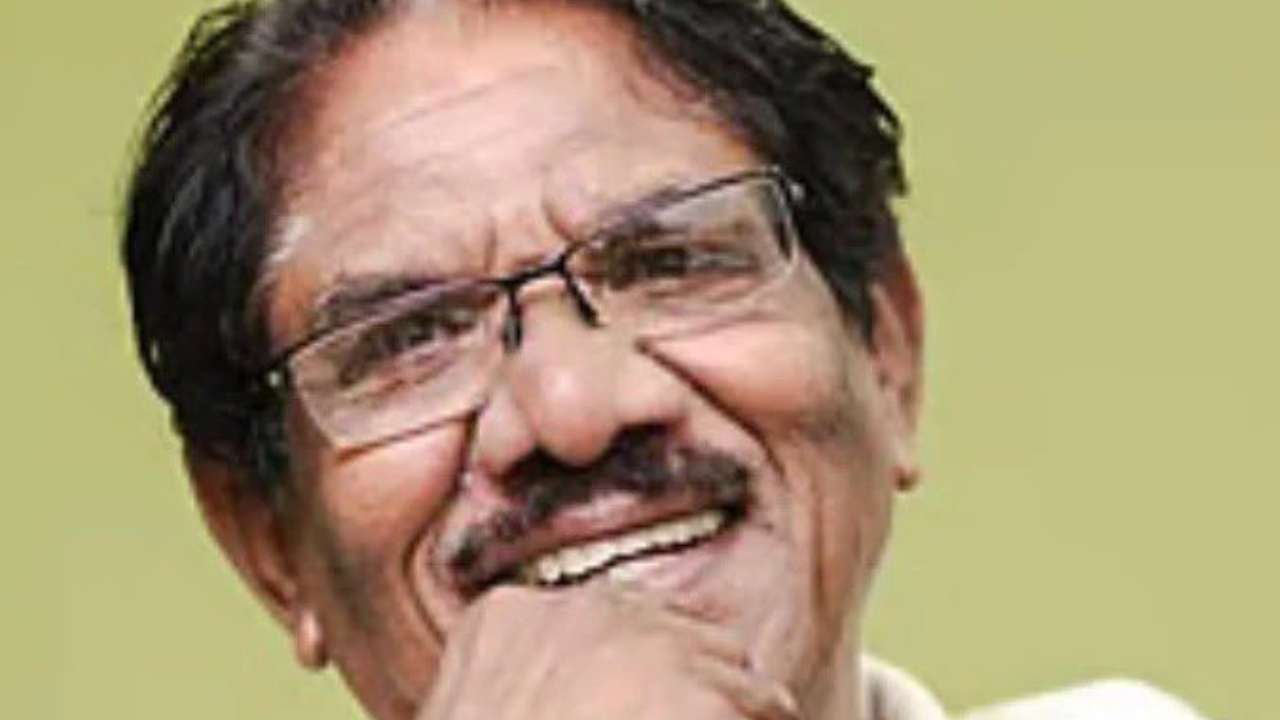
His voice, his vision, and his style will remain etched in the collective ethos of Tamil people forever.

Synopsis: Veteran Tamil filmmaker Bharathiraja, who revolutionised cinema by bringing village life and social reform to the screen, passed away on 10 June, aged 84. From ‘Mudhal Mariyadhai’ to ‘Karuthamma’, his films challenged caste, gender, and tradition while shaping Tamil cultural consciousness. A fearless voice for equality and Tamil rights, Bharathiraja’s legacy remains etched in the ethos of Tamil society.
Somewhere in Madurai, the sound system falls silent. Outside the hall, organisers wait anxiously. On stage, a mother cradles her infant daughter, ready for the ear-piercing ceremony.
Suddenly, a boy rushes in from the street, waving his hands. Faces brighten. A signal is given, and the music resumes. The lines, “Thaimaaman Seer Sumanthu Vaarandi… Avan Thanga Kolusu Kondu Thaaraandee…” fill the air as a procession carrying the Thaimaaman Seer enters.
Scenes like this are familiar in Madurai, Usilampatti, Andipatti, and Periyakulam, where the Kallar community has a dominant presence. The song belongs to Kizhakku Cheemayile, one of Bharathiraja’s finest works.
On the morning of 10 June 2026, Bharathiraja passed away at his residence, at the age of 84.
Also Read: Veteran Tamil filmmaker-actor Bharathiraja passes away at 84
Often misunderstood as a casteist filmmaker, Bharathiraja’s cinema consistently pressed for reforms within Kallar social identities. Kizhakku Cheemayile (1993) remains a landmark movie, documenting the matrilineal kinship structures of the Kallar community, where the maternal uncle plays a central role in family and social life.
Bharathiraja was the first Tamil director to speak directly to audiences, opening his films with the iconic greeting: “En Iniya Tamizh Makkale…” and his folded-hands ‘Vanakkam’.
Through his films, he introduced revolutionary ideas about politics and society. Puthiya Vaarpugal (1979) challenged the sanctity imposed on the ‘thali’, while Pudhumai Penn (1984) questioned the expectation that women must endure abusive marriages.
With Mudhal Mariyathai (1985), he gave Sivaji Ganesan one of his most celebrated roles, stripping away the legend’s theatricality for naturalism. Critics noted that if this had been Sivaji’s debut, the world might have seen a far more versatile actor. The film also explored the rarely discussed dynamic of a wife as the aggressor in an abusive marriage.
Alaigal Oivathillai (1980) boldly upheld inter-caste marriage, while Karuthamma (1994) delivered a searing critique of female infanticide, a practice reported in parts of Tamil Nadu. For Bharathiraja, cinema was never mere entertainment—it was a mirror for social introspection.
When critics dismissed him as a “village filmmaker,” he countered with urban thrillers like Sigappu Rojakkal (1978) and Tik Tik Tik (1981). His Vedham Pudhithu (1987) provoked outrage among Brahmin groups, who demanded its ban. The film featured a Brahmin child questioning hierarchy and depicted a Shankaracharya-like figure borne in a palanquin. Bharathiraja refused to censor it, declaring he would rather burn the film than compromise.
With MG Ramachandran’s intervention, it was released and became a blockbuster. It was, poignantly, the last film MGR ever watched.
In Nizhalgal (1980), Bharathiraja examined unemployment through a leftist lens, while En Uyir Thozhan (1990) symbolically critiqued the Dravidian parties and the exploitation of the marginalised communities.
Also Read: Tamil Cinema 2025: A mixed year as stalwarts fail to impress even as ‘Bison’ stands tall
Beyond cinema, he was deeply engaged in Tamil social and political struggles. A vocal supporter of Tamil rights and the Eelam cause, he joined protests and campaigns.
LTTE chief Prabhakaran admired him and once expressed a wish for Bharathiraja to direct a film on the Eelam freedom movement.
Before Bharathiraja, Tamil cinema was dominated by Brahmanical middle-class narratives and melodrama. He broke that mold. He brought village life to the forefront, opened doors for rural artists, and reshaped cinematic language with realism, zoom cuts, montages, and sharp cultural critiques.
He never bowed to authority. His voice was one of self-respect, awakening the conscience of Tamils through art, culture, and politics. For many, Bharathiraja was not just a filmmaker but a symbol of dignity and defiance.
His voice, his vision, and his style will remain etched in the collective ethos of Tamil people forever.
(Edited by Amit Vasudev).



