

Published Jan 31, 2026 | 4:11 PM ⚊ Updated Jan 31, 2026 | 4:11 PM

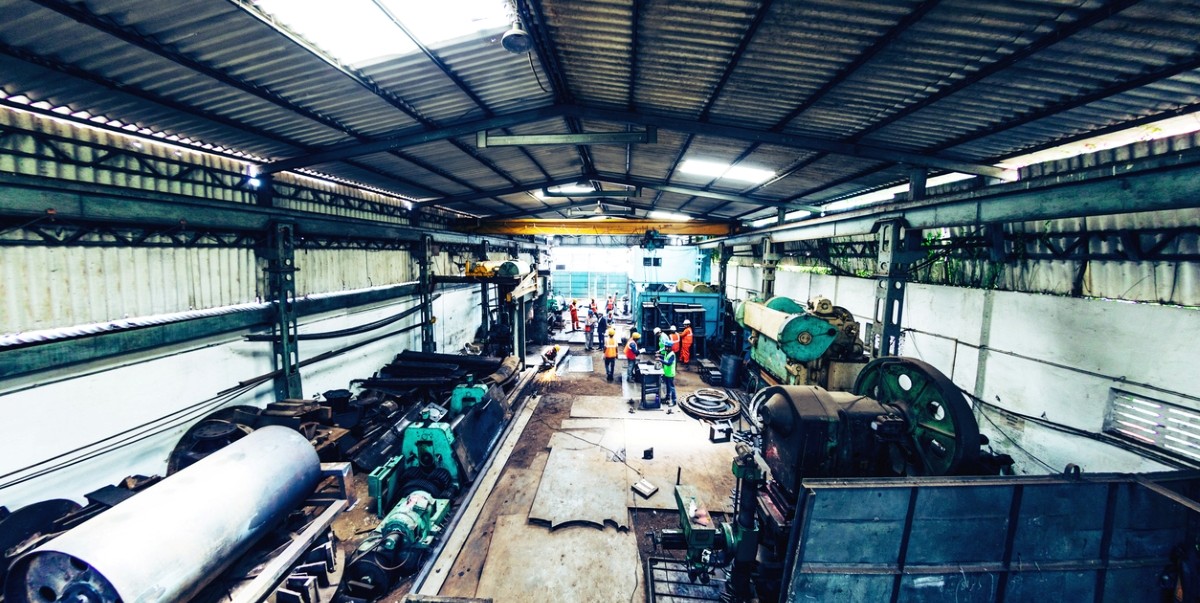
Economic Survey highlights Tamil Nadu’s wider role in services and manufacturing. (iStock)
Synopsis: Spread across its chapters, Tamil Nadu appears repeatedly, in sections on inflation, services, manufacturing, technology, skilling, social infrastructure and climate adaptation. Taken together, these references place the state firmly within India’s growth narrative, while also pointing to gaps in productivity and social outcomes that still need to be addressed.
When the Union government released the Economic Survey 2025–26 on 29 January 2026, it set out to map how India’s economy has performed ahead of the Union Budget.
The document reviews growth, fiscal pressures and sector-wise shifts, while stressing that the economy has managed to keep expanding despite global uncertainty. Its overall thrust is on investment-led growth, easing inflation and reforms in services, manufacturing and technology-driven sectors.
Spread across its chapters, Tamil Nadu appears repeatedly, in sections on inflation, services, manufacturing, technology, skilling, social infrastructure and climate adaptation. Taken together, these references place the state firmly within India’s growth narrative, while also pointing to gaps in productivity and social outcomes that still need to be addressed.
Like many states, Tamil Nadu’s finances are under strain. Even so, the Survey underlines that this pressure has not come at the cost of long-term investment. In other words, fiscal balance has not been achieved by cutting back on future-oriented spending.
On prices, the trajectory is clearer. Retail inflation in Tamil Nadu eased steadily through 2025–26, falling from 5.95 percent (2022-23) in the earlier period to 5.42 percent, then to 4.65 percent and finally to 2.45 percent(2025-26 April – December). The shift marks a move from near the Reserve Bank of India’s upper tolerance limit to comfortably within its 2–6 percent target band.
This trend sets Tamil Nadu apart from Kerala and Lakshadweep, both of which crossed the 6 percent threshold.
At the national level, farm output is growing faster than the global average, at over 2.9 percent annually. Yet low yields continue to hold back productivity. For Tamil Nadu, the message is that future gains must come from raising output per hectare, especially in rice, while consolidating gains in oilseeds and groundnut.
In services, Tamil Nadu is grouped with Karnataka, Maharashtra and Telangana — four states that together account for close to 40 percent of India’s total services output. The Survey attributes this dominance mainly to modern, high-productivity activities such as IT, finance and professional services. Urbanisation, particularly in southern India, is seen as a key factor behind this concentration.
This positioning implies that Tamil Nadu operates as a high-end services hub, with growth tied to technology and skill intensive sectors rather than to low-value service activities.
The contrast becomes sharper when other states are brought into the picture. Bihar draws 58.7 percent of its Gross Value Added from services, but most of this comes from low-value segments. Kerala’s services sector, which contributes 64.3 percent of its Gross State Value Added, is anchored largely in trade, tourism and real estate. Odisha’s services share has slipped from 38.5 percent to 34.9 percent, while Assam’s has fallen from 46.5 percent to 34.3 percent.
Together, these comparisons underline that Tamil Nadu’s services structure is more productivity-oriented than that of many other states.
Nationally, more than 60 percent of urban workers are employed in services. In a state where services account for such a large share of output, this naturally places cities like Chennai, and other urban clusters, at the centre of the growth story.
In newer technology sectors, Tamil Nadu accounts for 5 percent of India’s Generative AI startups. Across the country, the GenAI ecosystem had crossed 890 active startups by the first half of calendar year 2025. Karnataka dominates this space with 39 percent, followed by Maharashtra at 14 percent, Delhi at 9 percent and Telangana at 7 percent.
The Survey points to growing demand for AI, cloud computing and cybersecurity services. At the same time, it cautions that frontier technology activity remains concentrated in a handful of highly urbanised states. It stresses the need for reskilling workers and for firms to adapt as the IT–ITeS sector moves towards higher-value business models.
Tamil Nadu also stands out in organised manufacturing employment. It accounts for 15 percent of the national workforce in this segment, ahead of Gujarat and Maharashtra at 13 percent each. Uttar Pradesh follows with 8 percent, while Karnataka, Haryana and Telangana each contribute around 6 percent. Taken together, these seven states provide roughly 60 percent of India’s manufacturing jobs.
The state also features among those with a higher share of large factories, alongside Maharashtra, Madhya Pradesh, Himachal Pradesh, Haryana, Uttarakhand, Karnataka and Uttar Pradesh. These states show higher productivity when measured by Net Value Added per person engaged.
Employment itself remains concentrated. Eight major industry groups account for around 60 percent of total organised manufacturing employment, pointing to both scale and sectoral concentration in states such as Tamil Nadu.
In pharmaceuticals and medical devices, the Survey notes that while the Centre has introduced several nationwide schemes, Tamil Nadu is one of only three states approved for ₹100 crore to set up a Medical Device Park. This positions it as a key node in India’s effort to expand domestic medical equipment manufacturing.
In its chapter on climate change, the Economic Survey cites Tamil Nadu’s Coastal Restoration Mission as an example of adaptation policy at the state level. It notes that the state has a 1,069-kilometre coastline spread across 14 coastal districts, making it particularly vulnerable to shoreline erosion, storm surges and sea-level rise.
The Survey adds that Tamil Nadu’s Blue Economy project focuses on protecting coastal biodiversity, reducing pollution, supporting fishing livelihoods and strengthening coastal infrastructure.
Through the Business Reform Action Plan (BRAP), Tamil Nadu is credited with improving the ease of doing business by introducing single-window clearances, digitised approvals and land reforms.
The Survey specifically refers to the Tamil Nadu Pollution Control Board for actively monitoring industrial effluent treatment systems and for supporting Common Effluent Treatment Plants in pollution-intensive clusters such as tanneries and textile units.
The Economic Survey also notes that India has become the world’s largest source country of international students, with the number of Indians studying abroad rising from 6.85 lakh in 2016 to more than 18 lakh in 2025, and outward remittances reaching USD 3.4 billion in FY24. However, it also observes that India’s success in attracting foreign students remains limited.
For Tamil Nadu, the Survey identifies the state as an earlier hub for international students that has since seen a decline in foreign enrolments. By contrast, states such as Punjab, Uttar Pradesh, Gujarat and Andhra Pradesh have emerged as newer host destinations for inbound students.
The Survey highlights that expanding secure hostels and affordable rental housing can significantly improve women’s access to urban jobs, while women-centric industrial clusters and manufacturing hubs can create more targeted employment opportunities.
As part of this discussion, it points to Tamil Nadu’s Working Women’s Hostels Corporation (Thozhi Hostels) as a gender-inclusive infrastructure intervention. Established under the Department of Social Welfare and Women Empowerment and operated by the Tamil Nadu Working Women’s Hostels Corporation Ltd, the scheme is designed to support women navigating work and mobility.
Since 2023, the state government led by Chief Minister MK Stalin has expanded the Thozhi Hostel network to provide safe, secure and affordable accommodation in urban and semi-urban centres. At present, around 18 hostels are operational, offering facilities such as biometric entry, round-the-clock CCTV surveillance, free Wi-Fi and purified drinking water in districts including Chennai, Coimbatore, Hosur, Pudukottai, Salem, Trichy, Tirunelveli, Tiruvallur, Vellore, Villupuram, Perambalur and Thanjavur.
The government has also announced plans to build 12 additional hostels in districts such as Tirupathur, Namakkal, Dindigul and Tuticorin, at an estimated cost of ₹62.5 crore. These are expected to accommodate around 740 women, with a range of room options and modern amenities.
The Survey cites Tamil Nadu’s skill voucher scheme as an example of state-led efforts to expand access to skilling. Launched in 2024 by the Adi Dravidar and Tribal Welfare Department, the scheme targets Adi Dravidar, Tribal and Christian Adi Dravidar students who secure at least 60 percent marks in graduation, post-graduation or technical courses. Eligible students receive training vouchers worth ₹12,000, ₹15,000 or ₹25,000 to enrol in programmes in emerging fields.
Beyond this targeted initiative, the Tamil Nadu government operates a wider skilling ecosystem through several programmes. These include the Naan Mudhalvan scheme for industry-aligned training in higher secondary schools and colleges, the Tamil Nadu Skill Development Corporation’s free short-term vocational courses linked to placement, and the Chief Minister’s Self Employment Scheme, which combines training with financial assistance to promote entrepreneurship.
In addition, the Tamil Nadu Adi Dravidar Housing and Development Corporation (TAHDCO) provides free skill development training with full placement support for SC, ST and SCC youth aged 18–45 in sectors such as IT, healthcare, beauty and automotive, along with residential training facilities that include food and accommodation.
Building on the idea that “we lived on farms, then in cities, and now we will be living on the internet”, the Economic Survey examines how patterns of social connectedness relate to suicide rates across states.
Using Facebook’s Social Connectedness Index, based on more than 60 million location linkages and focusing on within-district connections as a proxy for in-person interaction, the Survey finds a broad inverse relationship between local connectedness and suicide death rates. States with stronger, locally rooted social networks tend to show lower suicide rates, while those with more geographically dispersed, digitally mediated networks tend to show higher rates.
For Tamil Nadu, chord diagrams in the Survey show densely woven connections across districts, indicating highly dispersed social networks and weaker in-person connectedness. The state’s suicide death rate is 25.3, far higher than Bihar (0.7) and Uttar Pradesh (3.9), though lower than Kerala (30.6). The Survey argues that this pattern highlights the need to balance rising digital engagement with stronger offline social interaction, particularly among young people, so that technological connectivity does not come at the cost of mental well-being.
(Edited by Sumavarsha)


