

Published Dec 07, 2025 | 7:00 AM ⚊ Updated Dec 07, 2025 | 8:28 AM

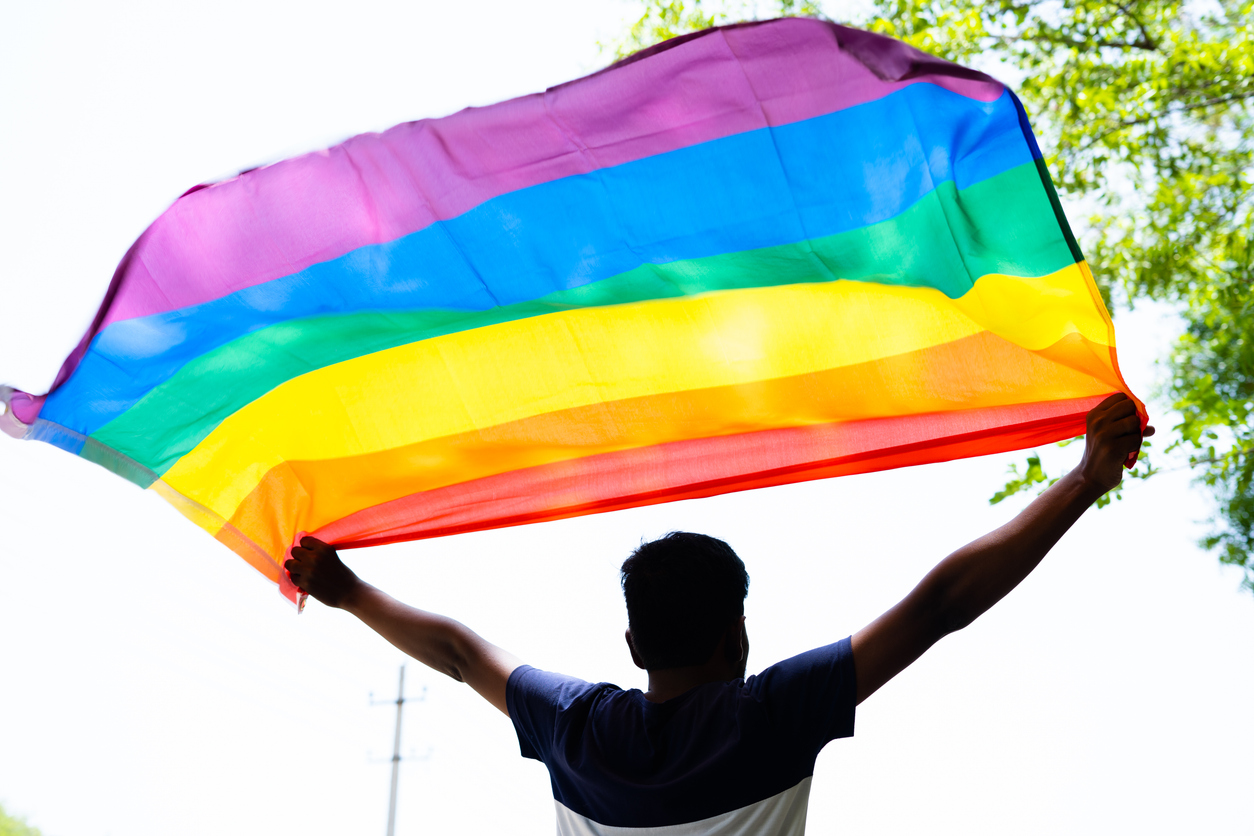
A person waving an LGBTQIA+ flag. (iStock)
Synopsis: The Madras High Court directed the Tamil Nadu government to appoint Complaint Officers under the Transgender Persons (Protection of Rights) Act, 2019. Despite progressive laws and policies, transgender and intersex persons continue to face discrimination, humiliation and denial of care across the state’s healthcare system.
The Madras High Court’s latest directive to the Tamil Nadu government — calling for the appointment of Complaint Officers under the Transgender Persons (Protection of Rights) Act, 2019 has once again highlighted a long-standing issue. Despite progressive laws and policies, transgender and intersex persons continue to face discrimination, humiliation and denial of care across the state’s healthcare system.
From misgendering at registration counters to invasive examinations and from outdated psychological assessments to refusal of treatment based on clothing, the community says the gap between policy and practice has widened into a crisis.
Tamil Nadu has long been projected as a pioneer in transgender welfare, yet the lived experiences of trans men and women paint a much harsher reality. Strip searches, verbal abuse, identity denial and outdated medical protocols have pushed activists to seek judicial intervention.
According to the Tamil Nadu State Policy for Transgender Persons, 2025, the state officially recorded 22,364 transgender persons in the 2011 Census.
In the policy, the government acknowledged that transgender and intersex individuals continue to face “marginalisation, violence and discrimination in all walks of life,” noting that many are still denied access to education, employment, supportive home environments, and even public spaces because of persistent stigma and prejudice.
The policy noted that transgender people are an intersectional community — cutting across caste, religion, ethnicity and age — and that structural barriers prevent them from accessing essential services.
It emphasised that even though Tamil Nadu was the first in India to create a Transgender Welfare Board and provide identity cards, housing pattas, and livelihood schemes, far more needs to be done to ensure dignity and rights.
The document directly references the 2014 Supreme Court NALSA judgement and the Transgender Persons (Protection of Rights) Act, 2019, recognising the legal obligation to uphold gender identity, eliminate discrimination, and provide accessible healthcare.
Yet, as community experiences show, policy commitments have not translated into functional protections.
The Public Interest Litigation (PIL) that led to the recent high court order was triggered by recurring incidents reported by trans men across the state.
The petitioner, transgender rights activist Fred Rogers, director of Urimai Kural Trust and a volunteer with Orinam, told South First, “I filed this PIL because my own community members — especially trans men — reported many violations inside government hospitals.”
He said the two-finger test, banned by the Supreme Court for ciswomen, still occurs for trans men, alongside misgendering and verbal abuse. Psychiatrists unfamiliar with gender identity and intersectionality repeatedly disrespect patients, despite years of complaints.
Rogers stressed the need for enforceable protocols: “A guideline is not a binding document. However, an ethical and operational protocol based on WPATH (World Professional Association for Transgender Health) Standards of Care, mandated under the 2019 Act, is enforceable. Without it, these violations will continue.”
He recounted the hostile experiences trans men face in hospitals. “Many trans men are asked to strip, subjected to invasive tests, or verbally abused. If someone says they like men, their gender identity is negated. And when trans men can’t publicly express their affirmed gender because of natal family violence, they’re denied care for not cutting their hair or not wearing a ‘pant-shirt’. This is discrimination disguised as protocol.”
Outdated medical practices remain a critical concern. “Tamil Nadu still follows outdated practices from older SOC versions. WPATH SOC8, released in 2022, removed requirements like one year of ‘real-life experience’. But many clinics here still insist on it. All we want is evidence-based, respectful gender-affirming care. We are human beings, we deserve dignified healthcare,” he said.
Speaking about the high court’s directive to appoint grievance officers, Rogers said, “Appointing complaint officers, as required under Section 11 of the Act, is essential because the law has not been implemented even after six years. A functioning complaints mechanism gives at least one avenue for redressal. But it must protect confidentiality — a complaint can’t be sent back to the same doctor with the patient’s name attached.”
He also pointed to employment gaps that hinder trans representation in grievance redressal. “Trans persons are hardly employed in government establishments. Without access to education — because many of us are pushed out of our homes — becoming a complaint officer ourselves is almost impossible today. For now, the officer has to be someone already within the system, but someone trained, empathetic, and aware of trans and gender-diverse identities.”
Looking ahead, he stressed the need for community involvement. “The law mandates continuous sensitisation and community consultation. Without our involvement, even a complaint officer will fail. Transparency and community participation are essential for any protocol or grievance system to work.”
Hearing the petition, a bench of Chief Justice Manindra Mohan Shrivastava and Justice G Arul Murugan directed the Tamil Nadu government to immediately appoint complaint officers across all departments, as mandated under Section 11 of the Transgender Persons (Protection of Rights) Act, 2019.
The court also asked the state to inform whether such officers had already been designated, and instructed departments to formally nominate responsible personnel to handle complaints regarding violations of the Act.
The bench also suo motu impleaded the National Council for Transgender Persons, asking it to respond within three weeks. A copy of the petitions was directed to be supplied to the Additional Solicitor-General of India to obtain instructions from the Union government before the next hearing on 8 December.
Additionally, the Court permitted the petitioner to file a rejoinder affidavit suggesting improvements or modifications to existing guidelines and SOPs already placed on record by the State, which include the 2020 guidelines on medical and surgical procedures for transgender persons and related census information.
Dr L Ramakrishnan, a public health professional with SAATHII in Chennai, told South First that while Tamil Nadu has been a national forerunner in transgender healthcare, major gaps persist. “The Act and the 2020 Rules mandate that every state should have at least one tertiary hospital offering gender-affirming care,” he said.
Tamil Nadu actually established two transgender clinics early on, one in Madurai and one in Chennai, and now the number of transgender clinics and government hospitals has gone up to 12 in 12 districts. However, one of the challenges is that the folks who are working in these hospitals are not necessarily trained in transgender health care, he said.
He stressed the importance of following current, evidence-based practices and implementing a binding health manual aligned with WPATH SOC8. “The petition asks for transgender healthcare to be updated and for unscientific and unethical practices to stop.”
Writer and veteran anti-caste activist Grace Banu, a prominent voice from the transgender community, said the state must first address a fundamental issue: Most trans persons cannot even access the systems meant to protect them.
“The door itself is closed,” she told South First, explaining that grievance mechanisms are inaccessible because trans persons are excluded from public institutions due to the lack of reservation rights and inclusion in government exams and employment.
“Even if complaint officers are appointed, how will the system work if we cannot enter it? Many LGBTQIA+ people don’t have opportunities in education, employment, or state institutions because of casteism, discrimination, and social exclusion,” she said.
Banu also highlighted gaps in healthcare access. Tamil Nadu provides free gender-affirming surgeries in some medical colleges and government hospitals, but rural areas remain underserved, and primary healthcare officers often lack sensitive, informed training.
“We need trained specialists and representatives who can guide healthcare staff, ensure respectful treatment, and advocate for the community. Appointing grievance officers is important, but first, the gate must be opened for trans persons to access these spaces,” she added.
The high court’s direction offers Tamil Nadu an opportunity to rebuild trust and finally address long-standing failures. However, community members warn that unless the state implements binding WPATH-aligned protocols, trains all levels of staff, ensures confidentiality in complaint handling and includes the community in decision-making, this moment may become another unfulfilled promise.
Tamil Nadu’s policy envisions a society where trans and intersex persons live with dignity, access healthcare without fear and participate fully in public life.
That vision, however, remains distant from daily realities in hostile hospitals with untrained staff and systems that force individuals to constantly defend their existence.
Whether the state moves from acknowledgement to action will determine if this becomes a turning point or simply another chapter in a long battle for basic rights.
(Edited by Muhammed Fazil.)


