

Published Nov 25, 2026 | 12:38 PM ⚊ Updated Nov 25, 2026 | 12:38 PM

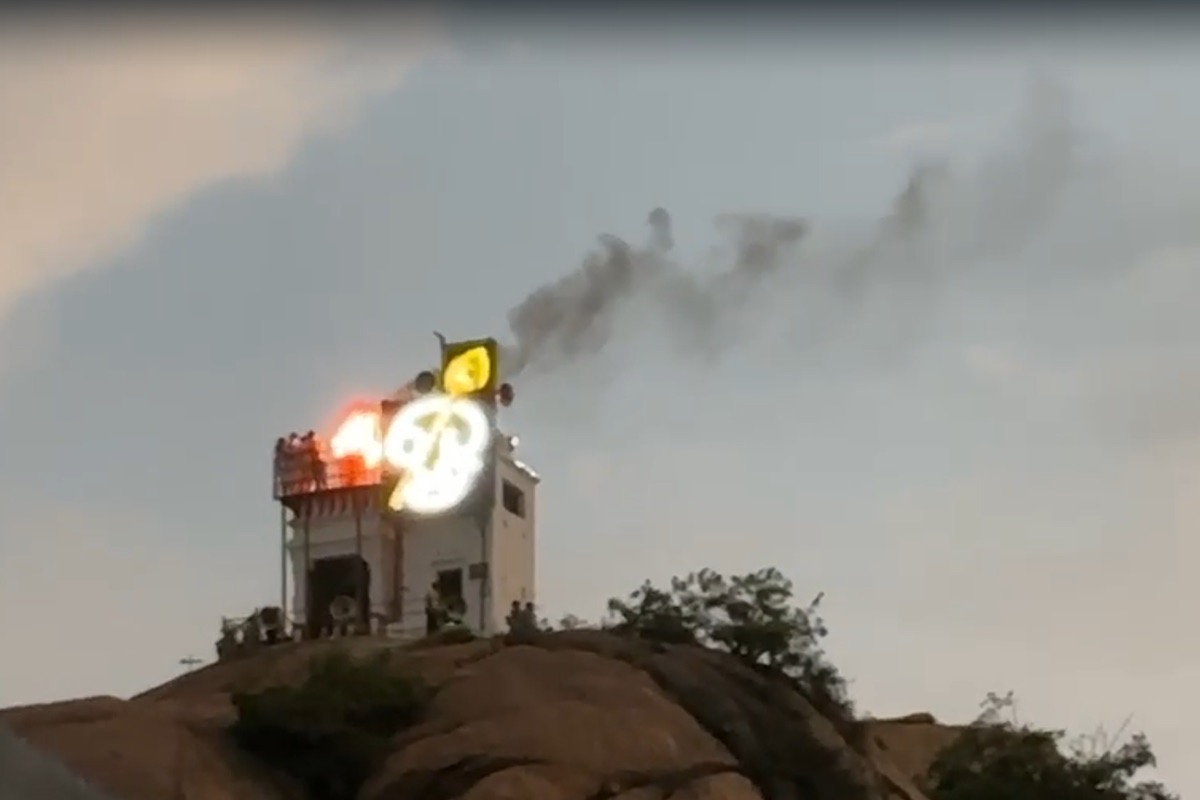
The lamp was lit based on religious traditions, customary practices and Agama rules.

Synopsis: Madurai District Collector Nishant Krishna said in an affidavit submitted before a bench of Justice Aravind Kumar and Justice Vipul Pancholi that the temple administration did not permit lighting the Karthigai Deepam at the disputed Deepathoon, citing a violation of established practices and rituals.
The Tamil Nadu government on Wednesday, 25 November, told the Supreme Court that it could not implement its 20 November order to light the lamp at the Deepathoon atop Thriuparankundram Hill in Madurai because the temple administration opposed it.
Madurai District Collector Nishant Krishna said in an affidavit submitted before a bench of Justice Aravind Kumar and Justice Vipul Pancholi that the temple administration did not permit lighting the Karthigai Deepam at the disputed Deepathoon, citing a violation of established practices and rituals.
Hence, the lamp was lit at the customary spot near the Uchipillaiyar Temple on Tuesday, 24 November, Bar and Bench quoted the affidavit.
The Collector, who apologised to the court, was responsible for coordinating the arrangements to carry out the apex court’s order.
A day ago, the Arulmigu Subramaniya Swamy Temple Trust said that the board members decided against lighting the lamp at Deepathoon to protect “age-old traditions, customary practices, Agama regulations and established worship practices”.
“Thiruparankundram Arulmigu Subramaniya Swamy Temple is one of the ancient places of worship of the Tamil people. The festivals, poojas, religious rituals, and the Karthigai Deepam festival conducted at the temple have been observed for generations based on religious traditions, customary practices and Agama rules. In particular, as per the age-old practice followed at the temple, the Karthigai Maha Deepam is traditionally lit at the Deepa Mandapam located near the Uchipillayar Temple atop the hill, directly above the sanctum sanctorum of the presiding deity,” the Trust said in a statement.
On Wednesday, one of the petitioners, Rama Ravikumar, alleged that the temple’s board of trustees was used to prevent lighting the lamp at Deepathoon. He sought contempt of court action.
However, the Supreme Court declined to initiate action, but told the petitioners that they could file a contempt petition. Senior Advocate Guru Krishnakumar, who appeared for the petitioners, said the petition would be filed soon, and sought the court’s permission to mention it at 12.30 pm.
Senior Advocate Gopal Sankaranarayanan appeared on behalf of the District Collector.
Also Read: Karthigai Deepam lit as per tradition at Uchi Pillayar temple
The dispute began after writ petitions were filed by individuals seeking permission to light the Karthigai Deepam at the ‘Deepathoon’, situated about 50 metres from the Sikandar Badusha Dargah, instead of at the traditional location at the Deepa Mandapam near the Uchi Pillaiyar Temple.
The temple administration has opposed the demand, maintaining that there was no established custom of lighting the lamp at the stone pillar and that the ceremony had been held at the Deepa Mandapam for more than 150 years.
In December 2025, a single-judge Bench of the Madras High Court permitted devotees to light the lamp at the ‘Deepathoon’, ruling that the ritual would not infringe on the dargah’s rights and that denying permission would violate the petitioners’ rights.
According to a report by the Department of Archaeology, the ‘Deepathoon’ is a Global Positioning Survey pillar dating to the colonial period.
The report, Documentation of the Great Trigonometrical Survey Stations in Tamil Nadu, lists Thiruparankundram among the locations with GTS stone pillars featuring a hole at the top. Images numbered 22 to 27, on pages 41–46, document the locations of GTS survey stations, the pillars and the triangulation measurements conducted using them. The report also documents the hole at the top of the pillar and measurement markings on the surrounding rocks.
On 6 January, a Division Bench of the Madurai Bench of the High Court upheld the single judge’s ruling and dismissed the State government’s contention that the ‘Deepathoon’ was merely a British-era survey stone.
The Bench also rejected the State’s law-and-order concerns as an “imaginary ghost” used to pit communities against each other.
(Edited by Majnu Babu).



