

Published Mar 22, 2026 | 8:20 AM ⚊ Updated Mar 24, 2026 | 12:03 PM

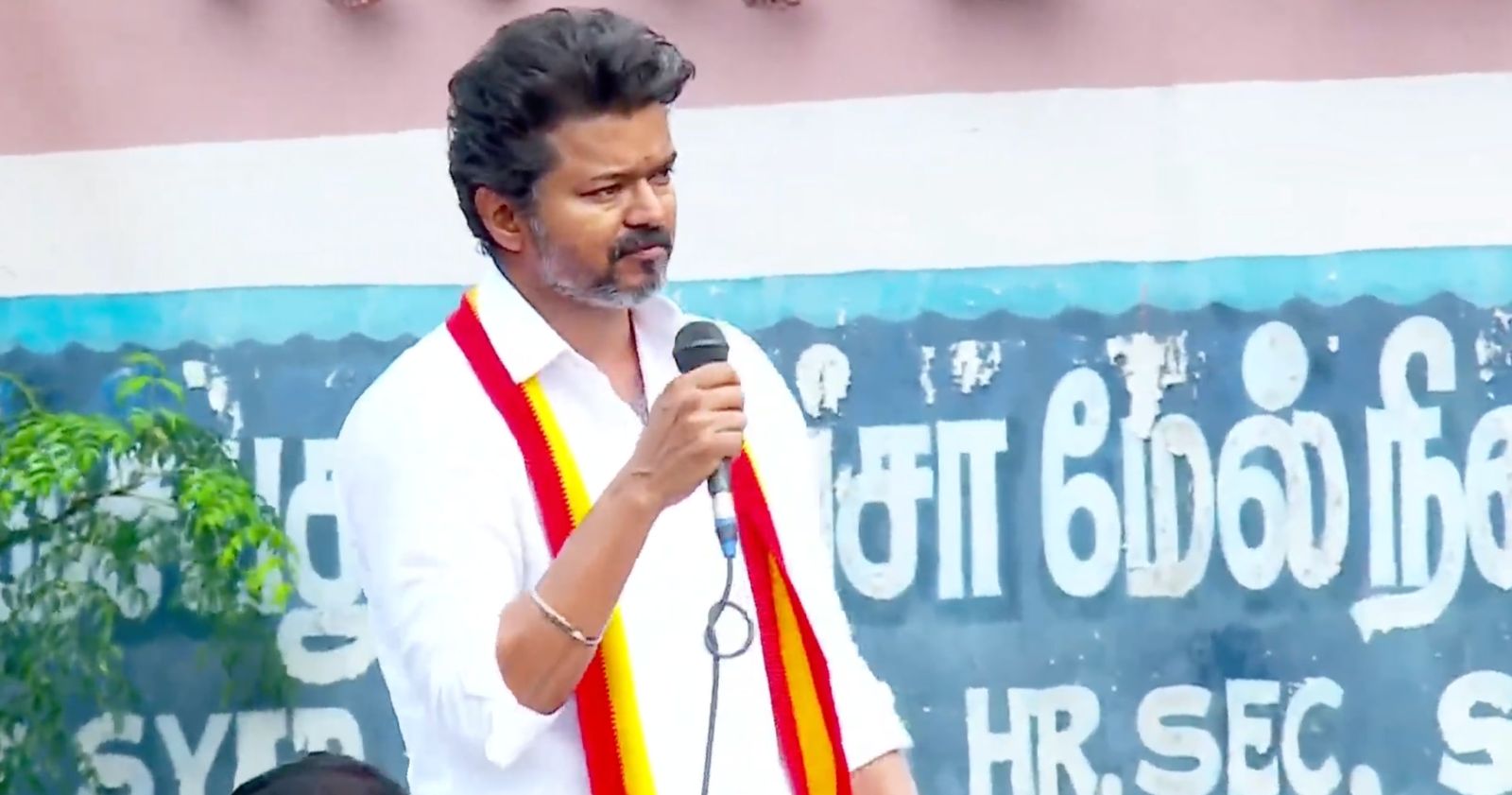
Some saw Vijay as a symbol of change. Others viewed him as untested, ideologically unclear and lacking in political depth.
Synopsis: Young voters are not passive. They are questioning, comparing and critically evaluating both new entrants and established parties. Vijay’s entry has sparked conversation and curiosity among young voters. But whether that curiosity translates into conviction and votes remains the key question ahead of 2026.
The young will have a decisive say in the 23 April Assembly elections in Tamil Nadu.
According to official estimates, the state has around 1.05 crore voters in the 20–29 age group, along with 12.51 lakh first-time voters.
Major political parties, the DMK, AIADMK, BJP and Tamilaga Vettri Kazhagam (TVK), are actively competing to attract the young.
Among the parties, TVK, which has actor-turned-politician Vijay as its president, is seen to have a natural advantage, as a significant portion of his fan base belongs to this age group. The party has claimed that the 20.63% segment of young voters could form Vijay’s core vote bank.
But what do students and young voters think about Vijay? Do they accept his entry into politics? And how do they evaluate existing parties and their welfare-driven governance model?
South First spoke to students across Tamil Nadu.
Vettriselvan, a 22-year-old student from Chengalpattu, felt that Vijay’s popularity alone may not be sufficient in Tamil Nadu’s deeply ideological political landscape.
Unlike many other states, Tamil Nadu’s politics has evolved through movements rooted in language, rationalism and social justice. In that context, he said, Vijay’s political identity has remained undefined.
He also pointed to the lack of sustained grassroots mobilisation and organisational depth within the TVK, arguing that Vijay has yet to demonstrate consistent engagement with people.
“He may not become a decisive force but could be a spoiler,” he said, adding that fan enthusiasm need not always translate into votes.
This gap between popularity and political grounding is reflected in several students.
Tamil Nadu’s welfare model, often labelled as “freebie politics”, remains central to youths’ political thinking.
The state’s economic performance is often linked to sustained investments in education and social welfare. Schemes such as Naan Mudhalvan have supported aspirants preparing for competitive exams, while Pudhumai Penn provides financial assistance to girls and better access to higher education.
Yet, among students, this model triggered both appreciation and scepticism.
“Existing parties have already misled people in the name of freebies. Even Vijay seems to be repackaging old schemes instead of bringing real change,” Yuvaraj S (22) opined.
He also questioned the timing of schemes like laptop distribution. He felt they were linked to elections and targeted at young voters.
Honey Priya Vadhani, 24, Vellore, offered a structural critique, observing, “Only around 40% of people benefit from schemes. Governments use them to secure votes. More than equality, equity is important.”
Dayanidhi, 22, Chengalpattu, pointed out that schemes such as laptops should reach all students, not just specific sections.
However, several students strongly defend welfare policies.
Muthu Ganesh, 22, from Sivakasi, recalled that the free laptop scheme had helped him complete his dissertation. “The free bus pass helped me go to college and internships. These schemes have real impact.”
Sreenidhi, 19, Tiruvallur, highlighted the role of schemes in women’s empowerment: “Programmes like Naan Mudhalvan, Pudhumai Penn and free bus travel are helping many girls continue their education.”
Nishanthi, 21, Ariyalur, emphasised lived experience: “Some say these schemes are distractions. But those who benefit know their importance.”
Robinson, 21, Tirunelveli, noted that welfare is often essential for survival: “My grandfather depends on free electricity for farming. I studied using a free bus pass.”
Meanwhile, many raised suspicion over whether several schemes were implemented or revived around election cycles.
“Laptops were not given for years, but suddenly appear before elections, and mostly to those who can vote,” Samuel, 21, Chintadripet, said.
Parameswari, 21, Thanjavur, raised similar concerns, questioning why schemes were reintroduced only during election periods.
The ongoing debate is not about whether welfare should exist, but whether it is driven by policy or politics.
The most consistent criticism was about the perceived absence of a clear ideological framework in Vijay’s politics.
“Vijay mentions Ambedkar and Periyar but does not explain their ideas. There is no clarity,” Vasanth Raj, 19, Pollachi, said.
Sakthipriyan, 21, of Kanchipuram, put it bluntly. “Every party has a clear ideology. Vijay’s party does not. That is a major concern.”
Bhaskar, 25, of Arakkonam, pointed to contradictions: “Vijay speaks about Ambedkar and celebrates the Constitution, but at the same time introduces opposing ideas such as the Bhagavad Gita. He celebrates Periyar but follows rituals that contradict rationalism.”
Aarthi Priya, 22, from Tenkasi, noticed a lack of clarity regarding Vijay’s plans: “At a time when vulnerable communities are facing challenges, there is no clear plan or policy from him.”
Robinson added that ideological inconsistency was reflected in the party’s silence on key issues.
Even among those open to supporting Vijay, there was a sense that his politics currently lacked depth and coherence.
Despite these concerns, a section of youth has thrown their weight behind Vijay, driven less by ideology and more by their desire for a change.
Sumathi, 22, Chengalpattu, from a tribal community, was optimistic. “No government scheme has reached my family. Only if he gets a chance can he do something.”
A student, Samuel, saw Vijay as the harbinger of change. “We have seen the same parties for years. We need a change. Vijay represents that change.”
Vaishnavi, 21, from Rajapalayam, felt that Vijay left a successful film career to serve the people. “It shows intent. We believe that he will bring change.”
She also noted that Vijay’s entry has increased political conversations among youth and even within families.
Interestingly, Yuvaraj, despite criticising Vijay’s lack of clarity, said he would still support him for now, reflecting the complex mix of doubt and hope among voters.
Several students questioned Vijay’s readiness for governance.
Nishanthi wondered how Vijay could lead a state. “If I am suddenly asked to become the head of a department, I cannot do it. Similarly, how can someone without experience become a chief minister?”
She also criticised Vijay’s response to the Karur stampede, saying leadership required immediate accountability.
Sashank Krish, 19, echoed a similar sentiment. “This feels like influencer marketing. He does not take responsibility and reacts late.”
Che Guevara, 19, Kallakurichi, did not sound impressed. “He has brought the youth to politics but does not know how to guide them.”
Dayanidhi pointed out that Vijay has not raised his voice on major issues in Tamil Nadu.
Muthu Ganesh noted that Vijay has not spoken on issues such as NEP, GST-related price rises or international developments, raising doubts about his broader policy engagement.
Another key issue is whether Vijay’s fan base can translate into a political movement.
“His followers are still fans, not cadres,” Vasanth Raj has no doubt.
Sashank Krish observed that when people follow blindly, they cannot question or analyse.
“Many supporters of Vijay do not understand how rights and benefits were historically achieved,” another youth, Robinson, said.
This raises a crucial electoral question: whether popularity can translate to organised political support and votes.
The voices reflected a politically aware, highly engaged but deeply divided youth electorate.
Some saw Vijay as a symbol of change and a break from entrenched political cycles. Others viewed him as untested, ideologically unclear and lacking in political depth.
At the same time, welfare schemes remain central to how young voters evaluate governance, not as abstract policy, but as lived experience.
Young voters are not passive. They are questioning, comparing and critically evaluating both new entrants and established parties.
Vijay’s entry has sparked conversation and curiosity among young voters. But whether that curiosity translates into conviction and votes remains the key question ahead of 2026.
(Edited by Majnu Babu).


