

Published Feb 22, 2026 | 8:00 AM ⚊ Updated Feb 23, 2026 | 4:10 PM

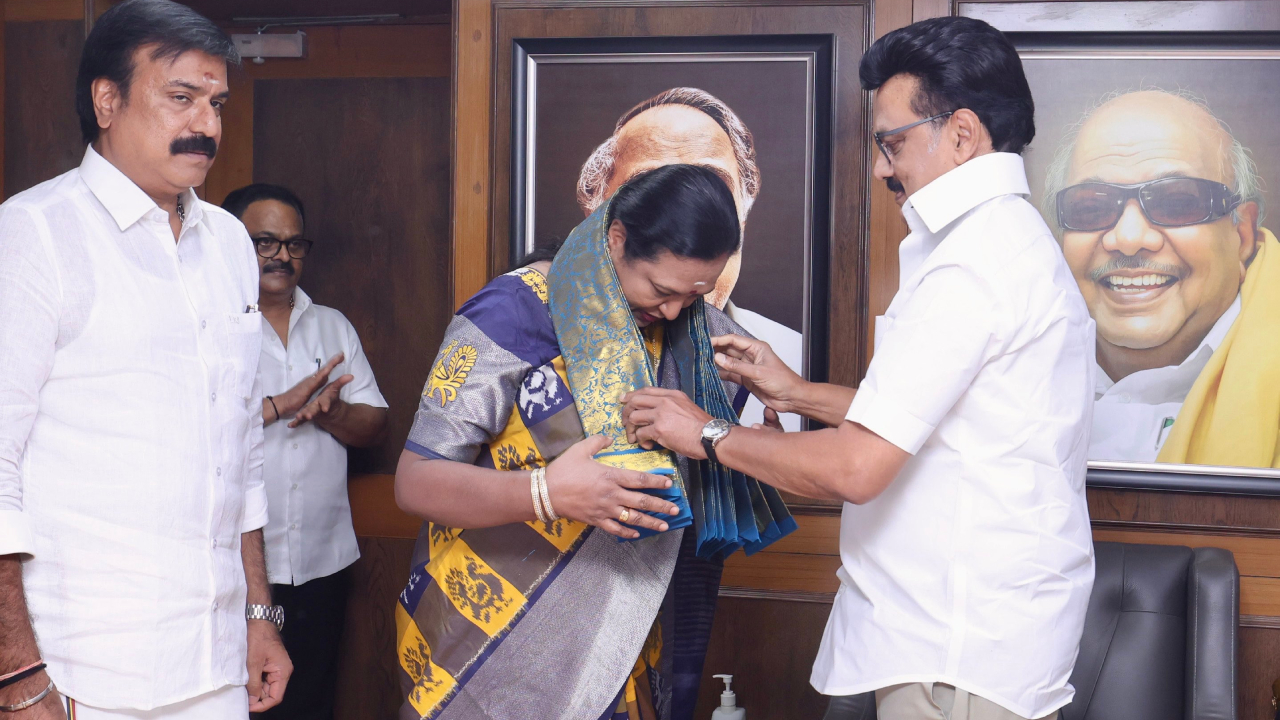
DMDK chief Premalatha Vijayakanth meeting Tamil Nadu CM MK Stalin. Credit: x.com/mkstalin
Synopsis: Desiya Murpokku Dravida Kazhagam (DMDK), founded by Vijayakanth, has joined the DMK-led INDIA alliance in Tamil Nadu ahead of the 2026 Assembly elections. While DMK cadres welcome the move, analysts note it could strategically balance Congress amid seat-sharing tensions. Vote share comparisons show DMDK remains weaker than Congress electorally.
The Desiya Murpokku Dravida Kazhagam (DMDK), founded in 2005 by the late actor Vijayakanth, has joined the Dravida Munnetra Kazhagam (DMK)-led INDIA alliance in Tamil Nadu for the first time. This move is seen as adding strength to the DMK ahead of the 2026 Assembly elections.
While this development has been welcomed by DMK cadres and INDIA alliance leaders, questions have emerged in political circles over whether it is equally welcome news for the Congress party.
On one hand, DMDK’s entry is being described as an added advantage for the DMK alliance. On the other hand, amid recent friction between the DMK and Congress over issues such as power-sharing and seat allocation, discussions have surfaced that DMDK’s inclusion may serve as a strategic check on Congress.
However, Tamil Nadu Congress Committee president K. Selvaperunthagai has firmly stated that DMDK’s entry does not exert any pressure on Congress.
More than 20 years after its formation, DMDK has entered into an alliance with the DMK for the first time.
After its launch in 2005, DMDK contested independently in the 2006 Assembly elections and the 2009 Lok Sabha elections. In the 2011 Assembly elections, it allied with the AIADMK and emerged as the Opposition party.
Later, in the 2016 Assembly elections, Vijayakanth led the People’s Welfare Front (Makkal Nala Kootani), which included Left parties, MDMK, and Viduthalai Chiruthaigal Katchi, but excluded the two major Dravidian parties. That alliance failed to win a single seat.
In the 2021 Assembly elections, DMDK contested in the alliance led by Amma Makkal Munnetra Kazhagam’s TTV. DInakaran, but failed to win any seats.
Ahead of the 2026 Assembly elections, both the DMK and AIADMK have been attempting to attract more parties into their respective alliances. For a long time, there was uncertainty over which alliance DMDK would join.
Premalatha Vijayakanth repeatedly stated that DMDK would join the alliance that offered it a double-digit number of seats.
On February 19, Premalatha Vijayakanth officially announced DMDK’s decision to join the DMK alliance after meeting Chief Minister and DMK president M.K. Stalin.
முத்தமிழறிஞர் தலைவர் கலைஞர் மேல் மாறாத அன்பு கொண்டவரும், எனது அன்பு நண்பருமான ‘கேப்டன்’ விஜயகாந்த் அவர்கள் உருவாக்கிய தேசிய முற்போக்கு திராவிட கழகம், இன்று மதச்சார்பற்ற முற்போக்குக் கூட்டணியில் இணைந்திருப்பது பெருமகிழ்ச்சி அளிக்கிறது!
சகோதரர் கேப்டன் உருவாக்கிய இயக்கத்தைத்… pic.twitter.com/n7qD7Ex8UH
— M.K.Stalin – தமிழ்நாட்டை தலைகுனிய விடமாட்டேன் (@mkstalin) February 19, 2026
DMK official spokesperson and former MP TKS Elangovan told South First, “We expect DMDK to fetch votes not only in North Tamil Nadu but up to Madurai to some extent. They have previously served as the Opposition party. Their presence in the alliance will add strength.”
When asked whether DMDK was seeking six Assembly seats and one Rajya Sabha seat, he said that those were their demands but that the final decision rested with the DMK leadership. When pressed further on whether the party was asking for six or ten seats, he replied that they were free to ask for anything, but it would ultimately be discussed and decided.
Though DMDK’s entry is being seen positively, tensions have recently surfaced between DMK and Congress over issues such as participation in governance, additional seats, and power-sharing.
Congress MP Manickam Tagore and other leaders have publicly stated that seeking a share in power is their right and that it is the DMK’s responsibility to grant it. This has reportedly led to friction between DMK and Congress functionaries.
Reports suggested that DMK had officially requested Congress leaders to put an end to such public statements.
With DMDK now firmly part of the DMK alliance, political observers have questioned whether the inclusion of another significant party equivalent to Congress could act as a check on the Congress party.
Some discussions suggest that if Congress continues to press its demand for a share in governance, DMK could, as a last resort, rely on DMDK and even consider removing Congress from the alliance.
However, Selvaperunthagai clarified during a press interaction that no such pressure exists and stated that he himself had requested MK Stalin two years ago to bring DMDK into the alliance.
An examination of vote percentages over the years indicates that DMDK has not matched Congress in electoral strength beyond its debut election.
In the 2006 Assembly elections, DMDK contested 232 constituencies independently and won only one seat (Virudhachalam). It secured 8.38% of the total vote share, polling 2,764,223 votes.
In the same election, the Indian National Congress contested 48 seats, won 32, and also secured 8.38% vote share, polling 2,765,768 votes.
In the 2011 Assembly elections, Congress contested 63 seats as part of the DMK alliance, winning five seats and securing 9.30% vote share (3,426,432 votes). In contrast, DMDK contested 41 seats with AIADMK, won 29 seats, and secured 7.88% vote share (2,903,828 votes). Even while becoming the Opposition party, DMDK did not surpass Congress in vote share.
In the 2021 Assembly elections, DMDK contested 60 seats and secured only 0.43% vote share, polling 201,157 votes.
In the same election, Congress contested 25 seats in the DMK alliance, won 18 seats, and secured 4.27% vote share, polling 1,976,527 votes.
Except for its first election, DMDK has never equalled or exceeded Congress in vote share. These figures suggest that DMDK does not pose significant electoral pressure on Congress.
At present, neither Congress appears willing to leave the alliance nor does the DMK appear inclined to remove it.
However, with DMDK, MNM, and several former ministers from other parties now aligned with DMK, seat allocation has become a crucial issue.
In the 2021 Assembly elections, DMK contested 188 seats and allocated the remaining seats to allies. With more parties in the alliance this time, DMK must either reduce the number of seats it contests or cut down the seats allotted to allies.
Senior journalist Priyan Srinivasan said that whenever the DMK has contested fewer seats, it has faced defeat, citing the 2011 election as an example. He suggested that the DMK may contest around 170 seats but would prefer to reduce allocations to allies rather than cut down its own share.
He further stated that, regardless of whether DMDK comes on board or not, the DMK is unlikely to offer Congress more than 27 seats.
According to him, Congress also has limited options. It cannot rely on Vijay, who has not yet achieved electoral success, nor can it afford to break the INDIA alliance. He added that statements made by a few Congress leaders do not necessarily reflect the party’s official stand.
TKS Elangovan reiterated that the DMK cannot reduce the number of seats it contests. Instead, he suggested that constituencies where the DMK alliance lost last time but where allies have better prospects could be allocated to alliance partners. He said the final decision would be taken by the party leadership after discussion.
(Edited by Amit Vasudev)


