

Published Jan 21, 2026 | 5:23 PM ⚊ Updated Jan 21, 2026 | 5:23 PM

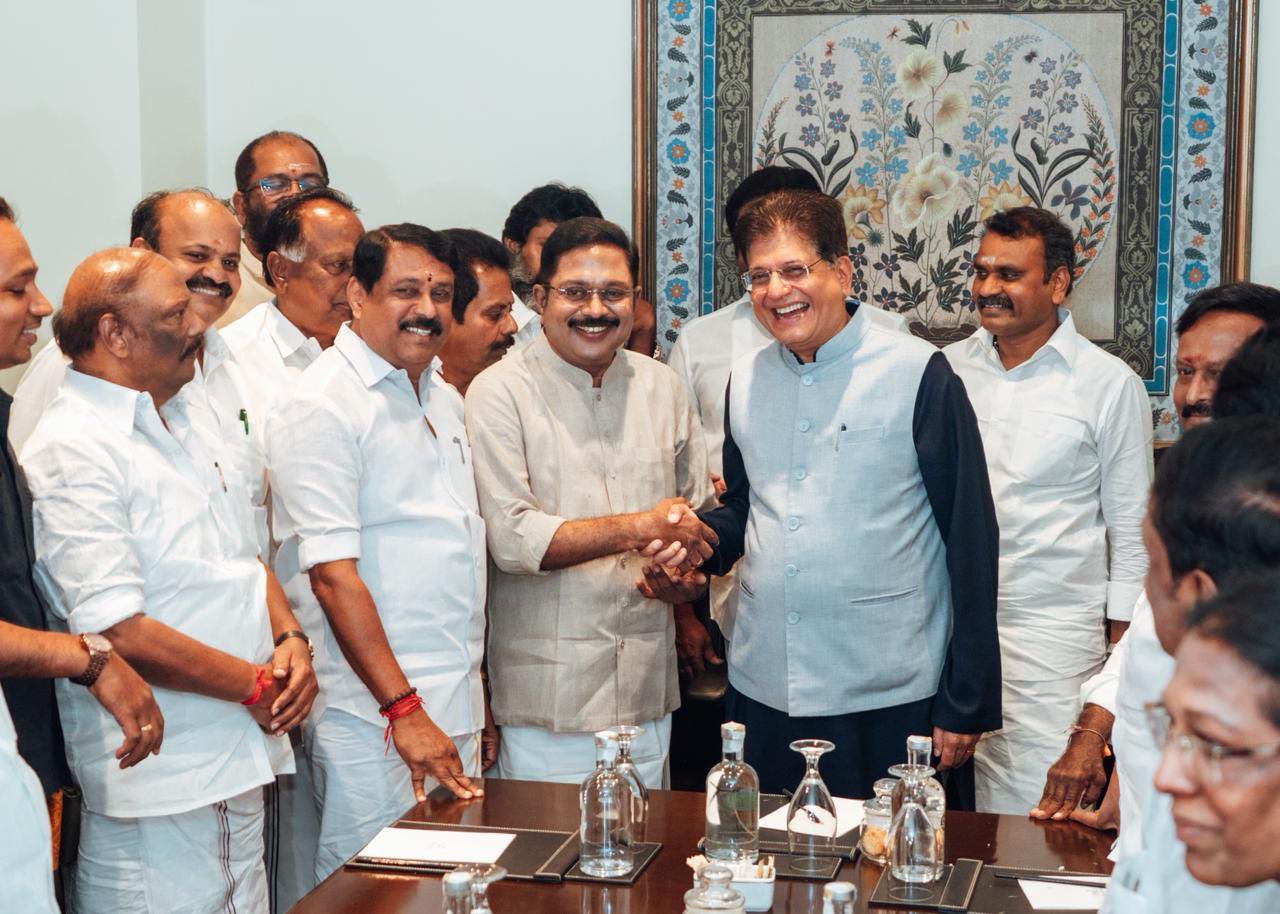
TTV Dhinakaran rejoined NDA in the presence of Union Minister Piyush Goyal. Credit: x.com/PiyushGoyal
Synopsis: TTV Dhinakaran’s AMMK rejoined the NDA on 21 January 2026, reversing his September 2025 exit. Welcomed by AIADMK chief Edappadi K Palaniswami, the move aims to consolidate anti-DMK votes, especially among the Mukkulathor community. While commentators see potential gains in southern Tamil Nadu, others caution that seat-sharing and past electoral setbacks may limit NDA’s prospects.
AMMK general secretary TTV Dhinakaran, who announced his exit from the National Democratic Alliance (NDA) on 3 September, 2025, has now declared that he is rejoining the same alliance on 21 January, 2026.
At a star hotel in Chennai on Wednesday, Dhinakaran formally inducted the Amma Makkal Munnetra Kazhagam (AMMK) into the NDA in the presence of Union Minister and BJP’s Tamil Nadu election in-charge Piyush Goyal, BJP state president Nainar Nagendran, and other party functionaries.
AMMK, which commands considerable influence among the Mukkulathor community in southern Tamil Nadu, rejoining the NDA has triggered fresh political debate.
In the 2021 Tamil Nadu Assembly elections, AMMK did not contest as part of the AIADMK-BJP alliance. As a result, reportedly AIADMK suffered losses across much of southern Tamil Nadu and the delta districts.
To be specific, AIADMK faced severe setbacks in Assembly constituencies across Theni, Tenkasi, Ramanathapuram, and Madurai, as well as in Thanjavur and surrounding delta districts.
The Sankarankovil Assembly constituency is often cited as a telling example. From 1991 to 2016, DMK had never managed to defeat AIADMK there. However, after the split within AIADMK, DMK wrested the seat from AIADMK in the 2021 election.
This was largely attributed to the fragmentation of Mukkulathor votes. Traditionally, leaders such as O Panneerselvam, Sasikala, and TTV Dhinakaran have been seen as influential figures among the Mukkulathor community.
But after Jayalalithaa’s death, a series of internal conflicts led to the expulsion of Dhinakaran, Sasikala, and later O Panneerselvam, meant that key leaders perceived as representatives of the community were pushed out, leading to a split in its vote base.
In this context, AIADMK chose to contest the 2024 Lok Sabha elections without BJP as an ally. At the same time, AMMK and O Panneerselvam joined hands with BJP. Yet, neither alliance managed to secure any electoral success.
It was against this backdrop that, in April 2025, Union Home Minister Amit Shah and AIADMK general secretary Edappadi K Palaniswami announced in Chennai that AIADMK and BJP would once again ally to face the 2026 Assembly elections. Soon after, it was repeatedly stated that Palaniswami would lead the alliance and be its chief ministerial candidate.
Following this, O Panneerselvam announced his exit from the alliance in July.
On 3 September, 2025, Dhinakaran also announced his exit from the BJP-led alliance. When asked by journalists at the time about reuniting with E Palaniswami, he had remarked—half in jest—that he would rather hang himself.
Now, however, describing the past differences as merely a “family feud,” Dhinakaran has said that all forces are uniting to defeat DMK. He met Piyush Goyal in person and formally rejoined NDA.
எனது இனிய நண்பரும், மூத்த தலைவருமான திரு.@TTVDhinakaran அவர்கள் மீண்டும் தேசிய ஜனநாயகக் கூட்டணி (NDA) குடும்பத்திற்குத் திரும்ப முடிவு செய்திருப்பது எனக்குப் பெருமையையும், மட்டற்ற மகிழ்ச்சியையும் அளிக்கிறது.
தமிழக மக்களுக்கும், தமிழ்ப் பண்பாட்டிற்கும், தமிழரின் பெருமைக்கும்… pic.twitter.com/fOhWTD8yHD
— Piyush Goyal (@PiyushGoyal) January 21, 2026
Speaking at a press conference, Dhinakaran said, “For the welfare of Tamil Nadu and the AMMK, we have forgotten the injustices done to us and rejoined NDA.”
When journalists asked whether he accepted Palaniswami as CM candidate, Dhinakaran avoided a direct yes-or-no answer. Instead, he said, “You already know who NDA’s chief ministerial candidate is—why ask a question you already know the answer to?”
On the question of power-sharing, he said AMMK would be part of NDA government formed under the alliance’s leadership.
Welcoming Dhinakaran into NDA, Palaniswami said the alliance aims to uproot what he described as the “oppressive rule” of DMK and put a full stop to dynastic politics in Tamil Nadu.
In a statement, Palaniswami said the goal was to once again establish the “golden era” of governance associated with former Chief Minister Jayalalithaa. He extended a warm welcome to Dhinakaran and conveyed his heartfelt wishes.
தீயசக்தி திமுக-வின் கொடுங்கோல் ஆட்சியை வேரடி மண்ணோடு வீழ்த்திடவும், வாரிசு அரசியலுக்கு முற்று புள்ளியை வைத்திடவும்,
மாண்புமிகு புரட்சித்தலைவி அம்மா அவர்களின் பொற்கால ஆட்சியை மீண்டும் தமிழகத்தில் அமைத்திட,
தேசிய ஜனநாயகக் கூட்டணியில் இன்றைய தினம் இணைந்துள்ள அம்மா மக்கள்…
— Edappadi K Palaniswami-SayYEStoWomenSafety&AIADMK (@EPSTamilNadu) January 21, 2026
“Keeping people’s welfare as the sole objective, let all of us unite and work together to rescue the people from the clutches of DMK’s family rule and reclaim Tamil Nadu,” Palaniswami said.
Political observers say this move has opened up an opportunity for NDA to consolidate socially rooted votes once again in southern and delta districts.
Senior journalist and political commentator Malan Narayanan says that in the 2021 Assembly elections, AIADMK under EPS lost several southern constituencies by narrow margins of 3,000 to 5,000 votes.
“When NDA studied the reasons for these losses, they concluded that votes from a caste group that traditionally supports TTV Dhinakaran did not go to the EPS-led AIADMK. In a way, that assessment is partially true. Had Dhinakaran been part of the alliance, at the very least the anti-DMK front would have been stronger,” he said.
According to Malan, BJP appears to have pushed hard to bring Dhinakaran back into the alliance, and this has now been achieved. He believes this could strengthen NDA in certain pockets of southern Tamil Nadu where Dhinakaran enjoys support.
“With Dhinakaran joining, anti-DMK votes are less likely to split into three or four segments. Especially among caste groups that back Dhinakaran, support could shift towards AIADMK, which may favour NDA in some southern constituencies,” Malan said.
Political analyst Gladston Xavier, however, disagrees with this assessment and says it is too early to predict any outcome.
“Dhinakaran has rejoined NDA because he has no other option left. Contesting alone serves no purpose. At best, this alliance can help in damage control. It’s essentially a consolidation to reduce fragmentation,” he said.
Gladston adds that such consolidation has not even begun in northern Tamil Nadu and that this announcement merely signals the start of that process in the south.
He also cautions that while Dhinakaran’s entry may help keep AIADMK vote base intact, whether it will translate into actual electoral victories remains uncertain.
Gladston also points to Dhinakaran’s past electoral record.
“Dhinakaran has not really proven himself as a decisive force. Even in the last election, he lost all 17 seats his supporters contested and in fact, his presence contributed to defeats,” he noted.
According to him, the real impact will depend on seat-sharing arrangements.
“Until now, it was always called the AIADMK alliance. Only now are they explicitly calling it the NDA in Tamil Nadu. Even now, Dhinakaran says he has joined NDA and not AIADMK. This distinction could matter during seat-sharing talks. If AIADMK dictates terms and others are expected to simply accept them, that itself could create friction,” he said.
For now, Gladston concludes, nothing can be predicted with certainty, the real picture will emerge only after the election results are out.
(Edited by Amit Vasudev)


