

Published Oct 29, 2026 | 9:30 AM ⚊ Updated Oct 29, 2026 | 9:36 AM

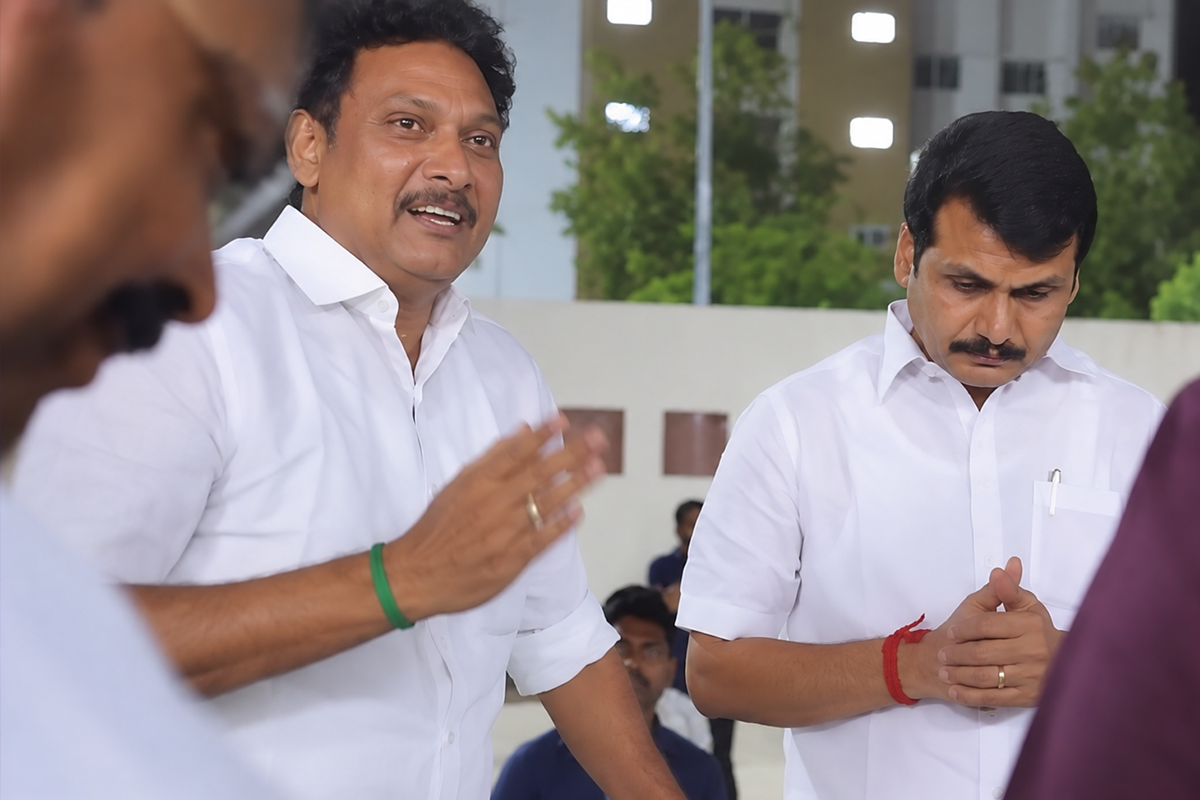
Anbil Mahesh Poyyamozhi and V Senthil Balaji (Videograb enhanced using AI)

Synopsis: The arrest of former Tamil Nadu minister Anbil Mahesh in an alleged ₹100-crore private-school approvals scam has brought renewed focus on corruption-related cases involving at least 10 former DMK ministers. From alleged tender manipulation and disproportionate assets to suspected irregularities in public contracts, the cases remain at different stages of investigation and judicial proceedings.
The arrest of former Tamil Nadu School Education Minister Anbil Mahesh Poyyamozhi in an alleged private-school approvals scam has brought renewed attention to corruption investigations and court proceedings involving several former ministers of the Dravida Munnetra Kazhagam (DMK).
At least ten other former DMK ministers, including KN Nehru, EV Velu, V Senthil Balaji, MRK Panneerselvam and Anitha R Radhakrishnan, are also facing corruption-related investigations or court proceedings involving alleged tender manipulation, irregularities in public contracts, TASMAC operations and disproportionate assets.
Chief Minister Vijay has said repeatedly that he will not tolerate corruption.
“Our government will never indulge in corruption… We will not touch even a single paisa of the people’s money. Nor will we allow anyone else to touch it. We will not spare those who misused it in the past,” he said in the Assembly on June 23.
The cases against these former ministers are at different stages, with the DVAC investigating several allegations, courts directing proceedings to continue in others, and prosecution-sanction requests pending in separate ED cases. A look at them:
Former Municipal Administration Minister KN Nehru is facing a DVAC investigation into alleged irregularities in government contracts awarded under the Municipal Administration and Water Supply Department between 2021 and 2025.
Ex-DMK minister KN Nehru. (Umar Sharieef)
The investigation follows a 258-page report submitted by the ED in December 2025, which flagged alleged manipulation of municipal tenders and collection of illegal gratification.
The DVAC registered an FIR on September 4, naming Nehru, his two brothers and other individuals among 13 accused. The FIR alleges wrongful gain of ₹1,020 crore and claims that illegal gratification was collected at rates of 7.5% to 10% of contract values, disguised as a “party fund”.
The allegations include claims that intermediaries handled collections, government officials facilitated contracts, and political intermediaries shared tender information and calculations relating to alleged commissions.
The ₹1,020-crore figure represents alleged wrongful gain cited in the FIR; it is not an amount established by a court as having been stolen.
In February 2026, the Madras High Court directed the DVAC to register a corruption case based on material supplied by the ED. Nehru and his brothers subsequently sought a review, arguing that they had not been heard before the direction was issued.
On October 26, the Madras High Court dismissed Nehru’s review petition. The following day, October 27, Nehru moved the Supreme Court challenging the High Court’s decision.
Former Highways Minister EV Velu is facing two separate DVAC cases involving alleged irregularities in government works and the use of lake-bed material.
On June 25, the DVAC registered a corruption case against Velu and others over alleged irregularities in highway infrastructure works.
The complaint, originally filed by anti-corruption organisation Arappor Iyakkam in 2022, alleged that payments were made to a contractor before the commencement of the relevant works, raising questions about the release and use of public funds.
Velu challenged the FIR and a lookout circular issued in connection with the investigation.
The Madras High Court initially stayed the lookout circular and restricted coercive action for a limited period, subject to Velu appearing before the DVAC for inquiry. On July 28, the court cancelled the lookout circular, subject to conditions concerning foreign travel.
The cancellation of the lookout circular did not quash the FIR or terminate the investigation.
The second case concerns allegations that clay soil was illegally excavated from the Malappambadi lake bed in Tiruvannamalai district to level the venue of a DMK youth-wing conference held in December 2025.
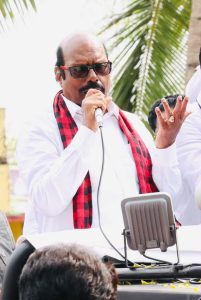
E. V. Velu
The DVAC registered a case against Velu, his son EV Kumaran and others. The complaint alleged that excavation from a depth of 10 to 23 feet caused a loss of approximately ₹8 crore to the exchequer.
Velu and his son have challenged the FIR, arguing that mandatory prior approval under Section 17A of the Prevention of Corruption Act had not been obtained. Their counsel has disputed the allegations.
On October 8, the Madras High Court refused to grant interim protection against police action, observing that coercive action could not be restrained in the manner sought without hearing the respondents.
The FIR remains under challenge, but the High Court has not granted the requested interim protection. The matter was adjourned to November 6, 2026.
Former Electricity and Prohibition and Excise Minister V Senthil Balaji is facing a DVAC investigation into alleged irregularities involving the Tamil Nadu State Marketing Corporation (TASMAC).
The investigation concerns transactions between 2020 and 2025, including bar tenders across six districts, transport contracts for 45 depots, demand drafts, dealings between bottle suppliers and distilleries, brand approvals and transfers of TASMAC officials.
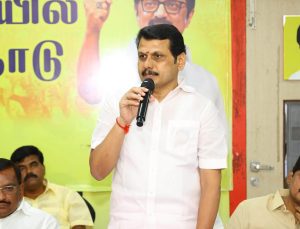
Former minister V. Senthil Balaji is facing a DVAC investigation into alleged irregularities in TASMAC operations.
The DVAC registered the case in July 2026, naming Senthil Balaji and other accused. The allegations concern suspected irregularities in the award and operation of contracts and other transactions linked to the state-run liquor retailer.
The Madras High Court rejected his anticipatory bail plea on July 30. However, on July 31, the Supreme Court stayed his arrest pending further orders, subject to his cooperating with the investigation, not influencing witnesses and depositing his passport.
A separate procedural development occurred in August, when the Madras High Court stayed the investigation against a fitness-centre owner in the wider TASMAC case. The state government subsequently indicated that it would approach the Supreme Court against the stay on the proceedings concerning that individual.
Separately, the ED has sought prosecution sanction against Senthil Balaji in an older money-laundering case connected to alleged cash-for-jobs irregularities during his tenure as transport minister under the AIADMK government between 2011 and 2016.
Currently, Senthil Balaji has Supreme Court protection against arrest in the TASMAC corruption case, subject to conditions. In the ED-related case, prosecution sanction remained pending with the Governor.
Former Minister MRK Panneerselvam and his family members are facing a disproportionate-assets case registered by the DVAC in 2011.
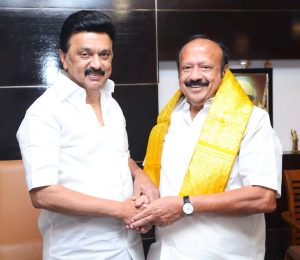
Former minister M. R. K. Panneerselvam is facing a disproportionate-assets case.
The agency alleges that Panneerselvam acquired assets disproportionate to his known sources of income during his tenure as Health Minister between 2006 and 2011. The case concerns alleged assets worth approximately ₹3.01 crore.
A trial court discharged Panneerselvam and his family members in 2016, holding that the alleged disproportionate assets amounted to around 6.4%, below the 10% margin considered in the proceedings at that stage.
The DVAC challenged the discharge. In April 2025, the Madras High Court set aside the discharge order and directed the special court to frame charges and proceed with the trial.
The family subsequently pursued further legal remedies, including discharge petitions before the trial court and the High Court.
On September 22, 2026, the Madras High Court rejected their latest challenge and directed the trial court to proceed with the case.
The High Court held that the question of whether the alleged disproportionate income fell below a particular percentage could not be conclusively determined at the discharge stage.
Former Fisheries Minister Anitha R Radhakrishnan is facing proceedings linked to a disproportionate-assets case and a separate money-laundering investigation by the ED.
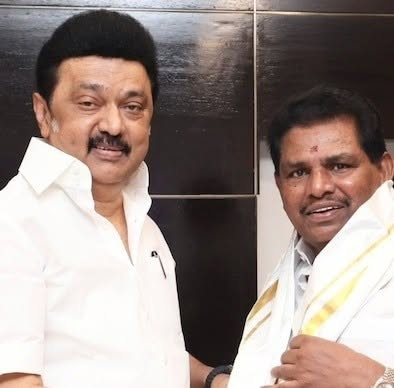
Former minister Anitha R. Radhakrishnan (Left) with Stalin. (Special Arrangement)
The ED has sought prosecution sanction in the case. According to a report published on September 21, 2026, the request remained pending with Governor RV Arlekar.
The case has also encountered a procedural obstacle in court. In August, the Madras High Court rejected the ED’s attempt to transfer the disproportionate-assets trial to a special court under the Prevention of Money Laundering Act.
The court noted that the special court had not yet taken cognisance of the money-laundering case because the necessary prosecution sanction had not been produced. It directed the Thoothukudi court to complete the underlying trial at the earliest.
Apart from the five former ministers mentioned above, at least five other DMK ministers have disclosed long-pending corruption or disproportionate-assets cases in their 2026 election affidavits. Their cases are at different stages of judicial proceedings, with some facing revived trials and others benefiting from stays on further proceedings.
Jayaraman Venkatesan, coordinator of Arappor Iyakkam, said prolonged trials in corruption cases allow witnesses to turn hostile, come under pressure and sometimes even die, weakening the prosecution’s case.
He argued that the problem cuts across political parties, with cases registered under both the DMK and AIADMK governments facing delays and, in some instances, being closed after witnesses turned hostile.
Citing the case involving former minister K Ponmudi’s brother and the alleged red-sand quarrying, Venkatesan said several witnesses had turned hostile during the proceedings. He also referred to instances in which courts intervened after corruption cases were closed, only for subsequent legal challenges and stay orders to delay further action.
Venkatesan’s broader argument is that registering corruption cases alone is insufficient unless investigations and trials are completed within a reasonable time, irrespective of which party is in power.
He called for charge sheets to be filed promptly and corruption trials to be completed ideally within three to four years. The Supreme Court has emphasised day-to-day hearings in corruption cases, he noted, urging investigating agencies to seek the removal of stay orders that prevent proceedings from advancing.
Venkatesan also stressed that investigating agencies need adequate resources, prosecutors, technical personnel and infrastructure to pursue cases effectively. He urged the Tamilaga Vettri Kazhagam government to strengthen this support system.
“Corruption cases should be tried on a day-to-day basis,” he said, arguing that prolonged proceedings undermine accountability and weaken the purpose of anti-corruption action.
Also Read:
Bribery demands waning under Vijay? The reality behind TVK’s ‘clean government’ claim
(Edited by R Rajesh Kumar.)



