

Published Apr 17, 2023 | 8:15 PM ⚊ Updated Apr 17, 2023 | 8:15 PM

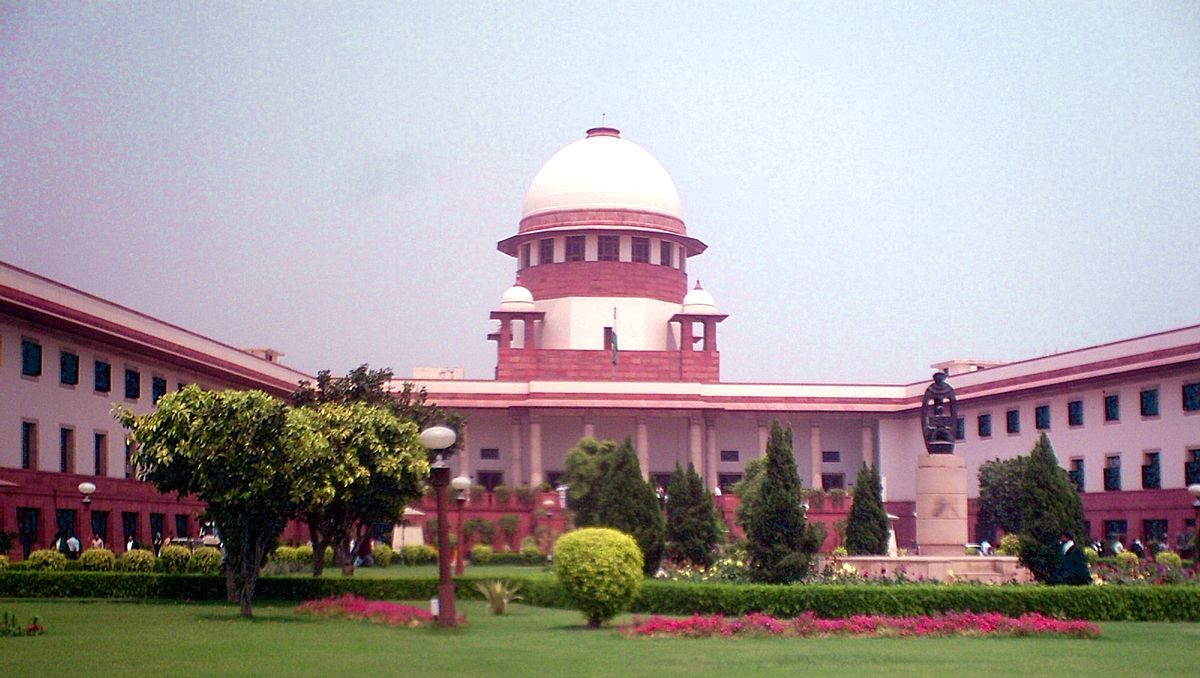
The Solicitor General sought time from the Supreme Court to file the reply to the petitions challenging the decision to scrap reservation. (Commons)

The Supreme Court, on Monday, 17 April, transferred to the Delhi High Court — for final disposal in the “interest of justice” — the dispute over a government order (GO) in Andhra Pradesh on the purchase of newspapers by local body volunteers.
The dispute, which was pending before the Andhra Pradesh High Court, has its genesis in a tussle between two leading Telugu dailies — Eenadu, owned by Ushodaya Publications of media baron Ramoji Rao, and Sakshi, published by Jagati Publications that is owned by Chief Minister YS Jagan Mohan Reddy.
Eenadu has accused the state government of promoting the sale of Sakshi newspaper.
The matter came up for hearing on Monday before a bench comprising Chief Justice DY Chandrachud and Justices PS Narasimha and JB Pardiwala, which said that the dispute is between two political parties.
“Without going into the merits and rival contentions of the parties, we are of the considered view that, in the interest of justice, it will be appropriate if the matter is transferred to the Delhi High Court for final disposal,” the bench said.
Requesting the chief justice of the Delhi High Court to consider passing an appropriate order, the bench said, “We leave every issue open to the Delhi High Court.”
When one of the advocates appearing in the matter said that transferring the case to the Delhi High Court might be a reflection on the Andhra Pradesh High Court, the bench observed, “Our order of transfer shall not be construed to have any reflection on the Andhra Pradesh High Court as we have passed this order in the interest of justice.”
“What weighed upon us is that this is not a dispute between two newspapers. This is between two political parties,” the bench orally observed.
While hearing the matter on 10 April, the apex court had voiced displeasure over bitter arguments between the state government and Eenadu over the choice of an Andhra Pradesh High Court bench to adjudicate the dispute over the GO on purchase of newspapers by local body volunteers, calling it a “sorry spectacle”.
Senior advocate Mukul Rohatgi, appearing for the publishers of Eenadu, had insisted that the matter be listed before any single judge bench of the Andhra Pradesh High Court, while senior advocate CS Vaidyanathan, representing the state government, wanted it to be heard by a division bench.
Vaidyanathan had said that the state government is willing to increase the additional financial support of ₹200 per month to ₹210 per month for village and ward volunteers for purchase of newspapers.
Rohatgi had said that the beneficiary volunteers are members of local bodies and village committees who are given financial support to buy the newspaper favouring the government (Sakshi) in order to take the message of its schemes to the people.
Ushodaya Publications has alleged that the GO violated the fundamental rights to equality and freedom of speech and expression, and that the widest-circulated Telugu newspaper in the state, Eenadu, was deliberately kept out on account of the fixation of an additional financial support of ₹200 per month for village volunteers and ward volunteers.
“It is relevant to note that Eenadu (petitioner) has a monthly subscription at the rate of ₹207.5 and the newspaper published by R-7 (Sakshi) has a monthly subscription rate of ₹176.5. It is relevant to note that the newspaper with the third widest circulation, that is Andhra Jyoti, has a monthly subscription rate of ₹207,” the plea said.
It has claimed that the amount of ₹200 has been fixed by the state government so the volunteers do not purchase Eenadu.
On 29 March, the top court had sought the response of the Andhra Pradesh government and others to a plea moved by Ushodaya Publications, challenging the GO that is “aimed at increasing the sales of the Sakshi newspaper”.
Ushodaya Publications, which moved the appeal against the Andhra Pradesh High Court order that refused to stay the GO, alleged that allowances are being given to village and ward volunteers in the southern state to buy Sakshi.
“This is a classic case where the respondent — the state government at the instance of respondent No 9 (the chief minister) — has made every attempt to curtail freedom of press, including freedom of circulation of the petitioners, in an arbitrary exercise of jurisdiction,” the plea noted.
“The constitutional rights guaranteed under Articles 14 and 19 of the Constitution of a newspaper (petitioner No 1) are infringed by the abuse of the official position by respondent No 9, who is making every attempt to strangulate the operations of Eenadu, published by petitioner No 1,” Ushodaya Publications said in its plea filed through lawyer Parmatma Singh.
The petition challenged the two high court orders by which the plea seeking the suspension of the GO dated 8 December, 2022, was rejected.
Besides seeking a stay on the operation of the high court orders, it also sought a direction to the Audit Bureau of Circulations of the Andhra Pradesh government to “suspend auditing the circulation of Sakshi newspaper for the period from July-December 2022 and for subsequent period”.
The GO sanctioned ₹200 per month from the state funds as an additional financial support for each gram volunteer and ward volunteer to enable them to purchase one widely-circulated Telugu newspaper.
The Andhra Pradesh High Court had said that there was no material showing that the GO instructed the gram volunteers or ward volunteers and village secretariats or ward secretariats to subscribe to Sakshi.



